Sep 142025
 
Oil Well

Oil Well

OPEC (Organization of the Petroleum Exporting Countries) was established in 1960. The goal of OPEC is to establish systems to stabilize oil prices and output of its members. The twelve members are: Algeria, Angola, Ecuador, Iran, Iraq, Kuwait, Libya, Nigeria, Qatar, Saudi Arabia, United Arab Emirates, and Venezuela.

Sep 142025
 

Joe W. Kittinger became the first person to cross the Atlantic in a hot-air balloon. He left Caribou, Maine, on September 14, 1984, and landed near Capbreton, France, on September 17, 1984. He broke his ankle when he was thrown from the gondola during the stormy landing. The 3,535-mile trip also established a new record for solo distance. Children could view a timeline of hot-air balloon flights at: Hot-Air Balloon Flights.

Sep 142025
 

William H. Armstrong (born Lexington, Virginia, 1911; died Kent, Connecticut, April 11, 1999) was a children’s author. He wrote, among other works, Sounder, which received the 1970 Newbery Medal. Children could learn more about him at: William H. Armstrong.

Diane Goode (born Brooklyn, New York, 1949) has written and/or illustrated at least 60  books for children. She received a 1983 Caldecott Honor Award for her illustrations in When I Was Young in the Mountains. Children could visit her website at: Diane Goode.

Frederick Heinrich Alexander Von Humboldt (born Berlin, Germany, 1769; died Berlin, Germany, May 6, 1859) was a geographer and scientist. Idea: Children could learn how Humboldt used isothermal lines on his maps. Older children could learn more at: Humboldt.

Edith Thacher Hurd (born Kansas City, Missouri, 1910; died Walnut Creek, California, January 25, 1997) wrote at least 75 books for children. She collaborated with her husband, illustrator Clement Hurd, on about 50 of those books. Her works include Under the Lemon Tree and I Dance in My Red Pajamas. Children could learn more at: Edith Thacher Hurd.

John Steptoe (born Brooklyn, New York, 1950; died New York, New York, August 28, 1989) was a picture book author and illustrator. He wrote among other works Mufaro’s Beautiful Daughters, which received a 1988 Caldecott Honor Award and a Coretta Scott King Medal. Steptoe received another Coretta Scott King Medal in 1982 for Mother Crocodile. He also earned another Caldecott Honor Award in 1985 for Story of Jumping Mouse – A Native American Legend. Children could learn more at: John Steptoe.

James Wilson (born Carskerdo, Scotland, 1742; died Edonton, North Carolina, August 21 or August 28, 1798) signed the Declaration of Independence. He represented Pennsylvania. A lawyer, he also signed the Constitution. He was one of the first Supreme Court Justices. Unfortunately, he made some poor business decisions and died in poverty. Older children could learn more at: James Wilson.

Elizabeth Winthrop (born Washington, DC, 1948) has written more than 60 books. Her audience includes both children and adults. One of her books is The Castle in the Attic. Children could visit her website at: Elizabeth Winthrop.

Sep 152025
 
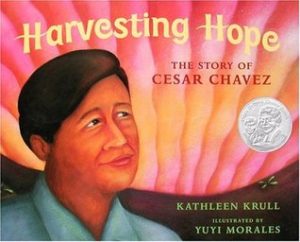
Harvesting Hope: The Story of Cesar Chavez, a Pura Belpre Medal Book

Harvesting Hope: The Story of Cesar Chavez, a Pura Belpre Medal Book

National Hispanic Heritage Month is celebrated from September 15 through October 15 by Presidential Proclamation. September 15 was picked as the beginning because five Latin American countries, Costa Rica, El Salvador, Nicaragua, Guatemala, and Honduras, celebrate their independence on that day. Mexico and Chile celebrate their independence within a few days. Children can learn more at: National Hispanic Heritage Month.

Sep 152025
 

The Central American countries of Costa Rica, El Salvador, Guatemala, Honduras, and Nicaragua declared their independence from Spain in 1821.

Costa Rica

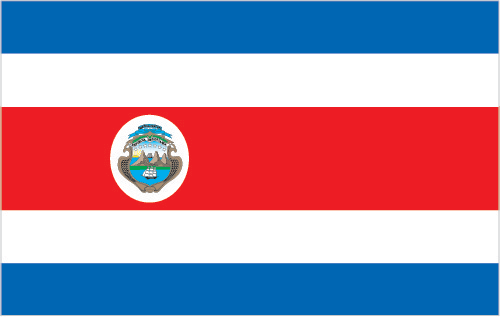
Flag of Costa Rica

Costa Rica, about the size of West Virginia, has a population of about 4.7 million people. The country, which exports bananas, pineapples, and coffee, has four active volcanoes. San José is the capital. Children can learn more at: Costa Rica.

El Salvador

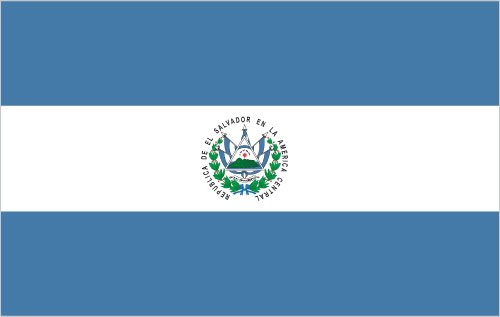
Flag of El Salvador

El Salvador, slightly smaller than the state of Massachusetts, has a population of 6.1 million people. It exports coffee, sugar, and textiles. It is the only Central American country that does not have a coastline on the Caribbean Sea. San Salvador is the capital. Children can learn more at: El Salvador.

Guatemala

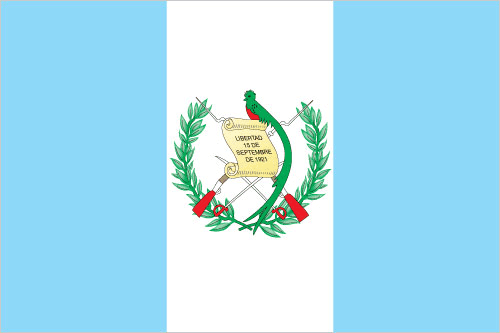
Flag of Guatemala

Guatemala, slightly smaller than the state of Tennessee, has a population of 14.3 million people. It exports sugar, coffee, and petroleum. Mountains cover most of the country, and Guatemala City is the capital. Children can learn more at: Guatemala.

Honduras

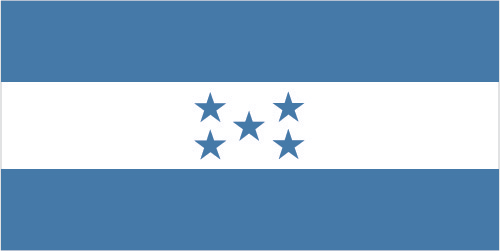
Flag of Honduras

Honduras, slightly larger than the state of Tennessee, is home to 8.5 million people. The country often experiences hurricanes along the Caribbean coast. It exports textiles, shrimp, and coffee. Tegucigalpa is the capital. Children can learn more at: Honduras.

Nicaragua

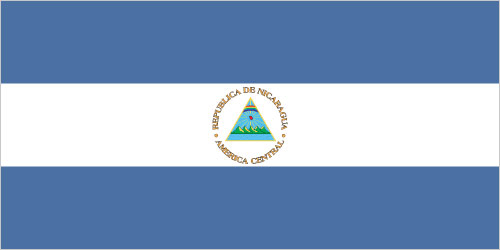
Flag of Nicaragua

Nicaragua, a bit smaller than the state of New York, has a population of 5.8 million people. The largest country in Central America, Nicaragua exports beef, coffee, gold, and sugar. Managua is the capital. Children can learn more at: Nicaragua.

Sep 152025
 
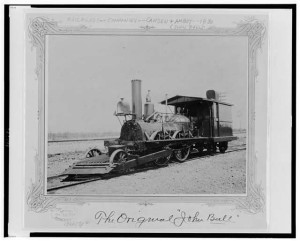
John Bull Locomtive

John Bull Locomotive

John Bull locomotive operated for the first time in 1831 for the Camden and Amboy Railroad in New Jersey. Built in Great Britain, the train engine was used until 1885 when it was purchased by the Smithsonian Institute. On September 15, 1981, celebrating its 150 year anniversary, the John Bull became the oldest working locomotive when it traveled several miles on train tracks on its own power. Later in 1985 it became the oldest locomotive to travel by air when it took a plane ride to Dallas, Texas, to be part of an exhibit. Today it is on static display at the National Museum of American History in Washington, DC.

Sep 152025
 

Saturn and Its Rings

Cassini Space Probe ended in 2017 when it was de-orbited above Saturn and was destroyed in Saturn’s atmosphere. The Cassini Huygens unmanned mission was launched on October 15, 1997. The Cassini-Huygens mission was a joint venture of the European Space Agency, the Italian Space Agency, and NASA. Cassini was supposed to be viable only until 2008. However, it continued to send back valuable data about various planets and Saturn’s moons and rings. Scientists had it perform a “Grand Finale” where it threaded its way between Saturn and the planet’s inner rings. That final set of maneuvers provided maximum information regarding Saturn. Children could read some amazing Cassini facts at: Cassini Quick Facts.

Sep 152025
 

Mabel C. Bragg (born Milford, Massachusetts, 1870; died April 25, 1945) wrote children’s books. Some experts have attributed her to be the author of The Little Engine That Could. However, others feel that Arnold Munk, a publisher using the pseudonym Watty Piper, wrote the book. Still others believe the story to be a version found in folk literature.

Agatha Christie (born Torquay, England, 1890; died Wallingford, England, January 12, 1976) was a writer, best known for her mysteries. Two of her most famous books are Death on the Nile and Murder on the Orient Express. Older children can read eight of her books at: Project Gutenberg.

James Fenimore Cooper (born Burlington, New Jersey, 1789; died Cooperstown, New York, September 14, 1851) was a writer and a historian. Two of his most famous works are The Last of the Mohicans and The Pathfinder. Children can read many of his works at: Project Gutenberg. Children can learn more at: James Fenimore Cooper.

Tomie dePaola (born Meriden, Connecticut, 1934; died Lebanon, New Hampshire, March 30, 2020) wrote and/or illustrated over 250 books for children. He received a 1976 Caldecott Honor Award for Strega Nona, a 2002 Newbery Honor Award for 26 Fairmount Avenue, and the 2011 Laura Ingalls Wilder Award for his body of work. Children could visit a website devoted to him at: Tomie DePaola.

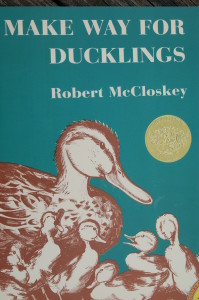
Make Way for Ducklings

Make Way for Ducklings

Robert McCloskey (born Hamilton, Ohio, 1914; died Deer Isle, Maine, June 30, 2003) was a children’s author and illustrator. He earned two Caldecott Medals: one in 1942 for Make Way for Ducklings and one in 1958 for Time of Wonder. He also received three Caldecott Honor Awards: one in 1949 for Blueberries for Sal, one in 1953 for One Morning in Maine, and one in 1954 for Journey Cake, Ho!, written by his mother-in-law Ruth Sawyer. His book Make Way for Ducklings is now the official state children’s book for Massachusetts. Children can learn more at: Robert McCloskey.

William Howard Taft

William Howard Taft

William Howard Taft (born Cincinnati, Ohio, 1857; died Washington. DC, March 8, 1930) was the twenty-seventh president (1909-1913) of the United States. He weighed over three hundred pounds. In 1900 he was governor of the Philippines. In 1904 Theodore Roosevelt made Taft Secretary of War. He was President of the country during a difficult period. After he concluded his term as President, he became a Supreme Court Justice in 1921. Children could visit a website at: William Howard Taft. Idea: Taft was the only president who also served on the Supreme Court. Children could locate more presidential facts and create a trivia game.

Sep 162025
 

United Nations Flag

International Day for the Preservation of the Ozone Layer is today! The United Nations commemorates this day in 1987 when nations signed the Montreal Protocol on Substances that Deplete the Ozone Layer. We need the ozone layer, so today is a good day to respect our layers of atmosphere.