Moving picture projector was patented in 1895. Auguste and Louis Lumiere created the cinematograph, and the first film they recorded was of workers leaving their factory.
Feb 132026
Moving picture projector was patented in 1895. Auguste and Louis Lumiere created the cinematograph, and the first film they recorded was of workers leaving their factory.
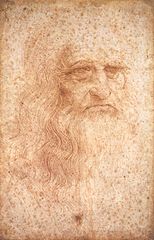 Madrid Codices, created by Leonardo da Vinci, were discovered in 1964 in the National Library of Spain by American researchers. Da Vinci died in 1608, and these works found their way to Spain by about 1623. They got lost in the library around 1712. The books contain information about science, geometry, and fortification. Children could learn more at: Madrid Codices.

Created by Sandie Obrin
Valentine’s Day is celebrated in many parts of the world. Three factors may contribute to the creation of Valentine’s Day. The holiday may have roots in an ancient Roman festival, Lupercalia. One saint named Valentine secretly married couples against a Roman emperor’s wishes. Another saint named Valentine refused to worship Roman gods and was arrested. Children tossed him notes, and thus the idea of exchanging valentines began. Other people believe birds choose their mates on Valentine’s Day. Idea: Instead of buying valentines, children could make cards. They could also learn more at: Valentine’s Day.
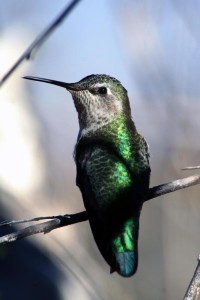
Anna’s Hummingbird in Big Bend
Great Backyard Bird Count occurs between February 14 and February 17! Children can spend as little as fifteen minutes in the backyard, identifying, counting, and photographing birds. They can submit their findings to add to the world’s knowledge of birds. Children can visit Great Backyard Bird Count. There they can find a printable bird checklist, data regarding past bird counts, and free apps to identify birds. What a fun, free, and engaging activity!

Oregon State Flag
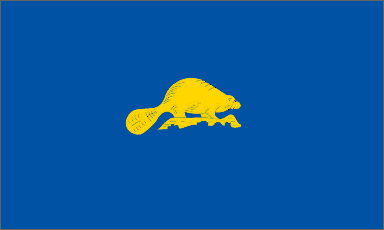
Reverse Oregon State Flag
Oregon became the thirty-third state of the United States in 1859. The state’s nickname is the Beaver State. Salem is the state capital, but Portland is the largest city. It is the leading state in the production of Christmas trees. It is also one of the strongest states in regard to the environment. The state is the ninth largest state, and it is 43rd in population. The square dance is the state’s official dance.

Arizona State Flag
Arizona became the forty-eighth state of the United States in 1912. The word Arizona derives from a Pima or Papago word meaning, place of small springs. It was relatively unpopulated until the wide spread use of air conditioners. It still faces the problem of water scarcity. Arizona is the sixth largest state and the fourteenth most populated. The bolo tie is the state’s official neckwear.
League of Women Voters was organized in 1920. Carrie Chapman Catt founded the group in Chicago, Illinois, and the purpose is to promote nonpartisan political action. All fifty states, Washington, DC, and Puerto Rico have chapters. Children can visit the website at: http://www.lwv.org/.
Lawrencium, element 103, was produced for the first time in 1961. Scientists from Lawrence Radiation Laboratory, located in Berkeley, California, created Lawrencium by bombarding californium and boron. Lawrencium is radioactive and short-lived.
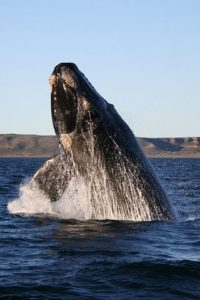
Southern Right Whale
World Whale Day is today. Celebrated on the third Sunday in February, the day was was started by a group in 1980 in Maui, Hawaii. They were concerned about the humpback whale, which is found in the waters off the island. Gregg Kauffman founded the Pacific Whale Foundation because he was concerned about the decline in whale populations. Whales are now protected by international laws. Prior to such laws whales were hunted. Even today bycatch and pollution threaten whale populations. Whales are the largest mammals. Two types of whale exist: baleen whales and toothed whales. Children could learn more at: Whales.
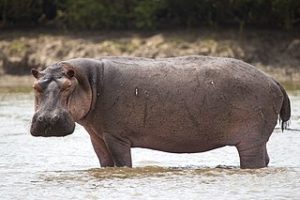
Hippopotamus
World Hippo Day is today! The day reminds us to make sure hippos survive and thrive. The animals’ name is interesting: hippos means horse and potamos means river. So the animals’ name is apt: a river horse. Two types of hippos exist today. The common hippo is on the vulnerable list and the pigmy hippo is on the endangered list. Both types exist in sub-Saharan Africa. They are the third largest land mammal, after elephants and rhinos. Children can learn more at: Hippos.