April Fool’s Day is today! The custom of April Fool’s Day may have begun in France in the 1500’s. Before then, New Year’s started on March 25th and ended April 1st. People gave gifts on April 1st to mark the beginning of the new year. Then New Year was moved to January 1st, but some people still gave gifts on April 1st as jokes. The custom spread to Britain in the eighteenth century and then to other countries.
Apr 012026
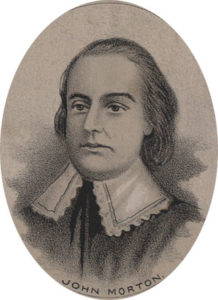 John Morton died in 1777. His date of birth is unknown. Active in politics, he was elected from Pennsylvania to serve in both the First Continental Congress and the Second Continental Congress. He signed the Declaration of Independence, and he was part of the committee that wrote the Articles of Confederation. He was the first Declaration of Independence signer to die. Children could learn more at:
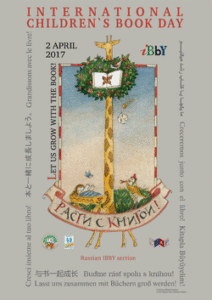 International Children’s Book Day honors Hans Christian Andersen’s birthday. The International Board on Books for Young Readers (IBBY) sponsors the event. Children could learn more at:
 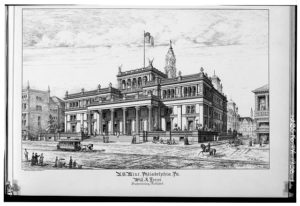 First United States mint was established in Philadelphia in 1792. It produced silver half-dismes and dismes (now spelled dimes). The mint is still active, and other mints are functioning in Denver and San Francisco. Children could visit the mint’s website,
 run in 1860. Prior to the Pony Express, a letter took three weeks to make its way across country. William Guin and William Russell started the Pony Express to speed up the delivery of mail. They hired 80 riders, bought 400 horses, and established 190 stations. The riders, mostly teenagers, had to be light weight and in excellent shape. They rode day and night and in all kinds of weather. A letter carried via the Pony Express left St. Joseph, Missouri and arrived in Sacramento, California (1,966 miles) in ten days. The Pony Express ended in October 26, 1861, two days after the telegraph started. Children could write “journals” as if they were the actual riders. They could describe their “adventures.” Children could also learn more at: