Sep 282025
 
Padre Island National Seashore

Padre Island National Seashore

Padre Island National Seashore was established in 1962. Located along the Gulf of Mexico, the national seashore is the longest unprotected barrier island in the world. Five species of sea turtles (Kemp’s ridleys, loggerheads, leatherbacks, hawksbills, and greens) nest on the island. More than 380 species of birds live on the island or migrate through the area. Children can learn more at: Padre Island.

Dec 292025
 
Texas State Flag

Texas State Flag

Texas became the twenty-eighth state of the United States in 1845. Its name derives from the Caddo tavshas, meaning friends. Its nickname is the Lone Star State, and Austin is the capital. While it is the second largest state of the Union, more than three-fourths of the population lives in cities. Houston, Dallas, and San Antonio are listed in America’s ten largest cities. At one time the region that is now Texas belonged to Spain. Then Mexico claimed ownership. For a while Texas was an independent country, and then it joined the United States. Oil is a major natural resource, and the state produces cotton and cattle. The state dish is chili. Children could make and eat chili.

Feb 022026
 

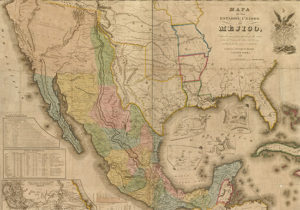
Map of Land Affected by the Treaty

Treaty of Guadalupe Hidalgo was signed in 1848, ending the war between Mexico and the United States. In return for fifteen million dollars from the United States, Mexico gave up the land that became California, Nevada, Utah, and parts of Arizona, Wyoming, Colorado, Kansas, Oklahoma, and New Mexico. Texas also became part of the United States.

Apr 012026
 
San Antonio Missions

San Antonio Missions

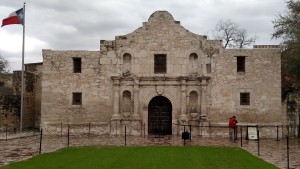
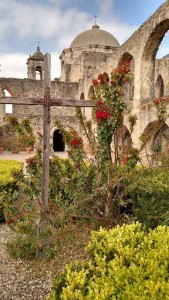
San Antonio Missions National Historical Park was established in 1983. Five Spanish missions were created around 1690 to 1720 in what is now San Antonio, Texas. Today four of the missions are part of the San Antonio Missions National Historical Park. The sites include Mission Concepción, Mission San José, Mission San Juan Capistrano, and Mission Espada. The fifth mission is the Alamo, administered by the Texas General Land Office. On July 5, 2015, the five missions became a UNESCO World Heritage site. Children can learn more at: http://www.nps.gov/saan/index.htm.

Apr 212026
 

Battle of San Jacinto occurred in 1836 in Texas. General Antonio Lopez de Santa Anna and his 1,200 soldiers attacked General Sam Houston and his 910 men. The Texans retreated but then caught the Mexicans in surprise. In less than one half hour, the Texans won. As a result of this battle, Texas won its independence from Mexico. Children could read Journey to San Jacinto (Mr. Barrington’s Mysterious Trunk) by Melodie A. Cuate. Children could also learn more at: San Jacinto.

May 142026
 
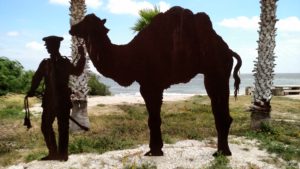
Historical Marker Camel Corps in Indianola, Texas

Historical Marker Camel Corps in Indianola, Texas

Thirty-four camels landed in Indianola, Texas, in 1856! After the United States won the Mexican-American War in 1846, the country acquired large land holdings in what is now Utah, Nevada, New Mexico, Arizona, and California. The American army wanted to map the region and establish forts in the new lands. Horses and mules could not easily withstand the high temperatures, lack of consistent water, and rough terrain. The army decided to try camels as beasts of burden. The camels marched from Indianola to base camp at Camp Verde, Texas. Eventually another 41 camels arrived. The camels were well-suited to the terrain and climate; the Camel Corps trekked all the way to the Pacific Ocean and back. Unfortunately, the Civil War disrupted the region, and the camel experiment ended.