Jean Pierre Blanchard made the first balloon flight in the United States in 1793. President George Washington and other officials watched the 46 minute flight, staged in Philadelphia, Pennsylvania. Blanchard landed in New Jersey. Children can read an extensive article on the flight at: Blanchard. Children could also read The First Air Voyage in the United States: The Story of Jean-Pierre Blanchard by Alexandra Wallner.
Jan 092026


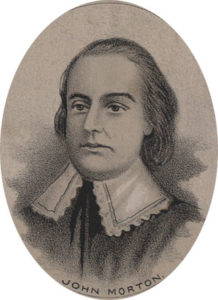 John Morton died in 1777. His date of birth is unknown. Active in politics, he was elected from Pennsylvania to serve in both the First Continental Congress and the Second Continental Congress. He signed the Declaration of Independence, and he was part of the committee that wrote the Articles of Confederation. He was the first Declaration of Independence signer to die. Children could learn more at: