Battle of Princeton took place in 1777. George Washington and his troops defeated a British assault in Princeton, New Jersey. While the British considered the battle to be minor, the American victory raised the soldiers’ morale.
Jan 032026
Battle of Princeton took place in 1777. George Washington and his troops defeated a British assault in Princeton, New Jersey. While the British considered the battle to be minor, the American victory raised the soldiers’ morale.
Jean Pierre Blanchard made the first balloon flight in the United States in 1793. President George Washington and other officials watched the 46 minute flight, staged in Philadelphia, Pennsylvania. Blanchard landed in New Jersey. Children can read an extensive article on the flight at: Blanchard. Children could also read The First Air Voyage in the United States: The Story of Jean-Pierre Blanchard by Alexandra Wallner.
Seeing Eye Guide Dog Organization was founded in 1929 by Dorothy Harrison Eustis of Morristown, New Jersey. Idea: Children could interview one of the dog trainers. Children could also learn more at: http://www.seeingeye.org/about-us/history.html.
First submarine was launched in 1898. John Phillip Holland, owner of the John P. Holland Torpedo Boat Company, created the Holland Submarine. It submerged for about 100 minutes in a shipyard in Elizabethtown, New Jersey.
Solar powered battery was first demonstrated in 1954. Scientists of Bell Laboratories in Murray Hill, New Jersey, used solar powered batteries to activate a toy Ferris Wheel and a radio transmitter. Children can review a timeline of solar energy at: Solar Energy.
Hindenburg before last Flight
Hindenburg dirigible exploded in 1937 at 7:20 PM. Thirty-six of the 97 passengers and crew died. It was approaching its mooring mast at Lakehurst, New Jersey. Children could learn how modern-day airships work at: Airships.
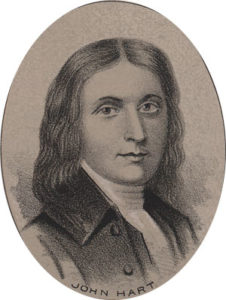
John Hart
John Hart, one of the signers of the Declaration of Independence, died in 1779 in Hopewell, New Jersey. He was born around 1711 in Stonington, Connecticut, but his exact date of birth is unknown. He represented New Jersey at the signing. When the British attacked New Jersey, they placed a bounty on Hart. He was forced to hide. When he was finally able to return to his farm, he found that his wife had died and that his children had moved. Children could learn more at: John Hart.
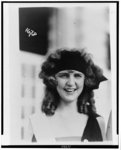
Margaret Gorman
Margaret Gorman became the first Miss America in 1921 in Atlantic City, New Jersey. The pageant was created in an effort to keep people in Atlantic City after Labor Day.
 Annapolis Convention was held from September 11 through September 14, 1786, in Annapolis, Maryland. The formal name of the meeting was The Meeting of Commissioners to Remedy Defects of the Federal Government. Delegates from New York, Delaware, New Jersey, Pennsylvania, and Virginia met to discuss economic interests. They concluded the meeting by calling for another meeting of all the states. This new group ended up being the Constitutional Convention. Older children can read some of the convention documentation at: Annapolis Convention.
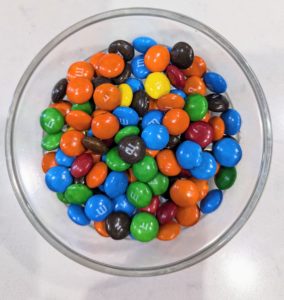
M&M Candies
National M&M Day is today! Also labeled as m&m candies, the candies were first produced in 1941. Today the candies are produced in two locations, Hackettstown, New Jersey, and Cleveland, Tennessee. The candies are now sold in over 100 countries. Idea: Children could make a list of the colors of the candies, and they could also list the variations that are produced today.