United States Army Insignia
United States Army was created in 1775 by the second Continental Congress. The next day George Washington became commander of the new army.
United States Army Insignia
United States Army was created in 1775 by the second Continental Congress. The next day George Washington became commander of the new army.

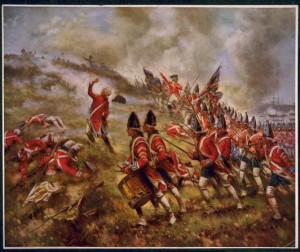
Battle of Bunker Hill
Battle of Bunker Hill occurred in 1775. Actually most of the military action took place on nearby Breed’s Hill. Britain won the battle, but they suffered severe casualties. The Patriot forces retreated, but they lost few soldiers. The battle proved to the British that the Patriots were better organized than they thought. Children could learn more at: Bunker Hill.
Olive Branch Petition was signed by representatives from the Second Continental Congress in 1775. It was delivered to King George III as one last try to peacefully resolve differences between the American colonies and Great Britain. Older children could read a copy of the petition at: Olive Branch Petition. Idea: Children could predict what would have happened if the king had not ignored the petition.

Today’s Navy
United States Navy, originally called the Continental Navy, was created in 1775. Today over 300,000 sailors serve on over 285 ships. Children could learn more at: Navy.

Phillis Wheatley
Phillis Wheatley gained her freedom in 1773. Born around 1753 probably in Gambia or Senegal, she was sold into slavery when she was seven years old. Purchased by the Wheatley family, she was well-educated. She began writing poetry in 1767. She was emancipated after her book, Poems on Various Subjects, Religious and Moral, was published on September 1, 1773. Children can read some of her works at: Project Gutenberg. Children can learn more about her life at: Phillis Wheatley.
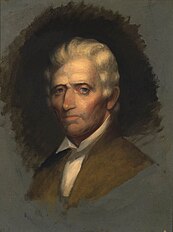
Daniel Boone
Painting by Chester Harding
Daniel Boone was hired in 1775 to cut the Wilderness Road. The road connected Virginia via the Cumberland Gap to Kentucky. The trail was rough and rocky; settlers walked the trail or rode horses. In 1790 the road was improved so that wagons could travel on it. Children can learn more about the Wilderness Road at: Daniel Boone.
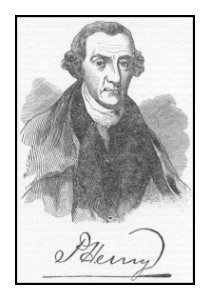
Patrick Henry
Patrick Henry gave his famous “Give me liberty or give me death” speech in Richmond, Virginia, in 1775. The speech, given without notes, was a rousing call for freedom from Great Britain. Children can read the speech at: Patrick Henry.

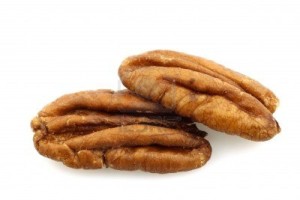
Pecans
Pecan Day marks the day in 1775 when Thomas Jefferson gave George Washington several pecan trees from his own plantings. Some of Washington’s pecan trees are still alive. The pecan, packed with phytonutrients and protein, is the only nut native to North America. Children could learn more at: Pecan.
The Society for the Relief of Free Negroes Unlawfully Held in Bondage was formed in Philadelphia, Pennsylvania, in 1775. This group was America’s first abolition society. Some of the early members were Thomas Paine, Benjamin Rush, Benjamin Franklin, and John Greenleaf Whittier. Renamed the Pennsylvania Abolition Society, the group still exists, working for racial justice.

Paul Revere

William Dawes
Paul Revere and William Dawes conducted their famous horse ride at 10:00 PM in 1775. They warned their fellow patriots that the British were marching to Lexington and Concord in Massachusetts. Children could read Henry Wadsworth Longfellow’s account of the ride, “The Midnight Ride of Paul Revere” at: Midnight Ride. They could learn more at: Revere and Dawes.