Mar 132026
 
File:Uranus clouds.jpg

2007 Image of Uranus and Rings

Uranus was discovered by Sir William Herschel in 1781. The planet is actually a gas giant, composed of methane, helium and hydrogen. Its temperature hovers around -355 degrees Fahrenheit. Some scientists believe that despite the cold surface temperatures, a core about fifteen times the size of earth has a temperature of approximately 12,000 degrees Fahrenheit. It possesses at least five major moons, ten minor moons, and thirteen rings. Idea: Encourage children to try to develop some kind of transport that could land on the gas giant. They could learn more at: Uranus.
Mar 132026
 

World Standard Time was accomplished in 1884. The International Meridian Conference met in Washington, DC. The group established the Prime Meridian through Greenwich and established 24 time zones. Prior to that conference, different countries used different times. In the United States, different railroads used different time systems. It was all very confusing! Children can find the time in different cities world wide at: World Clock.

Mar 142026
 

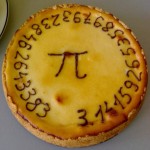
Pi Pie

Pi Day is today (3.14)! Larry Shaw started Pi Day in 1988 when he was a physicist at the San Francisco Exploratorium. Today schools across the country will host Pi Day activities and then students might eat slices of pie. Pi is the relationship of a circle’s circumference divided by its diameter. An irrational number, pi has been calculated to 62.8 trillion decimal places.  Several wonderful websites are devoted to Pi Day, but probably the best one is the Exploratorium site at: pi day.

Mar 142026
 

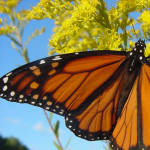
Monarch Butterfly

Learn about Butterflies Day is today! About 17,500 species of butterflies exist in the world, and about 750 species can be found in the United States. Butterflies are the only type of insect that have scales covering their wings, and they are the only type of insect that can curl up their proboscis. Butterflies provide beauty, but they also pollinate many, many plant species. Younger children could read The Very Hungry Caterpillar by Eric Carle. Older children can learn more at: Butterflies.

Mar 142026
 

Potato Chip Aisle in Grocery store

National Potato Chip Day is today! Potato chips were invented by Chef George Crum in Saratoga Springs, New York, in 1853. According to legend, Crum, a Native American chef at Moon’s Lake House, wanted to impress a client. He cut the potatoes into thin slices, fried them, and added salt. Today potato chips are about 35 percent of the snack food market and generate revenues of over sixteen billion dollars annually.

What could children do today other than eat a few potato chips? They could poll their friends as to their favorite type of potato chip. They could investigate why potato chips are not healthy and whether certain types are healthier than others. Finally they could learn about the different varieties of potatoes and potato chips.

Mar 142026
 
whitney.gif

Eli Whitney

Cotton gin was patented by Eli Whitney in 1794. It changed the way cotton was raised and processed in the southeastern United States. Prior to the gin, slaves had to hand separate the cotton fibers from cotton seeds and debris. The cotton gin processed the separation ten times faster. More cotton could therefore be planted, and unfortunately more slaves were needed. Children could glean many more details at: Cotton Gin Patent.

Mar 152026
 
Maine State Flag

Maine State Flag

Maine became the twenty-third state of the United States in 1820. Vikings explored the area around AD 1000. Originally Maine was a part of the Massachusetts colony. Augusta is the state capital, and the state nickname is the Pine Tree State. People who live in Maine are called Down-Easters. Today fishing, lumbering, and growing potatoes are strong sources of income. It is home to Acadia National Park. The moose is the state mammal. Maine is the twelfth smallest state, and it ranks as the ninth least populous state. Idea: Children could find out why and when Maine separated from Massachusetts.

Mar 152026
 

Cincinnati Red Stockings in 1869 became the first professional baseball team in the United States. Today Major League Baseball counts 30 teams, 29 in the United States and one in Canada. Children could enjoy reading The Everything KIDS’ Baseball Book by Greg Jacobs.