Cement was patented in 1871. David Oliver Saylor, of Allentown, Pennsylvania, received patent number 119,413. Children can take some virtual tours of cement being made at: Cement.

Matchbook Patent
Matchbooks were patented in 1892 by Joshua Pusey of Lima, Pennsylvania. He received patent number 483,166. Children can view the patent at: Matchbook Patent.

Slinky
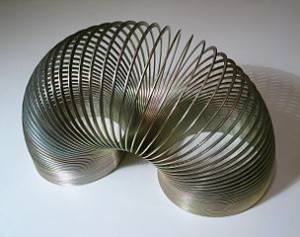
Slinky was patented by Richard and Betty James in 1947. Richard was trying to develop a spring that would suspend ship instruments even in turbulent waters. He accidentally dropped one of his springs, and the toy was born. Children can “walk” slinkies down an inclined plane by following the easy directions at: Slinky.
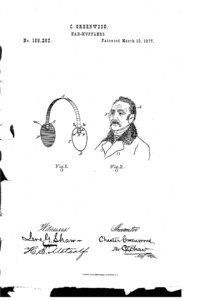
Earmuff Patent
National Earmuff Day is today! Earmuffs were patented by Chester Greenwood of Farmington, Maine, in 1877. He was fifteen years old when he invented the Champion Ear Protectors. He had his grandmother add some fur to the ends of a piece of wire. He received Patent Number 188,292. His invention became a factory, employing community members. Children can view the patent at: Earmuff Patent.

Eli Whitney
Cotton gin was patented by Eli Whitney in 1794. It changed the way cotton was raised and processed in the southeastern United States. Prior to the gin, slaves had to hand separate the cotton fibers from cotton seeds and debris. The cotton gin processed the separation ten times faster. More cotton could therefore be planted, and unfortunately more slaves were needed. Children could glean many more details at: Cotton Gin Patent.
Washing machine was patented by Nathaniel Briggs in 1797. A fire in the patent office in 1836 destroyed all records of his patent. However, his patent probably resembled a current wash board.
First United States patent law was formalized in 1790. Last year alone the United States Patent Office issued almost 187,000 patents. Children could visit the very interesting Patent Office website at: http://www.uspto.gov/kids/.

Safety Pins
Speaking of patents…the safety pin was patented by Walter Hunt in 1849. He received Patent Number 6,281. Children can examine his patent at: Safety Pin Patent.
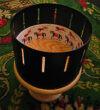
Modern Replica of Victorian Zoetrope
Courtesy of Andrew Dunn
Zoetrope was patented by William Lincoln in 1867. He received Patent Number 64,117. A zoetrope produces the illusion of a moving picture by creating two cylinders, one inside the other. The outer cylinder contains paintings. The inner cylinder has slits in its side. When the inner cylinder turns, observers see the images on the outer cylinder move. Quite popular in the 1880’s, zoetropes have found new homes in long subway station platforms. Children could see an amazing Pixar video of a zoetrope at: Zoetrope.
Air conditioner was patented by Willis Haviland Carrier in 1914. Idea: Children could research how air conditioners work, and they could find out if different types of coolant exist. Children can learn how an air conditioner works by viewing: https://www.youtube.com/watch?v=_lFUlA1PZ8U.