Paul Cezanne (born Aix-en-Provence, France, 1839; died Aix-en-Provence, France, October 22, 1906) has been declared the “father of modern painting.” He did not become famous until after his death. He tended to convey the emotion of the object painted rather than its physical appearance. Children could visit a website at: http://www.paul-cezanne.org/.
Alice Eastwood (born Toronto, Canada, 1859; died San Francisco, California, October 30, 1953) was a botanist. She studied botany in Europe and in the United States. In 1890 she took a job at the herbarium of the California Academy of Sciences. From 1894 to 1943 (when she retired) she was head of the department of botany. She collected and traded specimens of numerous plants from the western United States. Children could learn more at: Alice Eastwood.
Lisa Campbell Ernst (born Bartlesville, Oklahoma, 1956) has written or illustrated at least 30 books for children. Her works include Sylvia Jean, Drama Queen and The Gingerbread Girl.
Pat Mora (born El Paso, Texas, 1942) writes books for children, young adults, and adults. She pays particular attention to the Latino community, the importance of literacy, and the value of multilingualism. She created El dia de los ninos/ el dia de los libros, a day to share books with children and improve literacy. The American Library Association cohosts this yearly event on April 30th. She has written about 39 books, many published in both English and Spanish. Her books include A Birthday Basket for Tia and The Night the Moon Fell. Children can visit her website: Pat Mora.
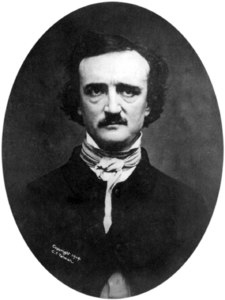 Edgar Allan Poe (born Boston, Massachusetts, 1809; died Baltimore, Maryland, October 7, 1849) was a poet and a writer. His most famous works include the poem The Raven and the tale The Gold Bug. Idea: Older children enjoy a choral reading of The Raven. Many of his works can be found at: Project Gutenberg. Children can learn more about Poe at: Edgar Allan Poe.
James Watt (born Greenock, Scotland, 1736; died Heathfield, England, August 19, 1819) was an inventor and a civil engineer. While he did not invent the steam engine, he did make it more practical. The electrical unit, the watt, is named in honor of him. Idea: Children could look at different types of light bulbs and find the wattage. They could then discover the relationships between watts and brightness.