celebrateandlearn

Mar 132025
 

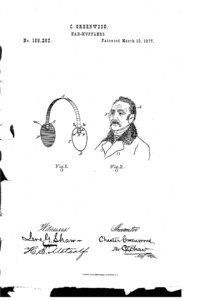
Earmuff Patent

National Earmuff Day is today! Earmuffs were patented by Chester Greenwood of Farmington, Maine, in 1877. He was fifteen years old when he invented the Champion Ear Protectors. He had his grandmother add some fur to the ends of a piece of wire. He received Patent Number 188,292. His invention became a factory, employing community members. Children can view the patent at: Earmuff Patent.

Mar 132025
 
File:Uranus clouds.jpg

2007 Image of Uranus and Rings

Uranus was discovered by Sir William Herschel in 1781. The planet is actually a gas giant, composed of methane, helium and hydrogen. Its temperature hovers around -355 degrees Fahrenheit. Some scientists believe that despite the cold surface temperatures, a core about fifteen times the size of earth has a temperature of approximately 12,000 degrees Fahrenheit. It possesses at least five major moons, ten minor moons, and thirteen rings. Idea: Encourage children to try to develop some kind of transport that could land on the gas giant. They could learn more at: Uranus.

Mar 132025
 

World Standard Time was accomplished in 1884. The International Meridian Conference met in Washington, DC. The group established the Prime Meridian through Greenwich and established 24 time zones. Prior to that conference, different countries used different times. In the United States, different railroads used different time systems. It was all very confusing! Children can find the time in different cities world wide at: World Clock.

Mar 132025
 

Diane Dillon (born Glendale, California, 1933) is a picture book illustrator. She and her husband Leo Dillon, who died in 2012, are the only people to have received two Caldecott Medals back to back. They illustrated, among other works, Why Mosquitoes Buzz in People’s Ears: A West African Tale (1976 Caldecott Medal) and Ashanti to Zulu: African Traditions (1977 Caldecott Medal). They also received a 2005 Coretta Scott King Honor Award for The People Could Fly: A Picture Book.

Percival Lowell (born Boston, Massachusetts, 1855; died Flagstaff, Arizona, November 12, 1916) was an astronomer. Lowell instigated the research that ultimately found Pluto. The former planet was found fourteen years after he died. He created the Lowell Observatory in Flagstaff, Arizona Territory in 1894. The observatory is still in operation.

Abigail Powers Fillmore (born Stillwater, New York, 1798; died Washington, DC, March 30, 1853) was America’s First Lady from July 9, 1850 to March 4, 1853. She was the first wife of Millard Fillmore, thirteenth president of the United States. A teacher, she was the first First Lady to work before and after she was married. After they moved into the White House, she created its first library. She also had the first bathtub installed, and the first kitchen stove was added. Prior to that, food had been prepared over an open fireplace. Children could visit a website at: Abigail Fillmore.

Joseph Priestley (born Fieldhead, England, 1733; died Northumberland, Pennsylvania, February 6, 1804) was a scientist and a cleric. While he is most famous for discovering oxygen, he actually isolated nine other gases, including carbon dioxide. He lived in the United States for ten years.

Ellen Raskin (born Milwaukee, Wisconsin, 1928; died New York, New York, August 8, 1984) was a children’s author and illustrator. She wrote and illustrated twelve picture books. She illustrated at least 25 books written by other authors, including Rebecca Caudhill and Aileen Fisher. She wrote four novels for children. She received a 1975 Newbery Honor Award for Figgs and Phantoms. One of her most well-known books is The Westing Game, which earned Raskin the well-deserved 1979 Newbery Medal. Children could visit a website at: Ellen Raskin.

Thomas Rockwell (born New Rochelle, New York, 1933; died Danbury, Connecticut, September 27, 2024) wrote books for children. The son of Norman Rockwell, he is known for his book How to Eat Fried Worms.

Mar 142025
 

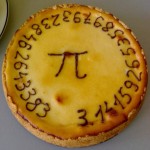
Pi Pie

Pi Day is today (3.14)! Larry Shaw started Pi Day in 1988 when he was a physicist at the San Francisco Exploratorium. Today schools across the country will host Pi Day activities and then students might eat slices of pie. Pi is the relationship of a circle’s circumference divided by its diameter. An irrational number, pi has been calculated to 62.8 trillion decimal places.  Several wonderful websites are devoted to Pi Day, but probably the best one is the Exploratorium site at: pi day.

Mar 142025
 

Monarch Butterfly

Learn about Butterflies Day is today! About 17,500 species of butterflies exist in the world, and about 750 species can be found in the United States. Butterflies are the only type of insect that have scales covering their wings, and they are the only type of insect that can curl up their proboscis. Butterflies provide beauty, but they also pollinate many, many plant species. Younger children could read The Very Hungry Caterpillar by Eric Carle. Older children can learn more at: Butterflies.

Mar 142025
 

Potato Chip Aisle in Grocery store

National Potato Chip Day is today! Potato chips were invented by Chef George Crum in Saratoga Springs, New York, in 1853. According to legend, Crum, a Native American chef at Moon’s Lake House, wanted to impress a client. He cut the potatoes into thin slices, fried them, and added salt. Today potato chips are about 35 percent of the snack food market and generate revenues of over sixteen billion dollars annually.

What could children do today other than eat a few potato chips? They could poll their friends as to their favorite type of potato chip. They could investigate why potato chips are not healthy and whether certain types are healthier than others. Finally they could learn about the different varieties of potatoes and potato chips.

Mar 142025
 
whitney.gif

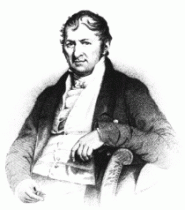
Eli Whitney

Cotton gin was patented by Eli Whitney in 1794. It changed the way cotton was raised and processed in the southeastern United States. Prior to the gin, slaves had to hand separate the cotton fibers from cotton seeds and debris. The cotton gin processed the separation ten times faster. More cotton could therefore be planted, and unfortunately more slaves were needed. Children could glean many more details at: Cotton Gin Patent.

Mar 142025
 

Frank Borman (born Gary, Indiana, 1928; died Billings, Montana, November 7, 2023) was an astronaut. He was the Command Pilot of Gemini 7. He and his crew set an endurance record in 1962 by spending fourteen days in space. He was Commander of Apollo 8, the first vehicle to circle the moon. Children could learn more at: Frank Borman.

Eugene Cernan (born Chicago, Illinois, 1934; died Houston, Texas, January 16, 2017) was a test pilot and astronaut. He participated in Gemini 9A and Apollo 10. He was commander of Apollo 17. He was the eleventh man on the moon and the last person to walk on the moon. Children can learn more at: Eugene Cernan.

Marguerite de Angeli (born Lampeer, Michigan, 1889; died Detroit, Michigan, June 16, 1987) was a children’s author. She received a 1945 Newbery Honor Award for Yonie Wondernose. Her book The Door in the Wall received the 1950 Newbery Medal. De Angeli received a 1956 Newbery Honor Award for The Black Fox of Lome. Children could visit a website at: Marguerite de Angeli.

Albert Einstein (born Ulm, Germany, 1879; died Princeton, New Jersey, April 18, 1955) revolutionized theories about the universe. Children could read Albert Einstein and Relativity for Kids: His Life and Ideas with 21 Activities and Thought Experiments by Jerome Pohlen.

Lucy B. Hobbs (born Constable, New York, 1833; died Lawrence, Kansas, October 3, 1910) became the first woman dentist when she graduated from the Ohio College of Dental Surgery in Cincinnati, Ohio, on February 21, 1866. She practiced dentistry for over 20 years. She then turned her attention to politics and women’s rights.

Casey Jones (born John Luther Jones near Cayce, Kentucky, 1864; died April 30, 1900 in a train wreck near Vaughn, Mississippi) is the subject of “the Ballad of Casey Jones.” Children can read the text of the ballad at: Casey Jones.

Hank Ketcham (born Seattle, Washington, 1920; died Pebble Beach, California, June 1, 2001) created Dennis the Menace. Dennis was created in the early 1950’s. Ketcham retired in 1995, and other people draw Dennis today. Children can learn more at: Hank Ketcham.