celebrateandlearn

Feb 142025
 
Arizona State Flag

Arizona State Flag

Arizona became the forty-eighth state of the United States in 1912. The word Arizona derives from a Pima or Papago word meaning, place of small springs. It was relatively unpopulated until the wide spread use of air conditioners. It still faces the problem of water scarcity. Arizona is the sixth largest state and the fourteenth most populated. The bolo tie is the state’s official neckwear. Children could visit an Internet site at: Arizona.

Feb 142025
 

Original Ferris Wheel at World’s Columbian Exposition

George Washington Gale Ferris (born Galesburg, Illinois, 1859; died Pittsburgh, Pennsylvania, November 22, 1896) invented the Ferris wheel. He created the first Ferris wheel for the World’s Columbian Exposition in Chicago in 1893. It was made to rival the Eiffel Tower.

Adam Gidwitz (born San Francisco, California, 1982) writes books for children. He received a 2017 Newbery Honor Award for The Inquisitor’s Tale: Or, The Three Magical Children and their Holy Dog. Children could visit his site at: Adam Gidwitz.

Margaret E. Knight (born York, Maine, 1838; died Framingham, Massachusetts, October 12, 1914) was a most accomplished woman inventor. One of her most-famous inventions produced flat-bottom paper bags. She received at least 27 patents, perhaps as much as 30. Children could read Marvelous Mattie: How Margaret E. Knight Became an Inventor, by Emily Arnold McCully.

George Shannon (born Caldwell, Kansas, 1952) writes books for children. His books include Frog Legs and Heart to Heart. Children can visit his website at: George Shannon.

Paul O. Zelinsky (born Evanston, Illinois, 1953) is a children’s book author and illustrator. His Rapunzel won the 1998 Caldecott Award. He has illustrated books by other authors, including Beverly Cleary and Jack Prelutsky. Children could visit his interesting website at: Paul O. Zelinsky.

Feb 152025
 

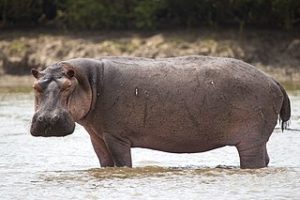
Hippopotamus

World Hippo Day is today! The day reminds us to make sure hippos survive and thrive. The animals’ name is interesting: hippos means horse and potamos means river. So the animals’ name is apt: a river horse. Two types of hippos exist today. The common hippo is on the vulnerable list and the pigmy hippo is on the endangered list. Both types exist in sub-Saharan Africa. They are the third largest land mammal, after elephants and rhinos. Children can learn more at: Hippos.

Feb 152025
 

Remember the Maine Day dates back to 1898. The United States battleship Maine, anchored in the harbor in Havana, Cuba, was blown up. Over two hundred Americans died, and the United States felt Spain was responsible. The United States declared war against Spain, starting the Spanish-American War, on April 25, 1898.  Children can learn more at: Remember the Maine Day.

Feb 152025
 

ENIAC was dedicated in 1946 at the University of Pennsylvania in Philadelphia. ENIAC (Electrical Numerical Integrator and Calculator) was among the first general computers. A marvel during its time, ENIAC was the size of a room. It used vacuum tubes, resistors, and transistors. Today a laptop can do all that the ENIAC could do. ENIAC was powered down October 2, 1955. Parts of ENIAC are with the Smithsonian and other institutions.

Feb 152025
 

Susan B. Anthony

Susan Brownell Anthony (born Adams, Massachusetts, 1820; died Rochester, New York, March 13, 1906) fought for women’s rights. She was arrested in 1872 for voting, illegal for women at that time. A dollar coin has her image imprinted on it. Children could learn more about her at: Susan B. Anthony.

Norman Bridwell (born Kokomo, Indiana, 1928; died Oak Bluffs, Massachusetts, December 12, 2014) wrote and illustrated books for children. He is perhaps best known for his Clifford the Big Red Dog Series. He created at least 40 books; over 126 million copies of his books have been printed in at least 13 languages.

Abraham Clark (born Roselle, New Jersey, 1726; died Rahway, New Jersey, September 15, 1794) signed the Declaration of Independence. A surveyor and lawyer, he was known as the ‘poor man’s councilor’ because he often took cases when his clients could not pay him. Representing New Jersey, he was active after the Revolutionary War. He was twice elected to the US House of Representatives. Children could learn more about him at:  Abraham Clark.
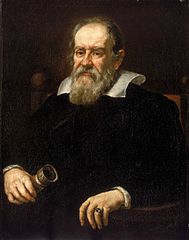
Galileo

Galileo

Galileo Galilei (born Pisa, Italy, 1564; died near Florence, Italy, January 8, 1642) was a scientist. Although he did not invent the refracting telescope, he was the first person to put it to good use. By using the telescope, he found that the moon is not smooth but covered with mountains and valleys. In 1610 he located four moons around Jupiter. He was accused of being a heretic by the Catholic Church in 1633 because he believed that the earth revolved around the sun. He was placed under house arrest for the remainder of his life. Idea: Students could play with different kinds of lenses and find out how telescopes work. They could also read Starry Messenger, by Peter Sis. The book received a 2001 Caldecott Honor award. Children could learn more at: Galileo.

Cyrus H. McCormick (born Rockbridge County, Virginia, 1809; died Chicago, Illinois, May 13, 1884) invented the mechanical reaper, an invention that harvested grains. Prior to his invention, farmers had to harvest the grains with scythes. Children can learn more at: Cyrus H. McCormick.

Doris Orgel (born Vienna, Austria, 1929; died August 4, 2021) wrote over 50 books for children. Her books include The Devil in Vienna and Button Soup.

Feb 162025
 

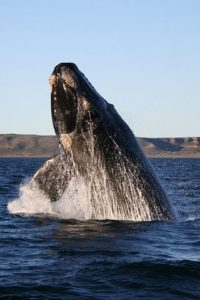
Southern Right Whale

World Whale Day is today. Celebrated on the third Sunday in February, the day was was started by a group in 1980 in Maui, Hawaii. They were concerned about the humpback whale, which is found in the waters off the island. Gregg Kauffman founded the Pacific Whale Foundation because he was concerned about the decline in whale populations. Whales are now protected by international laws. Prior to such laws whales were hunted. Even today bycatch and pollution threaten whale populations. Whales are the largest mammals. Two types of whale exist: baleen whales and toothed whales. Children could learn more at: Whales.