Apr 152026
 

Thomas Hart Benton Self-Portrait

Thomas Hart Benton (born Neosho, Missouri, 1889; died Kansas City, Missouri, January 19, 1975) was an artist. His works of the American midwest and south led to the development of artistic regionalism. Children can view some of his works at: Thomas Hart Benton.

Leonhard Euler (born Basel, Switzerland, 1707; died St. Petersburg, Russia, September 18, 1783) was a mathematician. Children could learn about Euler’s Formula at: Euler Formula. Make sure you check out the morphing coffee cup/doughnut!

Henry James (born New York, New York, 1843; died London, England, February 28, 1916) was a prolific and noted American writer. He wrote over 110 stories, twenty novels, and sixteen plays. Some of his most famous work includes The Turn of the Screw and What Maisie Knew. Older children can read many of his works at: Project Gutenberg.

Jacqueline Briggs Martin (born Lewiston, Maine, 1945) writes books for children. She wrote Snowflake Bentley, and the book’s illustrator, Mary Azarian, received the 1999 Caldecott Medal. Children can learn more at: Jacqueline Briggs Martin.

Charles Willson Peale Self-Portrait

Charles Willson Peale (Born Queen Anne County, Maryland, 1741; died Philadelphia, Pennsylvania, February 22, 1827) was a famous portrait painter during the Revolutionary period. He enjoyed painting famous Americans. He created at least 60 portraits of George Washington. His brother (James Peale), and four of his sons (Rembrandt, Rubens, Titian Ramsay, and Raphael) were also accomplished artists. Idea: Children can make a portrait of a fellow classmate. Hang the results in the “American Gallery.” Children could view some of his works at: Charles Willson Peale.

Bessie Smith (born Chattanooga, Tennessee, 1894; died Clarksdale, Mississippi, September 26, 1937) was nicknamed the “Empress of the Blues.” She combined spirituals with jazz, and some experts consider her one of the greatest singers in blues history. She died in a car crash in 1937.
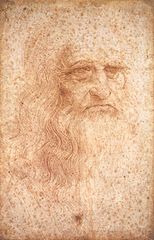
Leonardo da Vinci Self-Portrait

Leonardo da Vinci Self-Portrait

Leonardo da Vinci (born Vinci, Italy, 1452; died Cloux, France, May 2, 1519) was a great artist and scientist. Famous works include Mona Lisa, Saint John the Baptist, and The Last Supper. His scientific interests ranged from plant studies to aviation. Idea: The Last Supper is a fresco; it is painted into the plaster on the wall. Fill disposable pie plates with wet plaster of Paris. Children can paint right into the wet plaster surface. Let the plaster dry, and then display the results. Children could also read Leonardo da Vinci for Kids: His Life and Ideas, 21 Activities by Janis Herbert. Finally, they could view some of his works at: Leonardo da Vinci.
Apr 162026
 

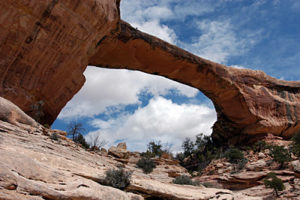
Natural Bridges

Natural Bridges National Monument in Utah was created in 1908. Visitors can walk to the three natural bridges, Kachina, Owachomo, and Sipapu. They can also visit Horsecollar Ruin, a pueblo ruin abandoned 700 years ago. Children can visit the national park service website at: http://www.nps.gov/nabr.

Apr 162026
 
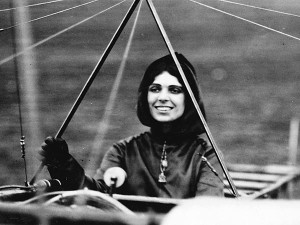
Harriet Quimby

Harriet Quimby

Harriet Quimby in 1912 became the first woman to fly solo over the English Channel. She flew from Dover, England, to Harclat, France. She was welcomed as a hero in France, Great Britain, and the United States. Children could read more at: Harriet Quimby.

Apr 162026
 

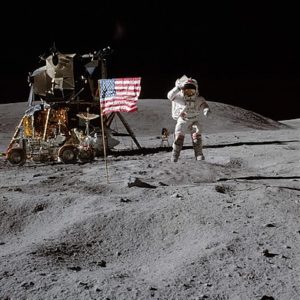
Apollo 16 on the Moon

Apollo 16 was launched in 1972. The fifth group to land on the moon, John Young, Charles M. Duke, Jr., and Thomas K. Mattingly made the 11-day trip, exploring the moon for 71 hours. Among their activities, they launched a satellite that would circle the moon. However, it was sent into an orbit that was not stable. The satellite crashed into the moon’s surface on May 29, 1972. Children could learn more at: Apollo 16.

Apr 162026
 

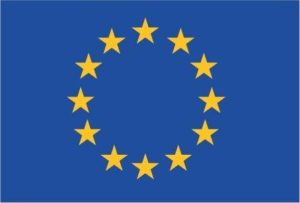
Flag of European Union

Treaty of Accession was signed in Athens, Greece, in 2003. Ten more nations joined the European Union: Cyprus, Czech Republic, Estonia, Latvia, Lithuania, Hungary, Malta, Poland, Slovenia, and Slovakia. Today 27 countries are members of the European Union. Children could learn more at: European Union.

Apr 162026
 

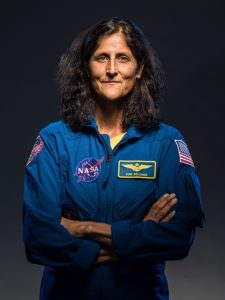
Sunita Williams

Astronaut Sunita Williams ran the Boston Marathon in 2007 while she was serving on the International Space Station. She ran the marathon on a treadmill in four hours 24 minutes. Her fellow crew members cheered for her while her sister Dina Pandya and fellow astronaut Karen L. Nyborg ran the marathon on earth.

Williams participated in Expeditions 15 and 16  and in Expeditions 32 and 33 on the International Space Station. By 2012 she had taken seven spacewalks for a total of 50 hours 40 minutes.


Apr 162026
 

Dorothy Pulis Lathrop (born Albany, New York, 1891; died Falls Village, Connecticut, December 30, 1980) wrote and illustrated children’s books. She illustrated Hitty, Her First Hundred Years. That book earned the author, Rachel Fields, the 1930 Newbery Medal. Lathrop wrote and illustrated The Fairy Circus, earning her a 1932 Caldecott Honor Award. She received the very first Caldecott Medal (1938) for her illustrations in Animals of the Bible. Children can view some of the books she illustrated at: Project Gutenberg.

Gertrude Chandler Warner (born Putnam, Connecticut, 1890; died Putnam, Connecticut, August 30, 1979) created the Boxcar Children series. Warner wrote only the first nineteen books of the series. Now someone else writes the books. At last count, 167 Boxcar Children books have been published. Check the cover of a Boxcar book to see if the author is really Warner. Children could propose a plot for a new Boxcar book. Children could also read a biography, Gertrude Chandler Warner and the Boxcar Children, by Mary Ellen Ellsworth. They could read Gertrude Chandler Warner’s first book at: Project Gutenberg.

Garth Williams (born New York, New York, 1912; died Guanajuato, Mexico, May 8, 1996) wrote and illustrated children’s books. He stated he illustrated 97 books, including Stuart LittleCharlotte’s Web and the Little House series. Children can learn more at: Garth Williams.

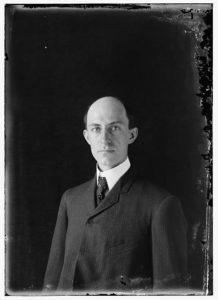
Wilbur Wright

Wilbur Wright (born Millville, Indiana, 1867; died Dayton, Ohio, May 30, 1912) invented, along with his brother, the first airplane. The two were owners of a bicycle shop when they became interested in aviation. They first experimented with kites and then moved on to gliders. They often experienced failure as they tested idea after idea. On December 17, 1903, Wilbur’s brother, Orville, flew their motorized airplane. Children could visit a website at: Wright Brothers. They could read the Newbery Honor Award book, The Wright Brothers: How They Invented the Airplane, by Russell Freedman. Idea: Consider having a paper airplane contest. Encourage new designs rather than the standard plane. Have a contest for the longest flight, and have another contest for the most acrobatic plane.

Samuel Youd (born England, 1922; died England, February 3, 2012) wrote science fiction under several pen names, including John Christopher. His books include The Death of Grass and The Tripods trilogy. Children could learn more at: Samuel Youd.

Apr 172026
 

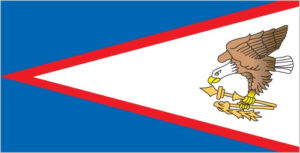
Flag of American Samoa

American Samoa celebrates Flag Day, the day in 1900 when it became an American territory. It was formerly Eastern Samoa. Located in the South Pacific, the island group (according to the CIA World Factbook) is about the size of Washington, DC. About 55,000 people live in this tropical territory. Tuna fishing and tuna processing are a large part of its economy. Pago Pago is the capital. Older children can learn more at: American Samoa.

Apr 172026
 

Flag of Syria

Syria celebrates Independence Day. Liberated from France in 1946, this Middle Eastern country is about the size of North Dakota. Farmers grow cotton and grains on its arable land. Mountains and deserts form a good portion of its geography. About 22.5 million people live in Syria, and its capital is Damascus. Children can learn more at: Syria.