Oct 152025
 

Katherine Ayres (born Columbus, Ohio, 1947) writes books for children. Her works include Silver Dollar Girl and Macaroni Boy. Children can visit her website at: Katherine Ayres.

Jacob Broom (born Wilmington, Delaware, 1752; died Philadelphia, Pennsylvania, April 25, 1810) represented Delaware at the Constitutional Convention. During the Revolutionary War he surveyed land for Washington’s army. After the convention he was active in Delaware politics. Children could learn more at: Jacob Broom.

Virgil (born 70 B.C.; died 19 B.C.) was a poet who lived in ancient Rome. One of his most famous works is the epic Aeneid. Children can read the Aeneid and other works in several languages, including Latin, at: Project Gutenberg.
Edith Wilson

Eidth Bolling Galt Wilson

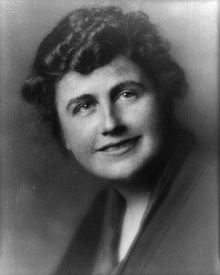
Edith Bolling Galt Wilson (born Wytheville, Virginia, 1872; died Washington, D. C., December 28, 1961) was America’s First Lady from December 18, 1915 to March 4, 1921. She was the second wife of Woodrow Wilson, twenty-eighth president of the United States. She married him while he was president and a year after his first wife died. He suffered a severe stroke in 1919, and for some time she may actually have been making decisions regarding the presidency. Children could visit a website at: Edith Wilson.

Oct 162025
 
Dictionary

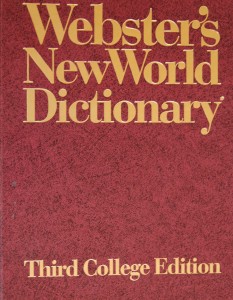
Webster’s Dictionary

National Dictionary Day honors Noah Webster’s birth. Children could participate in the “Dictionary Olympics.” One event could be the fastest finder of words. Another event could be the best user of guide words. Or…since many people today use online dictionaries, children could use a dictionary in book form. They could discuss what Noah Webster would think if he could see online dictionaries today.

Oct 162025
 
John Brown

John Brown

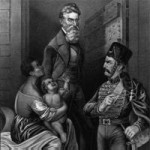
John Brown and his party raided the United States arsenal in Harper’s Ferry, West Virginia in 1859. Their goal was to end slavery. He and 21 followers captured 60 citizens and the arsenal at Harper’s Ferry. However, the military quickly responded. Within days he was captured, and he was hanged on December 2, 1859. Children could learn more at: John Brown.

Oct 162025
 

Joseph Bruchac (born Greenfield Center, New York, 1942) has written more than 120 books. His ethnicity includes a Native American background, and his works focus on the “indigenous peoples of America.” One of his books is Between Earth and Sky. Children can visit his website at: Joseph Bruchac.

Jonathan Dayton (born Elizabeth, New Jersey, October 16, 1760; died Elizabeth, New Jersey, October 9, 1824) represented New Jersey at the Constitutional Convention. He was the youngest member. Later, he invested in land in what is today Ohio. The city of Dayton is named after him. Children could learn more at: Jonathan Dayton.

Eugene Gladstone O’Neill (born New York, New York, 1888; died Boston, Massachusetts, November 27, 1953) was an American playwright. He received the 1936 Nobel Prize for Literature and four Pulitzer Prizes for his plays. One of those plays is Long Day’s Journey into Night. Children can learn more at: O’Neill.

Noah Webster

Noah Webster

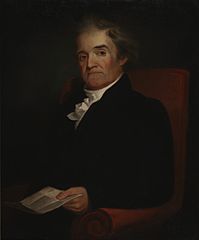
Noah Webster (born West Hartford, Connecticut, 1758; died New Haven, Connecticut, May 28, 1843) was a teacher and a writer. He was also a lexicographer, compiling one of the first American dictionaries, Webster’s Dictionary.

Oscar Wilde (born Fingal O’Flahertie Wills Wilde in Dublin, Ireland, 1854; died Paris, France, November 30, 1900) was a playwright and poet. One of his most important works was The Importance of Being Earnest. Older children can read many of his works at: Project Gutenberg.

Oct 172025
 

United Nations Flag

International Day for the Eradication of Poverty is sponsored by the United Nations. The event can be traced back to 1987 when a group met in Paris to see what could be done to eliminate poverty. This year’s theme is “Dignity for All in Practice.” Children can learn more at: End Poverty.