Fluoridation process was added to drinking water in 1945 in Grand Rapids, Michigan. Idea: Children could find out how fluoride makes their teeth stronger. Children can learn more at: http://ilikemyteeth.org/fluoridation/.
Jan 252026
Fluoridation process was added to drinking water in 1945 in Grand Rapids, Michigan. Idea: Children could find out how fluoride makes their teeth stronger. Children can learn more at: http://ilikemyteeth.org/fluoridation/.
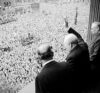
Winston Churchill Waving to the Ecstatic Crowd
V-E Day was celebrated in 1945. Germany surrendered to the Allied Forces, ending World War II in Europe. A surrender document was signed in Reims, France, and became effective one minute past midnight on May 9, 1945. President Harry Truman, whose birthday is today, signed the agreement. He stated that the agreement was a wonderful birthday present. Children could view an excellent multimedia presentation at: V-E Day.
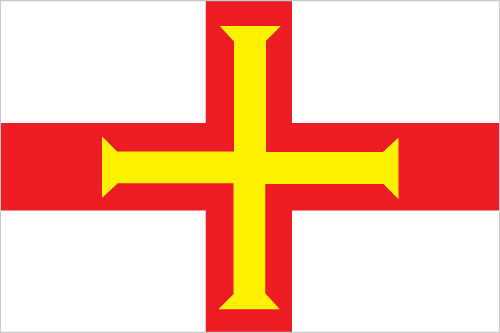
Flag of Guernsey
Guernsey celebrates Liberation Day, the day in 1945 that the populace was freed from Nazi Germany. The islands, located in the English Channel, are a British Crown Dependency but not part of the United Kingdom. Home to 65,000 people, the islands are about half the size of Washington, DC. Saint Peter Port is the capital, and the economy depends on tourism and banking. Older children can learn more at: Guernsey.
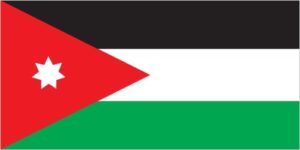
Flag of Jordan
Jordan celebrates Independence Day. This Middle Eastern country became free of a League of Nations mandate by British occupation in 1946 and adopted a monarchy. According to the CIA World Factbook, Jordan is a bit smaller than Indiana. Mostly a desert country, Jordan needs water and oil. It exports clothing. About 6.4 million people live in Jordan. Amman is the capital.
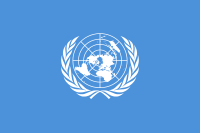
United Nations Flag
United Nations Charter was signed by fifty nations in San Francisco, California, in 1945. The United Nations replaced the faltering League of Nations. Now 193 members belong to the United Nations. Children could see the list of countries now belonging to the United Nations at: https://www.un.org/en/about-us/member-states.
Atomic bomb was dropped on Hiroshima in 1945. The Enola Gay, a B-29 bomber, dropped the bomb that immediately killed 70,000 to 80,000 people. Within four months another 90,000 to 140,000 people died from radiation sickness and other complications of the atomic bomb. The United States dropped an atomic bomb on Nagasaki on August 15, 1945. The Japanese informally surrendered on August 15, 1945 and formally surrendered on September 2, 1945. Older students could read Hiroshima by John Hersey. The book follows several Japanese citizens after the bomb drop and then about 40 years later.
Atomic bomb was dropped on Nagasaki, Japan, in 1945. Approximately 70,000 people died, and more than half of the city lay in ruins. The United States had dropped the first atomic bomb on Hiroshima three days earlier on August 6, 1945. The Japanese informally surrendered on August 15, 1945, and formally surrendered on September 2, 1945.
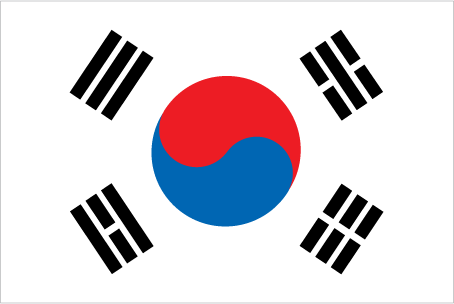
Flag of South Korea
South Korea celebrates Liberation Day. In 1945 it became free of Japanese rule. Its area is slightly larger than the area of Indiana, and mountains and hills cover the northwestern portion while a coastal plain covers the southeastern portion. Almost 49 million people live there, and Seoul is the capital.
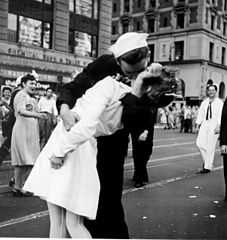
Kissing the War Goodbye
World War II informally ended in 1945. When President Truman proclaimed that the Japanese had surrendered, people rejoiced around the world. The official surrender took place on September 2, 1945, in Tokyo Bay aboard the USS Missouri. Idea: Children could read 500 Facts World War II History for Kids, written by Kelly Milner Halls and illustrated by Katy Dockrill. Then they could make a timeline of World War II.
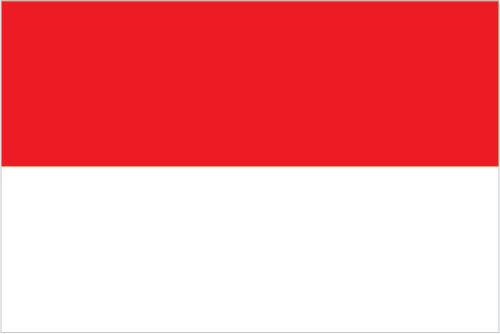
Flag of Indonesia
Indonesia celebrates Independence Day. It became free from Dutch control in 1945. About 13,700 islands comprise this archipelago, located between Asia and Australia. The total area of the islands is about three times the size of Texas. Over 251 million people live in Indonesia, making it the fourth most populous country. Jakarta is the capital. Idea: Indonesia grows cassava. Children could find out more about this crop.