Jan 212025
 

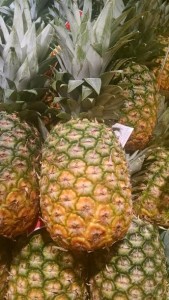
Pineapples

Pineapple was brought to Hawaii for cultivation in 1813. According to some sources, Don Francisco de Paula y Marin, Spanish adviser to King Kamehamaha I, brought the first pineapples to the islands. Pineapple plantations became common. However, the pineapple really became popular when canning processes allowed preserved pineapple to reach the mainland. By 1930 nine million cases of pineapple were exported. In 1955 pineapple production peaked at 76,700 acres. Today pineapple is not as important to the economy of Hawaii. Pineapples are grown in other countries, including the Philippines, Thailand, and Costa Rica. Idea: Children could prepare and eat fresh pineapple. They could also find out how pineapples are grown.
Jan 212025
 
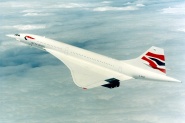
Concorde

Concorde

Concorde flew for the first time in 1976. A British company and a French company formed a joint cooperation to fund and build 20 Concorde planes. The planes mainly flew from London and Paris to New York and Washington, DC. Flights were expensive, but passengers arrived at their destinations in less than half the usual flight time. Due to less travel after September 11, 2001, and increased costs, the planes were retired on November 26, 2003.

Jan 212025
 

John Fitch (born East Windsor, Connecticut, 1743; died Bardstown, Kentucky, July 2, 1798) was an inventor and clock maker. He actually invented the steamboat, and he obtained American and French patents for it in 1791. Ships could then travel without concerns about sails and wind. Idea: Children could discover how steam could propel a ship and learn more about Fitch at: John Fitch.


Jan 222025
 

Postal service between Boston and New York was started in 1673. The monthly service was the first of its kind in the colonies. Prior to that, some people boarding ships would act as couriers for packages and letters. Over land, people would ask ministers or merchants to transport important packages. Sometimes letters would move from tavern to tavern. There was no guarantee a letter would reach its recipient. The Postal Road followed Native American trails and ultimately became the major thoroughfares for the region. Mile posts were set up along the road. Children could participate in a wide variety of outstanding activities at: Postal Service.

Jan 222025
 

World’s biggest cheese was made in Wisconsin in 1964. Using 170,000 quarts of milk from 16,000 cows, the Wisconsin Cheese Foundation made a block of cheddar cheese 14 ½ feet by 6 ½ feet by 5 ½ feet. It weighed 34,591 pounds. The cheese was driven from Wisconsin to New York to be part of the World’s Fair. The cheese was later eaten. Children could sample some cheddar and other types of cheeses. Children can learn more and watch a great video at: Cheese Making.

Jan 222025
 

Andre Ampere (born Lyons, France, 1775; died Marseilles, France, June 10, 1836) was a physicist specializing in electricity. The ampere, a measure of electrical current, is named for him. Children could conduct some great electricity experiments by following the directions at: http://www.energizer.com/science-center.

Jerry Craft (born New York, New York, 1963) is a cartoonist (Mama’s Boyz) and a children’s book author/illustrator. He earned the 2020 Newbery Medal and the 2020 Coretta Scott King Author Medal for his graphic novel New Kid. Children can learn more at: Jerry Craft.

Blair Lent (born Boston, Massachusetts, 1930; died Medford, Massachusetts, January 27, 2009) wrote and illustrated children’s books. He received a 1965 Caldecott Honor Award for The Wave, a 1969 Caldecott Honor Award for Why the Sun and the Moon Live in the Sky: An African Folktale, and the 1973 Caldecott Medal for The Funny Little Woman.  Perhaps he is most famous for illustrating Arlene Mosel’s Tikki Tikki Tembo. He also wrote and illustrated Molasses Flood, a story about the Boston Molasses Disaster, which occurred on January 15, 1919. Children could learn more at: Blair Lent.

Brian Wildsmith (born Penistone, England, 1930; died Grasse, France, August 31, 2016) illustrated at least thirteen books for children. His first book, ABC, received the Kate Greenaway Award in 1963.

Jan 232025
 

National Pie Day is celebrated through tastings and competitions. Children could celebrate the day by first listing all the types of pies that they can think of (flavors of fruit pies, cream pies, pot pies, pizza pies). Then they could make a simple “pie” by filling a pie pan with chunky applesauce and covering with a mixture of 1 stick melted butter, 1 cup brown sugar, 1 cup flour, 1 cup uncooked oatmeal, and 1 tablespoon cinnamon. The “pie” can be baked or microwaved.

Jan 232025
 

Presidential Election Day Act was passed by Congress in 1845. It established the presidential election day as the Tuesday after the first Monday in November. Prior to this act, states established their own day for voting. The days varied from early November to early December, leading to chaos, voter intimidation, and fraud.

Jan 232025
 
File:Elizabeth Blackwell.jpg

Elizabeth Blackwell

Elizabeth Blackwell became the first woman to receive a medical doctor’s degree in the United States in 1849. Children could learn more about Blackwell at: Elizabeth Blackwell. They could read Who Says Women Can’t Be Doctors? The Story of Elizabeth Blackwell, written by Tanya Lee Stone and illustrated by Marjorie Priceman. They could also interview an expert to find out how someone becomes a doctor.