Italy celebrates St. Catherine of Siena Feast Day. St. Catherine of Siena, the patron saint of Italy, was born in 1347. She died April 29, 1380.

Italy celebrates St. Catherine of Siena Feast Day. St. Catherine of Siena, the patron saint of Italy, was born in 1347. She died April 29, 1380.
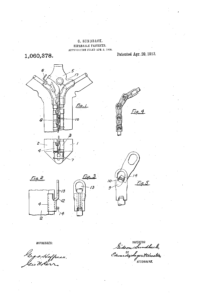
Zipper Patent
Zipper was patented by Gideon Sundback of Hoboken, New Jersey, in 1913. However, it was not called a zipper until 1922 when the B. F. Goodrich Company used the term to describe fasteners on its galoshes. Prior to 1922, it was called a “separable fastener.” Idea: Children could make a list of non-clothing items that have zippers. For example, some school children’s binders have zippers. They could view the patent at: Zipper Patent.
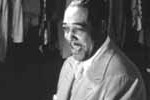
Duke Ellington
Duke Ellington (born Edward Kennedy Ellington in Washington, DC, 1899; died New York, New York, May 24, 1974) was a jazz pianist, bandleader, and composer. He wrote over 2,000 compositions, including some for musicals, ballet, opera, and movies. He performed over 20,000 times in 65 countries with his jazz big band. One of his most famous pieces is It Don’t Mean a Thing (If It Ain’t Got That Swing). Children can learn more at: Duke Ellington.
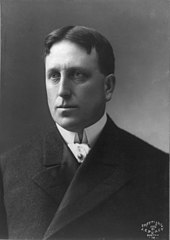
William Randolph Hearst
William Randolph Hearst (born San Francisco, California, 1863; died Beverly Hills, California, August 14, 1951) became a media baron. At one time he owned 25 newspapers, several magazines, and a newsreel company. He is also remembered for building San Simeon, a huge estate in California. It had, among other luxuries, a zoo and an airport.
Zubin Mehta (born Bombay, India, 1936) is a renowned conductor. He received India’s highest award, the Padma Bhusan (Order of the Lotus) in 1967.
Ron Roy (born Hartford, Connecticut, 1940) has written over 60 books for children. He is best known for his A to Z mystery series and his Capital Mystery series. Children can visit his website at: Ron Roy.
Jill Paton Walsh (born London, England, 1937; died Huntington, England, October 18, 2020) wrote books for both children and adults. Her children’s books, numbering around 25, include The Dolphin Crossing and Fireweed.
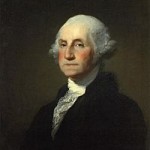
George Washington
George Washington was inaugurated President of the United States in 1789 in New York City. Idea: Present Presidents are inaugurated on January 20 in Washington, DC. Children could try to figure out why George Washington’s inauguration was in April (instead of January) and in New York City (instead of Washington, DC). They could also read a transcript of his speech at: http://www.archives.gov/exhibits/american_originals/inaugtxt.html.
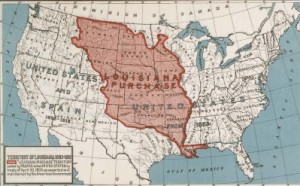
Louisiana Purchase
Louisiana Purchase was finalized in 1803, doubling the size of the United States. The agreement included all the land west of the Mississippi to the continental divide of the Rocky Mountains. Children could learn more at: Louisiana Purchase.
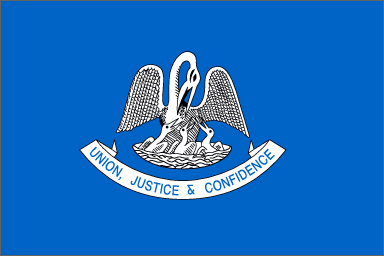
Louisiana State Flag
Louisiana became the eighteenth state of the United States in 1812. It ranks thirty-first in area and twenty-first in population. The state was named after King Louis XIV of France, and Baton Rouge is the capital. Children could visit a website at: Louisiana. Idea: New Orleans, a major city in Louisiana, hosts Mardi Gras every year. Mardi Gras, meaning “Fat Tuesday,” is a big tradition held the day before Ash Wednesday. Parades, parties, and feasts mark the day. Consider having a Mardi Gras celebration in the classroom.

Mary Dimmick Harrison
Mary Scott Lord Dimmick Harrison (born Honesdale, Pennsylvania, 1858; died New York, New York, January 5, 1948) was the second wife of Benjamin Harrison, twenty-third president of the United States. She married Harrison after he left the White House.
Dorothy Hinshaw Patent (born Rochester, Minnesota, 1940) has written over 100 nonfiction books for children. Her books include Big Cats and The Right Dog for the Job. Children could visit her website at: Dorothy Henshaw Patent.
Michael J. Smith (born Beaufort, North Carolina, 1945; died January 28, 1986) was captain of the Challenger, the space shuttle that disintegrated in 1986. Children could learn more at: Michael J. Smith.
May Day is celebrated throughout the world. Spring festivities occur in many parts of America. Maypole dancing is somewhat popular in  Europe, especially in England. However, the Puritans felt the celebration was pagan, and they refused to allow the custom to grow in the United States.
Save the Rhino Day is today. At least five species of rhinoceros exist; all are endangered. People kill them for their horns. However, the horns are nothing  but chunks of keratin, the material found in hair and nails. A rhino can grow to a length of fourteen feet and weigh as much as four tons. These animals are shortsighted but have keen senses of smell and hearing. All rhinos are herbivores but will attack people if they feel especially threatened. Ancestors of present-day rhinos date back to the prehistoric times. Their thick skins act as armor to protect them from enemies. Idea: Cut lengths of paper 14 feet long, the length of a rhino. Have children draw rhinos on the paper. Fill the paper with rhino facts students have gleaned from research.

Flag of Marshall Islands
Marshall Islands celebrate Constitution Day. Composed of 1,156 islands, the country is about the size of Washington, DC. Located half-way between Hawaii and Australia, the Marshall Islands depend on coconut products and deep-sea mining to support the economy. About 70,000 people live on the islands, and 31,000 people live in the capital, Majuro. Children can learn more at: Marshall Islands.