celebrateandlearn

Mar 232025
 

Eleanor Cameron (born Winnipeg, Canada, 1912; died Monterey, California, October 11, 1996) wrote about twenty books for children. She is most known for The Wonderful Flight to the Mushroom Planet. Children can learn more at: Eleanor Cameron.

Fannie Merritt Farmer (born Boston, Massachusetts, 1857; died Boston, Massachusetts, January 15, 1915) was a cooking expert. She standardized measurements so that cooking became much easier. She also wrote the Boston Cooking School Cookbook. This book, now known as The Fannie Farmer Cookbook, and its revisions have sold approximately four million copies. Children can view her recipes at: Fannie Farmer Cookbook.

Wernher von Braun (born Wirsitz, Germany, 1912; died Alexandria, Virginia, June 16, 1977) headed teams that developed space rockets.

Mar 242025
 

Robert Koch announced that he had discovered the cause of tuberculosis in 1882. He found that tuberculosis is caused by Mycobacterium tuberculosis. This discovery has prompted today to be World Tuberculosis Day. He received the 1905 Nobel Prize in Physiology or Medicine for his work. Older children could learn more about the disease at: Tuberculosis.

Mar 242025
 
Philippines

Flag of Philippines

The Philippines celebrate Independence Day. In 1934 the United States granted the Philippines its independence. The treaty took effect in 1946. The Philippines had been sold to the United States in 1898 for twenty million dollars. Manila is the capital, and the country was named after Spain’s King Philip II. Over 7,100 islands comprise the country. Children can learn more at: Philippines.

Mar 242025
 

Bill Cleaver (born Hugo, Oklahoma, 1920; died 1981) and his wife Vera wrote sixteen books for children. Their books include Ellen Grae (a 1968 Newbery Honor Book) and Where the Lilies Bloom (a 1970 Newbery Honor Book). Children can learn more at: Bill Cleaver.

Lawrence Ferlinghetti (born Yonkers, New York, 1919; died San Francisco, California, February 22, 2021) was a poet, artist, and social activist. Children can read some of his work at: Ferlinghetti Poetry.

Harry Houdini

Harry Houdini (born Budapest, Hungary, 1874; died Detroit, Michigan, October 31, 1926) was a magician and escape artist. Children could read Harry Houdini for Kids: His Life and Adventures with 21 Magic Tricks and Illusions by Laurie Carlson.

Rufus King (born Scarborough, Maine, 1755; died New York, New York, April 19, 1827) represented Massachusetts at the Constitutional Convention. He tried to write into the Constitution a section forbidding slavery. Later he became one of New York’s U.S. senators. Children could learn more at: Rufus King.

Andrew W. Mellon (born Pittsburgh, Pennsylvania, 1855; died Southampton, New York, August 27, 1937) was a financier. He became very wealthy from investments made mostly in coal and oil. He was Secretary of the Treasury under three presidents. He donated his $25 million art collection and $15 million to a new museum, the National Gallery of Art. Children can visit a website about the National Gallery of Art at: http://nga.gov. They could also find out how he reduced the national debt when he was Secretary of the Treasury.

John Wesley Powell (born Mt. Morris, New York, 1834; died Haven, Maine, September 23, 1902) was the second director of the USGS. He lost most of his right arm at the Battle of Shiloh during the Civil War. He is most famous for his 1869 expedition down the Colorado River and through the Grand Canyon. He also made ethnological studies of the American Indians. Young adults could read his book Canyons of the Colorado at: Project Gutenberg. Younger children could read Down the Colorado: John Wesley Powell, the One-Armed Explorer by Deborah Kogan Ray.


Mar 252025
 

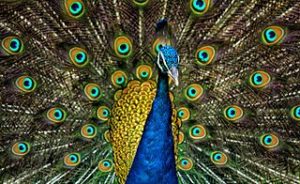
Indian Peacock

National Peacock Day is today! Actually today should be called National Peafowl Day. The term peacock refers to the male peafowl. The term peahen refers to the female peafowl. And so cute – a peachick is a baby peafowl. Three species of peafowl exist: the blue or Indian peafowl, the green peafowl, and the Congo peafowl. Americans are most familiar with the Indian, or blue, peacock. The birds are omnivores, preferring to eat plants, seeds, insects, and even small reptiles and amphibians. The International Union for Conservation of Nature (IUCN) lists the blue peacock of least concern. The IUCN lists the green peacock as an endangered species. Children could learn more at: Peafowl.

Mar 252025
 
Greece

Flag of Greece

Greece celebrates Independence Day. It became free from Turkey’s rule in 1821. The country, composed of a mainland and many small islands, according to the CIA World Factbook, is a bit less than the size of Alabama. Almost 11 million people live in Greece. Athens is the capital. About 15 percent of the economy comes from tourism. Children can learn more at: Greece.

Mar 252025
 
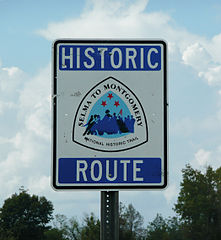
Selma to Montgomery National Historic Trail

Selma to Montgomery National Historic Trail

Civil Rights March started in Selma, Alabama, reached the destination of Montgomery, Alabama, in 1965. Civil Rights marchers, led by Martin Luther King, Jr. began their journey on March 21. They camped overnight on three occasions, and the number of marchers swelled to 25,000. Two unsuccessful marches predated this march. President Johnson had to bring in soldiers and the National Guard to protect the marchers. Outcomes of the march included the 1965 Voting Rights Act and the voting registration of Blacks in unprecedented numbers. The road that the marchers used is now a National Historic Trail. Children could view a map of the march and learn more at: Civil Rights March.