celebrateandlearn

Mar 012025
 
Nebraska State Flag

Nebraska State Flag

Nebraska became the thirty-seventh state of the United States in 1867. The word Nebraska means flat water. Its nickname is the Cornhusker State, and it is a leading producer of corn and cattle. Lincoln is the state capital. Nebraska ranks fifteenth in area and 37th in population. Idea: Children could brainstorm a list of what to do with all those cornhusks.

Mar 012025
 

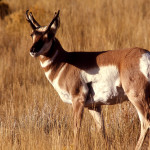
Yellowstone National Park

Yellowstone National Park was established in 1872. It was the country’s first national park and perhaps the world’s first national park. Comprising over 2,200,000 acres, it is mostly in Wyoming, but portions of the park extend into Idaho and Montana. It is known for beautiful vistas, plentiful wildlife, and interesting geothermal features. It became a UNESCO World Heritage Site in 1978. Children could visit an Internet site, especially the portions for children and teachers, at: http://www.nps.gov/yell.

Mar 012025
 
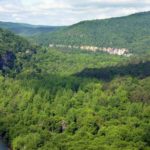
Buffalo National River

Buffalo National River
Credit: National Park Service

Buffalo National River was established in 1972. Located in northern Arkansas, a lower stretch of 135 miles of the Buffalo River is a national river. An upper stretch of eighteen miles is part of the Ozark National Forest. Children could learn more at: Buffalo National River.

Mar 012025
 

Glenn Miller (born Clarinda, Iowa, 1904; disappeared over the English Channel, December 15, 1944) was a bandleader and a composer. His big band sound was especially popular before and during World War II. He was on a flight to Paris to perform for troops when his plane vanished.

Donald “Deke” Slayton (born Sparta, Wisconsin, 1924; died League City, Texas, June 13, 1993) was one of the original seven astronauts. A heart condition kept him from traveling in space for some time, and he became chief of flight operations. In 1971 the heart condition disappeared, and he flew on the last Apollo mission. His crew docked for the first time with a Soviet Soyuz vessel. Children can learn more at: Deke Slayton.

Mar 022025
 

Mount Rainier

Mount Rainier National Park became the country’s fifth national park in 1899. Located in the state of Washington, the park is almost 370 square miles. Mount Rainier, an active volcano, is the jewel of the park. Children can visit a website at: http://www.nps.gov/mora.

Mar 022025
 

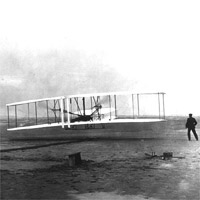
First Flight

Wright Brothers National Memorial was authorized in 1927. Originally designated Kill Devil Hills Memorial, the memorial is located in Kill Devil Hills, North Carolina. The 428-acre site pays tribute to the Wright Brothers’ original four flights on December 17, 1903. Children can learn more at: https://www.nps.gov/wrbr/index.htm.

Mar 022025
 

Leo Dillon (born Brooklyn, New York, 1933; died Brooklyn, New York, May 26, 2012) was a children’s book illustrator with wife Diane Dillon. They illustrated at least 40 picture books, including Why Mosquitoes Buzz in People’s Ears: A West African Tale which received the 1976 Caldecott Medal. The following year they again received the Caldecott Medal for their illustrations in Ashanti to Zulu: African Traditions. They also illustrated at least 30 chapter books. They received the 2002 Virginia Hamilton Award for their body of works. Children can learn more at: Leo Dillon.

Sam Houston (born Rockbridge County, Virginia, 1793; died Huntsville, Texas, July 26, 1863) is one of Texas’s greatest heroes. He defeated General Santa Anna at the Battle of San Jacinto in 1836. He was elected to the United States Senate and served as governor of Texas until 1861 when he declined to swear allegiance to the Confederacy. Children can learn more at: Sam Houston.

Marjorie Blain Parker (born Edmonton, Alberta, Canada, 1960) writes books for children. Her books include Jasper’s Day and When Dads Don’t Grow Up. Children can visit her website at: Marjorie Blain Parker.

Dr. Seuss (born Theodor Seuss Geisel in Springfield, Massachusetts, 1902; died La Jolla, California, September 24, 1991) was an author and an illustrator. He wrote among other works Green Eggs and Ham, published in 1960. His birthday is celebrated by the Read Across America program. Children could visit a website at: http://www.nea.org/readacross. They could also read Imagine That! How Dr. Seuss Wrote the Cat in the Hat, written by Judy Sierra and illustrated by Kevin Hawkes. Finally, they could make and eat green eggs by adding a few drops of green food coloring to scrambled eggs before cooking the eggs.