celebrateandlearn

Oct 122026
 
Equitorial Guinea

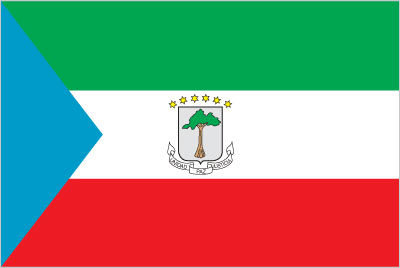
Flag of Equatorial Guinea

Equatorial Guinea celebrates Independence Day. It gained its independence from Spain in 1968. The country consists of a mainland portion of Africa and five islands. The country, slightly larger than the state of Maryland, exports cocoa beans and coffee. About 700,000 people live in Equatorial Guinea, and Malabo is the capital.

Oct 122026
 
Mass Use of Iron Lungs

Mass Use of Iron Lungs

Iron lung was used for the first time in 1928 in a Boston hospital. During the 1940’s and 1950’s, when polio outbreaks were at their worst, some children with polio could not breathe on their own. They were put into iron lungs, and the apparatus used negative pressure to help them breathe. Over 1,200 people needed to use an iron lung. In 1954 mass polio inoculations began to take place. Fewer and fewer people contracted polio, so the need for iron lungs decreased. Today the United States is just about polio-free. Also, newer inventions help people breathe easier and with more mobility. The iron lung is seldom used today.

Oct 122026
 

Edward Bloor (born Trenton, New Jersey, 1950) has written at least sixteen books for children and young adults. He is also a playwright. His works include Tangerine and Crusader.

Luciano Pavarotti (born Modena, Italy, 1935; died Modena, Italy, September 6, 2007) was an opera singer. Idea: Children could listen to a recording of his music.

Oct 132026
 

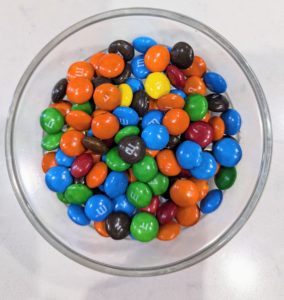
M&M Candies

National M&M Day is today! Also labeled as m&m candies, the candies were first produced in 1941. Today the candies are produced in two locations, Hackettstown, New Jersey, and Cleveland, Tennessee. The candies are now sold in over 100 countries. Idea: Children could make a list of the colors of the candies, and they could also list the variations that are produced today.

Oct 132026
 

Magellan fixed in Atlantis

Magellan plunged into Venus’s surface in 1994. Atlantis, an American shuttle spacecraft, was launched on May 4, 1989. It successfully deployed Magellan, which traveled to Venus to map the planet’s surface. Magellan encountered Venus on August 10, 1990, and began taking high-quality radar images on September 15, 1990. It continued to photograph the planet’s surface, making six complete mapping cycles. Magellan mapped about 98 percent of Venus’s surface. It was commanded to plunge into Venus’s surface, still sending data, on October 13, 1994. Children could learn more at: Magellan.