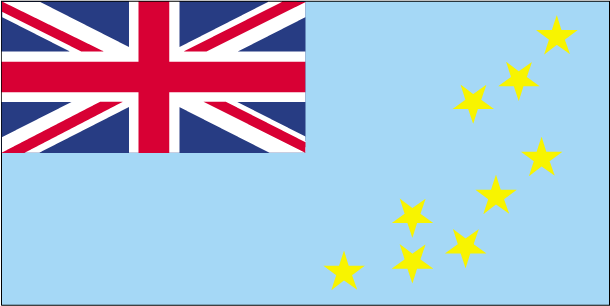
Tuvalu celebrates Independence Day. In 1978 it became an independent country, but it is still part of the British Commonwealth. The fourth smallest country in the world, Tuvalu has an area about the size of 0.1 the area of Washington, DC. Located about halfway between Hawaii and New Zealand, the country’s three islands and six atolls support about 11,000 people. Funafuti is the capital.

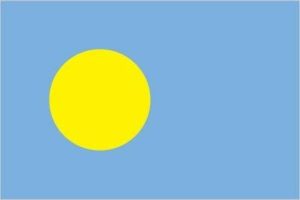
Flag of Palau
Palau Celebrates Independence Day. It became independent of the United States in 1994, although it still has extremely close ties with America. Located in the North Pacific Ocean, this archipelago consists of over 300 islands that can be classified into six groups. In total, the country’s area is about 2.5 times the size of Washington, DC. The climate is tropical, and most islands’ terrain is mountainous. The capital is Ngerulmud, but the largest city is Koror, located on an island of the same name. About 22,000 people reside in Palau. The country has taken a strong ecological stand. It has created the first shark sanctuary, and all sunscreens that cause damage to coral reefs are banned.

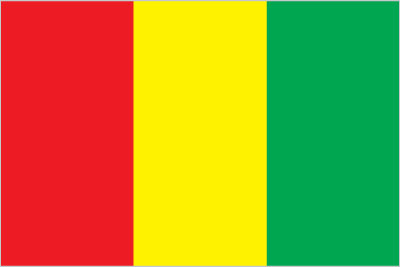
Flag of Guinea
Guinea celebrates Independence Day. France relinquished control in 1958. Located in western Africa, the land was the site of ancient caravan routes. The country is slightly bigger than the state of Utah, and Conakry is the capital. About eleven million people live in Guinea.

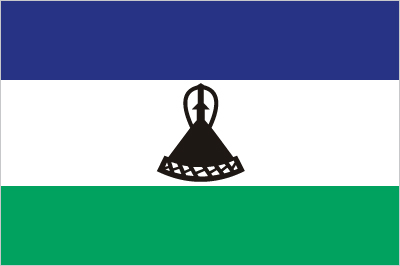
Flag of Lesotho
Lesotho celebrates Independence Day. It became free from British rule in 1966. The country, about the size of Maryland, is entirely surrounded by South Africa. Almost two million people live in Lesotho, and Maseru is the capital. Tourism is a major industry. Older children can learn more at: Lesotho.

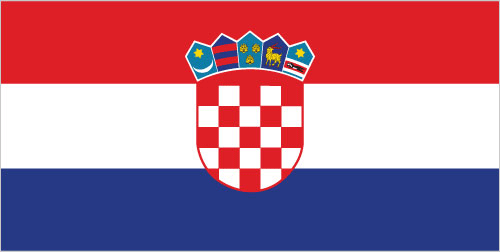
Flag of Croatia
Croatia celebrates Independence Day. In 1991 Croatia’s Parliament voted to sever ties to Yugoslavia. Bordering the Adriatic Sea, the country is slightly smaller than the state of West Virginia. About 4.5 million people live in Croatia, and Zagreb is the capital. Children could learn more at: Croatia.

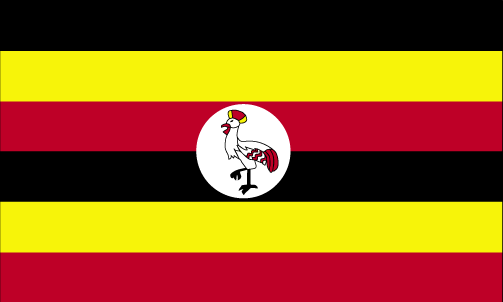
Flag of Uganda
Uganda celebrates Independence Day. This African land-locked country became free from British rule in 1962. Slightly smaller than the state of Oregon, Uganda is home to almost 35 million people. Farmers comprise about 80 percent of the population, and coffee is one of its biggest exports. The capital is Kampala. Children can learn more at: Uganda.

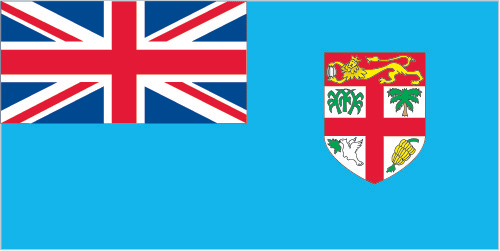
Flag of Fiji
Fiji celebrates Independence Day. The United Kingdom gave up custody of the three hundred islands in 1970. The islands, located in the South Pacific, depend on agriculture and tourism for income. The total area of Fiji is about the area of the state of New Jersey. Around 900,000 people live there. Suva is the capital. Older children could learn more at: Fiji.

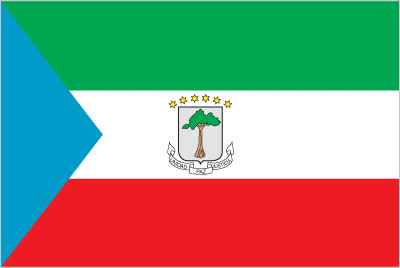
Flag of Equatorial Guinea
Equatorial Guinea celebrates Independence Day. It gained its independence from Spain in 1968. The country consists of a mainland portion of Africa and five islands. The country, slightly larger than the state of Maryland, exports cocoa beans and coffee. About 700,000 people live in Equatorial Guinea, and Malabo is the capital.

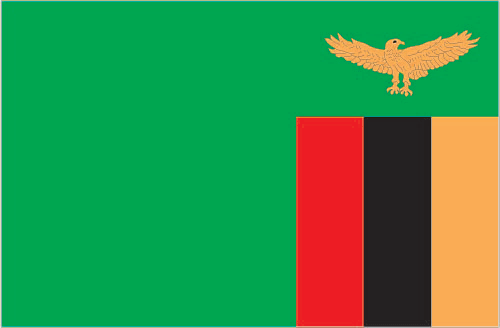
Flag of Zambia
Zambia celebrates Independence Day. It was declared free of British control in 1964. The country, larger than Texas, is located in southern, central Africa. One of Zambia’s major industries is copper mining and processing. Over fourteen million people live in Zambia, and Lusaka is the capital.

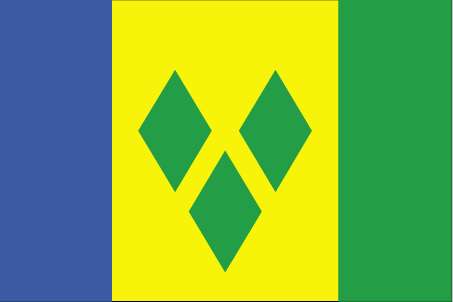
Flag of Saint Vincent and the Grenadines
Saint Vincent and the Grenadines celebrate Independence Day. Located in the Caribbean, the one large island of St. Vincent and the fifty smaller Grenadines islands gained their freedom from the United Kingdom in 1979. However, they are still part of the British Commonwealth. The total area of the country is about twice the size of Washington, DC. Banana production and tourism provide many of the local jobs. About 103,000 people live there, and Kingstown is the capital.