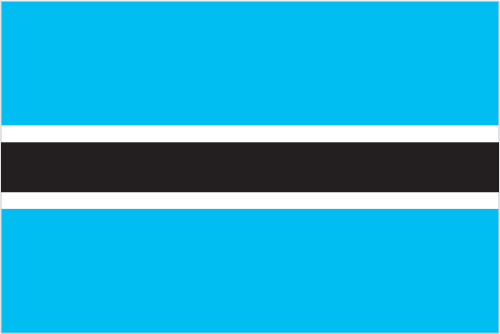
Botswana celebrates Botswana Day, the day in 1966 when the United Kingdom gave up control of the country. This landlocked country in southern Africa is fairly prosperous. It is a leading producer of diamonds. Gold has also been found in the country. Because large herds of game still roam the country, tourism also brings in a great deal of revenue. Botswana, home to two million people, is a bit smaller than Texas. Gaborone is the capital. Children can learn more at: Botswana.
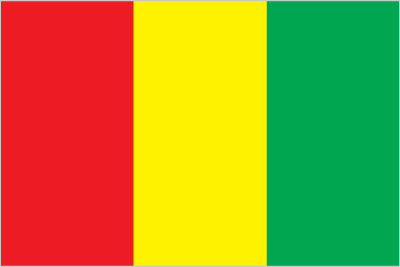
Flag of Guinea
Guinea celebrates Independence Day. France relinquished control in 1958. Located in western Africa, the land was the site of ancient caravan routes. The country is slightly bigger than the state of Utah, and Conakry is the capital. About eleven million people live in Guinea.

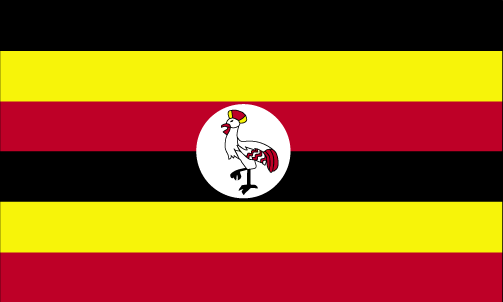
Flag of Uganda
Uganda celebrates Independence Day. This African land-locked country became free from British rule in 1962. Slightly smaller than the state of Oregon, Uganda is home to almost 35 million people. Farmers comprise about 80 percent of the population, and coffee is one of its biggest exports. The capital is Kampala. Children can learn more at: Uganda.

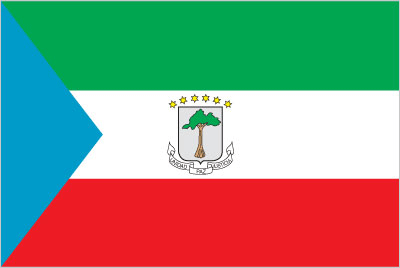
Flag of Equatorial Guinea
Equatorial Guinea celebrates Independence Day. It gained its independence from Spain in 1968. The country consists of a mainland portion of Africa and five islands. The country, slightly larger than the state of Maryland, exports cocoa beans and coffee. About 700,000 people live in Equatorial Guinea, and Malabo is the capital.

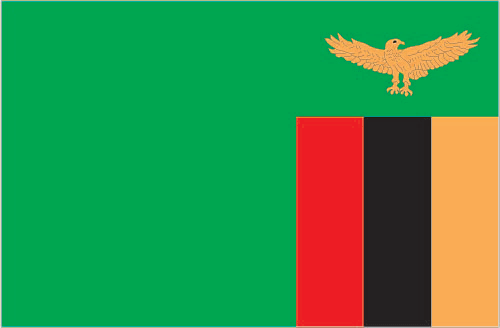
Flag of Zambia
Zambia celebrates Independence Day. It was declared free of British control in 1964. The country, larger than Texas, is located in southern, central Africa. One of Zambia’s major industries is copper mining and processing. Over fourteen million people live in Zambia, and Lusaka is the capital.

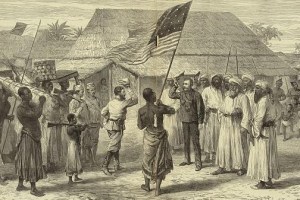
Stanley found Livingstone
Henry M. Stanley in 1871 found David Livingstone, the missing missionary, in Africa. He asked the famous question, “Dr. Livingstone, I presume?” Dr. Livingstone, missing for six years, was trying to find the source of the Nile. Most people assumed he had died. Stanley was sent by the New York Herald to find Livingstone. After their meeting Livingstone remained in Africa but died about 2.5 years later. Older children can read books by Livingstone and by Stanley at: Project Gutenberg.

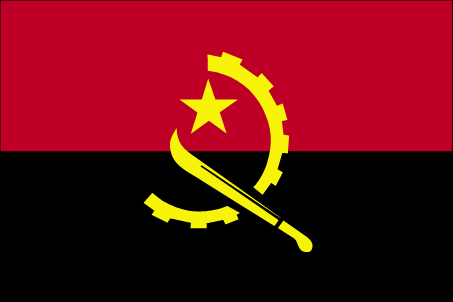
Flag of Angola
Angola celebrates Independence Day. Portugal relinquished its claims to Angola in 1975. The country, located in southwestern Africa, supports an economy that is about 85 percent agricultural. The country’s area is slightly less than twice the size of Texas. About 18.6 million people live in Angola, and Luanda is the country’s capital.
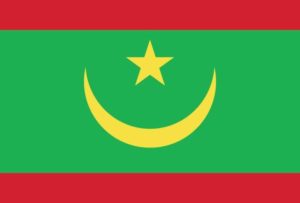
Mauritania celebrates Independence Day. It gained its freedom from France in 1960. The country, located in northwestern Africa, is larger than the state of Texas. Over three million people live in Mauritania, and the capital is Nouakchott. Located in the Sahara Desert, the country derives most of its income from livestock, iron ore, and gypsum.
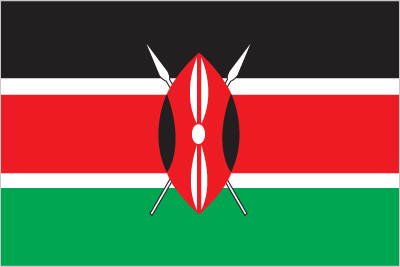
Flag of Kenya
Kenya celebrates Jamhuri Day. Kenya gained its independence from the United Kingdom in 1963. Today is also its Constitution Day, established a year later in 1964. This east African country, located along the equator, is slightly larger than the state of California. More than 40 million people live in this tropical country; Nairobi is the capital. Kenya exports coffee, tea and petroleum. Kenya’s coffee is quite strong. Children could find out how coffee is grown and harvested. They could also learn more at: Kenya.

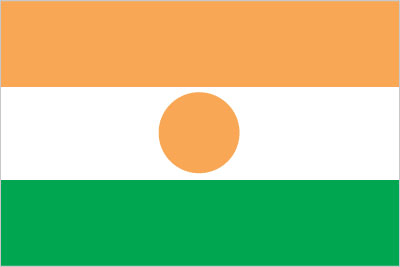
Flag of Niger
Niger celebrates Republic Day. It became a republic in 1958 before it became free of French control in 1960. This landlocked country, located in north central Africa, is a bit less than twice the size of Texas. Niger is mostly covered with deserts and mountains. Almost seventeen million people live in Niger, and Niamey is the capital.