World Food Day marks the founding of the Food and Agriculture Organization in 1945. The organization is part of the United Nations. This year’s theme is Safe Food Today for a Healthy Tomorrow. Children could visit a website at: World Food Day.

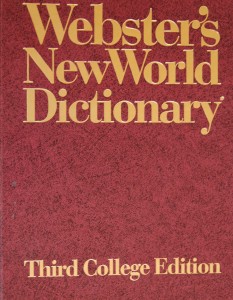
Webster’s Dictionary
National Dictionary Day honors Noah Webster’s birth. Children could participate in the “Dictionary Olympics.” One event could be the fastest finder of words. Another event could be the best user of guide words. Or…since many people today use online dictionaries, children could use a dictionary in book form. They could discuss what Noah Webster would think if he could see online dictionaries today.

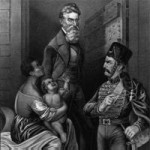
John Brown
John Brown and his party raided the United States arsenal in Harper’s Ferry, West Virginia in 1859. Their goal was to end slavery. He and 21 followers captured 60 citizens and the arsenal at Harper’s Ferry. However, the military quickly responded. Within days he was captured, and he was hanged on December 2, 1859. Children could learn more at: John Brown.
Million Man March occurred in 1995. African-American men joined together in Washington, DC, for a “holy day of atonement and reconciliation.”
Joseph Bruchac (born Greenfield Center, New York, 1942) has written more than 120 books. His ethnicity includes a Native American background, and his works focus on the “indigenous peoples of America.” One of his books is Between Earth and Sky. Children can visit his website at: Joseph Bruchac.
Jonathan Dayton (born Elizabeth, New Jersey, October 16, 1760; died Elizabeth, New Jersey, October 9, 1824) represented New Jersey at the Constitutional Convention. He was the youngest member. Later, he invested in land in what is today Ohio. The city of Dayton is named after him. Children could learn more at: Jonathan Dayton.
Eugene Gladstone O’Neill (born New York, New York, 1888; died Boston, Massachusetts, November 27, 1953) was an American playwright. He received the 1936 Nobel Prize for Literature and four Pulitzer Prizes for his plays. One of those plays is Long Day’s Journey into Night. Children can learn more at: O’Neill.
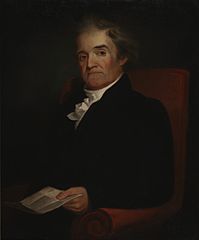
Noah Webster
Noah Webster (born West Hartford, Connecticut, 1758; died New Haven, Connecticut, May 28, 1843) was a teacher and a writer. He was also a lexicographer, compiling one of the first American dictionaries, Webster’s Dictionary.
Oscar Wilde (born Fingal O’Flahertie Wills Wilde in Dublin, Ireland, 1854; died Paris, France, November 30, 1900) was a playwright and poet. One of his most important works was The Importance of Being Earnest. Older children can read many of his works at: Project Gutenberg.

International Archaeology Day is today! The day is celebrated on the third Saturday in October. Created by the Archaeological Institute of America, the day promotes knowledge of our many archaeological sites. The National Park Service is one of the day’s sponsors. Children could learn more at: International Archaeology Day.

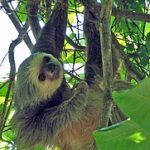
Hoffman’s Two-Toed Sloth
International Sloth Day is today! Celebrated on the third Saturday in October, the day raises awareness of sloths and their importance to the environment. Six types of sloth exist today; some species are three-toed and some are two-toed. All six types eat leaves of the group Cecropia. Two-toed sloths are omnivorous, eating fruits, carrion, and insects for example. Three-toed sloths are herbivorous. All living species of sloths today live in trees, but ancient, extinct ground-dwelling sloths could be the size of elephants. Interesting fact: about every eight days sloths slowly climb down their trees to pee and poop. Then they cover up their droppings and climb back up the trees.

United Nations Flag
International Day for the Eradication of Poverty is sponsored by the United Nations. The event can be traced back to 1987 when a group met in Paris to see what could be done to eliminate poverty. This year’s theme is “Dignity for All in Practice.” Children can learn more at: End Poverty.
Museum of Modern Art, in New York City, hung Matisse’s Le Bateau upside down in 1961. The mistake was not discovered until December 3, 1961.
United States population exceeded 300 million in 2006. Children can view some fascinating facts about the United States population and the world population at: http://www.census.gov/popclock/.