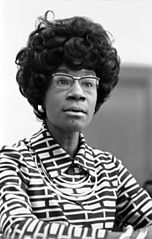
Shirley Chisholm
Shirley Chisholm (born Brooklyn, New York, 1924; died Ormond Beach, Florida, January 1, 2005) was the first African American woman elected to Congress. She represented New York’s 12th District from 1969 to 1983. Children can read Shirley Chisholm: The Story of the First Black Woman in Congress, by Alicia D. Williams. Children can also learn more at: Shirley Chisholm.
Sir Winston Leonard Spencer Churchill (born Oxfordshire, England, 1874; died London, England, January 24, 1965) was the Prime Minister of England during World War II. Children could read more about Churchill by exploring an interesting timeline at: Winston Churchill. How did he keep Great Britain functioning during the war?
Dick Clark (born Mt. Vernon, New York, 1924; died Santa Monica, California, April 12, 2012) was a television personality. He hosted American Bandstand.
William Livingston (born Albany, New York, 1723: died Elizabeth, New Jersey, July 25, 1790) represented New Jersey at the Constitutional Convention. A wealthy lawyer, he served in the Continental Congress and headed New Jersey’s militiamen during the Revolutionary War. He was also elected New Jersey’s governor in 1776. The British placed a bounty on him, and for about six years he was constantly on the move. Following the war, he tried to eliminate slavery. Older children could learn more at: William Livingston.
Lucy Maud Montgomery (born New London, Prince Edward Island, Canada, 1874; died Toronto, Canada, April 24, 1952) wrote 20 novels, over 500 short stories, and at least 500 poems. Her most famous work is probably Anne of Green Gables. She also wrote Emily’s Quest. Children can read her works at: Project Gutenberg. Children can learn more at: Lucy Maud Montgomery.
Roland Smith (born Portland, Oregon, 1951) has written close to 50 books for children and young adults. His works include In the Forest with the Elephants and Eruptions. Children can learn more at: Roland Smith.
Jonathan Swift (born Dublin, Ireland, 1667; died Dublin, Ireland, October 19, 1745) was an author and a satirist. One of his most famous works is Gulliver’s Travels, published in 1726. Children can read his works at: Project Gutenberg.
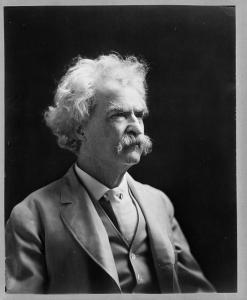
Mark Twain
Mark Twain (born Samuel Langhorne Clemens in Florida, Missouri, 1835; died Redding, Connecticut, April 21, 1910) was a writer. His works include The Adventures of Tom Sawyer and The Prince and the Pauper. His birth and death coincide with an astronomical event. Students could see if they can find the event. Children can also read his works at: Project Gutenberg. Children can learn more at: Mark Twain.
Margot Zemach (born Los Angeles, California, 1931; died Berkeley, California, May 21, 1989) wrote/illustrated over 40 children’s books. She often collaborated with her husband, Harve Ficshstrom, who used the pseudonym Harve Zemach. She won the 1974 Caldecott Medal for Duffy and the Devil. She earned two Caldecott Honor Awards: one in 1970 for The Judge: An Untrue Tale and one in 1978 for It Could Always Be Worse: A Yiddish Folk Tale.
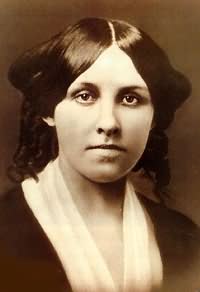
 Nellie Tayloe Ross (born Saint Joseph, Missouri, 1876; died Washington, DC, December 19, 1977) was the first woman governor of a state in the United States. After her husband, the governor of Wyoming, died, she completed his term. Then she campaigned and won her term. She was not reelected, but she became director of the United States Mint in 1933. She remained at that post for twenty years. Children could learn more at:
  Continental Congress. He was secretary as the colonial representatives drafted and voted on the Declaration of Independence. Many historians believe that only John Hancock and he signed the Declaration of Independence on July 4, 1776. He recorded government proceedings for the next fifteen years and collected thousands of documents. He gave all the records to the government in 1789.