Aug 082025
 

Lynne Cox in 1987 became the first person to swim from the United States to the Soviet Union across the Bering Strait. She took only 2 hours 5 minutes to complete the swim. The water temperature averaged about 43 degrees Fahrenheit. Both United States President Ronald Reagan and Soviet Union President Mikhail Gorbachev congratulated her on her success. She has also had swimming adventures in Antarctica, the English Channel, and the Straits of Magellan. Older children can learn more by clicking here.

Aug 082025
 

H. L. Hunley was raised from the ocean floor in 2000. The Confederate submarine was launched in July 1863. It sank soon after it sank the USS Housatonic on February 17, 1864, in Charleston Harbor. All eight members of the crew died. Experts are still trying to decide how and why the Hunley sank. Young adults could learn a great deal more at: H. L. Hunley.

Aug 082025
 
Genesis

Genesis

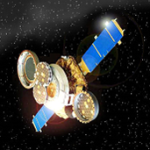
Genesis was launched in 2001. The space vehicle traveled to the sun and gathered particles of the sun on its way. A capsule then turned around and returned to earth. It crash landed (the drogue parachute failed to deploy) in Utah on September 8, 2004. Some of the samples were contaminated by earth soil on impact, but many collectors were intact. Scientists used the data to learn more about the sun’s composition and history. Children could learn more by clicking Genesis Spacecraft.

Aug 082025
 

Matthew A. Henson

Matthew A. Henson (born Charles County, Maryland, 1866; died New York, New York, March 9, 1955) was an African-American explorer. He was hired to be Robert E. Peary’s valet. The two explored the Arctic region. He described his adventures in A Negro Explorer at the North Pole. Children can read the book at: Project Gutenberg.

Marjorie Kinnan Rawlings (born Washington, DC, 1896; died Saint Augustine, Florida, December 14, 1953) wrote at least eleven books and at least twenty short stories for children. Her book The Yearling received the 1939 Pulitzer Prize for fiction, and The Secret River earned a 1956 Newbery Honor Award.

Aug 092025
 

Webster-Ashburton Treaty was finalized in 1842. United States Secretary of State Daniel Webster and British representative Lord Ashburton negotiated the eastern border between the United States and Canada. The treaty also allowed shared use of the Great Lakes. Older children can read a transcript of the document at: Treaty.

Aug 092025
 
Lassen Volcanic National Park

Lassen Volcanic National Park

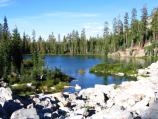
Lassen Volcanic National Park was created in California in 1916. Lassen Peak and Cinder Cone National Monument, founded in 1907, and other lands were united to form one national park. The park contains all four types of volcanoes (lava, cinder, composite, and shield). Children could visit the park’s  website at: Lassen Volcanic National Park. They could learn about volcanoes in general at: Volcanoes. Then they could draw illustrations of the four different kinds of volcanoes.

Aug 092025
 
Jesse Owens

Jesse Owens

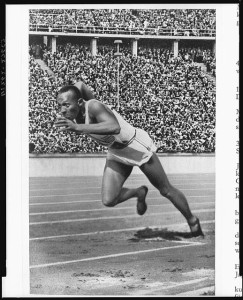
Jesse Owens won the last of his four gold medals in the 1936 Olympic Games. On August 3 he won the 100 meter sprint. On August 4 he won the long jump competition. On August 5 he finished first in the 200 meter sprint, and on August 9 he was part of the 4 X 100 sprint relay that came in first. Children could read You Should Meet Jesse Owens, written by Laurie Calkhoven and illustrated by Elizabet Vulkovik.

Aug 092025
 

Atomic bomb was dropped on Nagasaki, Japan, in 1945. Approximately 70,000 people died, and more than half of the city lay in ruins. The United States had dropped the first atomic bomb on Hiroshima three days earlier on August 6, 1945. The Japanese informally surrendered on August 15, 1945, and formally surrendered on September 2, 1945.