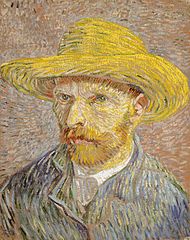
Pearl Bailey (born Newport News, Virginia, 1918; died Philadelphia, Pennsylvania, August 17, 1990) was a singer. She was awarded the Presidential Medal of Freedom in 1988.

Lou Henry Hoover
Lou Henry Hoover (born Waterloo, Iowa, 1875; died New York, New York, January 7, 1944) was America’s First Lady from March 4, 1929 to March 4, 1933. She was the wife of Herbert Hoover, thirty-first president of the United States. She was a geology and mining major at Stanford University when they met. She was First Lady during the Great Depression, and she often paid for White House social events with her own money. Children could visit a website at: Lou Henry Hoover.
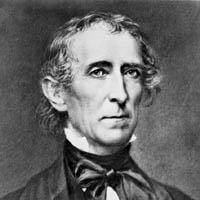 John Tyler (born Charles City County, Virginia, 1790; died Richmond, Virginia, January 18, 1862) was the tenth president (1841-1845) of the United States. He was the first president to become so from the death of his predecessor. Prior to being the president, he was a representative, a senator and a governor. He was known as “His Accidency,” and he was not a popular president. After his presidency was over, he returned to the South. He was about to join the Confederate Congress, but he died before it convened. Children could learn more at: John Tyler.
Cy Young (born Denton True Young in Gilmore, Ohio, 1867; died Peoli, Ohio, November 4, 1955) was a very famous pitcher. The Cy Young Award honors the two best pitchers in Major League Baseball, one for the National League and one for the American League. Children can learn more at: Cy Young.
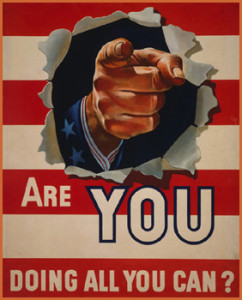 Cheese, butter, and meat were rationed in 1943 as part of the effort to win World War II. Shoppers received ration books with stamps. When the shopper no longer had stamps for a certain product, that product could not be bought until next month. Sugar, tires, and gasoline were also rationed. Rationing was lifted in 1946. Children could learn many more facts at the excellent website: Food Rations.

 Amendment Fifteen to the Constitution was adopted in 1870. A person’s right to vote could not be denied on the basis of “race, color, or previous servitude.” Children can examine a photo of the original document, read a transcript of the document, and learn more about the background of the amendment at: