Remember the Maine Day dates back to 1898. The United States battleship Maine, anchored in the harbor in Havana, Cuba, was blown up. Over two hundred Americans died, and the United States felt Spain was responsible. The United States declared war against Spain, starting the Spanish-American War, on April 25, 1898. Children can learn more at: Remember the Maine Day.
ENIAC was dedicated in 1946 at the University of Pennsylvania in Philadelphia. ENIAC (Electrical Numerical Integrator and Calculator) was among the first general computers. A marvel during its time, ENIAC was the size of a room. It used vacuum tubes, resistors, and transistors. Today a laptop can do all that the ENIAC could do. ENIAC was powered down October 2, 1955. Parts of ENIAC are with the Smithsonian and other institutions.
Susan B. Anthony
Susan Brownell Anthony (born Adams, Massachusetts, 1820; died Rochester, New York, March 13, 1906) fought for women’s rights. She was arrested in 1872 for voting, illegal for women at that time. A dollar coin has her image imprinted on it. Children could learn more about her at: Susan B. Anthony.
Norman Bridwell (born Kokomo, Indiana, 1928; died Oak Bluffs, Massachusetts, December 12, 2014) wrote and illustrated books for children. He is perhaps best known for his Clifford the Big Red Dog Series. He created at least 40 books; over 126 million copies of his books have been printed in at least 13 languages.
Abraham Clark (born Roselle, New Jersey, 1726; died Rahway, New Jersey, September 15, 1794) signed the Declaration of Independence. A surveyor and lawyer, he was known as the ‘poor man’s councilor’ because he often took cases when his clients could not pay him. Representing New Jersey, he was active after the Revolutionary War. He was twice elected to the US House of Representatives. Children could learn more about him at: Abraham Clark.
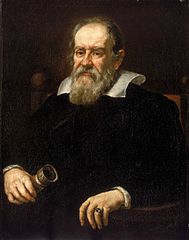
Galileo
Galileo Galilei (born Pisa, Italy, 1564; died near Florence, Italy, January 8, 1642) was a scientist. Although he did not invent the refracting telescope, he was the first person to put it to good use. By using the telescope, he found that the moon is not smooth but covered with mountains and valleys. In 1610 he located four moons around Jupiter. He was accused of being a heretic by the Catholic Church in 1633 because he believed that the earth revolved around the sun. He was placed under house arrest for the remainder of his life. Idea: Students could play with different kinds of lenses and find out how telescopes work. They could also read Starry Messenger, by Peter Sis. The book received a 2001 Caldecott Honor award. Children could learn more at: Galileo.
Cyrus H. McCormick (born Rockbridge County, Virginia, 1809; died Chicago, Illinois, May 13, 1884) invented the mechanical reaper, an invention that harvested grains. Prior to his invention, farmers had to harvest the grains with scythes. Children can learn more at: Cyrus H. McCormick.
Doris Orgel (born Vienna, Austria, 1929; died August 4, 2021) wrote over 50 books for children. Her books include The Devil in Vienna and Button Soup.
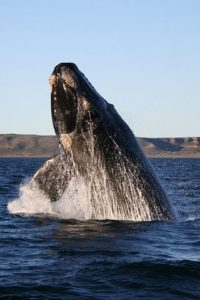
Southern Right Whale
World Whale Day is today. Celebrated on the third Sunday in February, the day was was started by a group in 1980 in Maui, Hawaii. They were concerned about the humpback whale, which is found in the waters off the island. Gregg Kauffman founded the Pacific Whale Foundation because he was concerned about the decline in whale populations. Whales are now protected by international laws. Prior to such laws whales were hunted. Even today bycatch and pollution threaten whale populations. Whales are the largest mammals. Two types of whale exist: baleen whales and toothed whales. Children could learn more at: Whales.

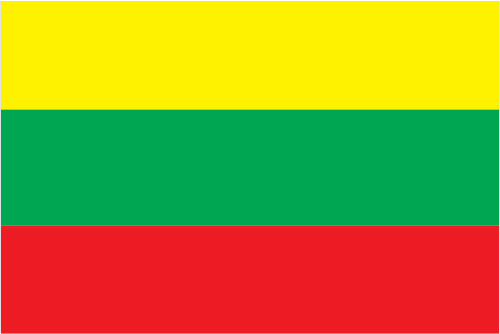
Flag of Lithuania
Lithuania celebrates Independence Day of 1918. It became free of Russian and German rule. People celebrate this day even though Lithuania was annexed into the Soviet Union in 1940. In 1991 Lithuania became the first nation to break away from the Soviet Union. According to the CIA World Factbook, Lithuania is slightly larger than West Virginia and hosts a population of about 2.7 million people. It borders the Baltic Sea, and Vilnius is the capital. A member of the European Union, Lithuania depends on agricultural products, including grains, potatoes, and flax.

Peaches
First fruit tree patent was granted in 1932 to James Markham of Stark Brothers Nurseries and Orchards in Mississippi. The patent concerned a peach that ripened later than other varieties.
Nylon was patented in the United States in 1937. Wallace H. Carothers, an employee of DuPont, patented the amazing synthetic polymer. One of the first applications was to replace hog-bristle toothbrushes with nylon-bristle toothbrushes. Children could view the patent at: Nylon Patent.
South Pole Telescope saw first light in 2007. Scientists using the ten-foot diameter radio telescope are seeking data regarding the history of the universe, dark energy, and galaxy clusters. The radio telescope is located on a South Pole plateau two miles above sea level. The air there is so dry that the area is desert-like. Older children can learn more at an excellent site: South Pole Telescope.
Robert Joseph Flaherty (born Iron Mountain, Michigan, 1884; died Dummerston, Vermont, July 23, 1951) is known as the “Father of Documentary Motion Pictures.” He started out making silent films, including the 1922 Nanook of the North. Later he made sound films. The Land demonstrated erosion effects.
Carol Gorman (born Iowa City, Iowa, 1952) has written at least 25 books for children. Her books include The Miraculous Makeover of Lizard Flanagan and Chelsea and the Green-Haired Kid.
George Washington
Abraham Lincoln
Presidents’ Day is a national holiday. Originally meant to honor George Washington and Abraham Lincoln, this day honors all of our Presidents. Children could read Anne Rockwell’s book, Presidents’ Day. They could also visit the White House site to read a biography of every president, starting with George Washington, at: Presidents. Children could participate in some Presidential trivia. Which President served the least amount of time? Which President served the most amount of time? Which President received a patent? Which President went on to serve on the Supreme Court?