Indiana Flag
Indiana became the nineteenth state of the United States in 1816. Indianapolis is the state capital, and the state’s nickname is the Hoosier State. Mound builders lived in the area around AD 1000. It is about 36,185 miles square, placing it thirty-eighth in area. It ranks fourteenth in population. Farming is a leading source of employment in the north, and rich coal deposits can be found in the southern parts of the state. It is the leading U. S. producer of limestone. The Indianapolis 500 has been running since 1911. Children could make a board game about Indiana. The board could be a speed track. The students who know the most about Indiana would win the game.
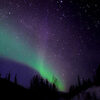 Aurora Borealis was first documented in North America in New England in 1719. Stories state that Cotton Mather observed the natural phenomenon and considered it an omen of evil. An aurora borealis (northern lights) occurs when charged particles from a solar wind interact with earth’s atmosphere. Children can learn more at:
  Poinsettia Day marks the death of Dr. Joel Roberts Poinsett. A United States diplomat assigned to Mexico, he was the first person to bring the poinsettia plant from Central America to the United States. The plant was named in honor of him. He died in 1851 near Statesburg, South Carolina. Now the poinsettia is associated with the Christmas season. The red portions of a poinsettia are actually a type of bracket leaf. The real flowers are the yellow dots in the center of the red bracket leaves. Children could read Tomie dePaola’s The Legend of the Poinsettia.