A. G. MacDonald in 1905 drove an automobile for the first time faster than 100 miles per hour. The speed trial was located in Daytona Beach, Florida.
Jan 312026
A. G. MacDonald in 1905 drove an automobile for the first time faster than 100 miles per hour. The speed trial was located in Daytona Beach, Florida.
First Social Security check was issued in 1940. Ida May Fuller of Ludlow, Vermont, received check 00-000-001 for $22.54. She lived to the age of 100. Today over 64 million people receive Social Security checks. Children can learn more at: https://www.ssa.gov/history/imf.html.
First US Satellite Explorer I was launched in 1958, four months after Sputnik 1 and Sputnik 2 were sent into space. It returned data, including confirmation of the Van Allen Radiation Belts, to the United States for four months until the batteries died. More than 90 more Explorer projects followed. Children could view a table of all the Explorer projects at: Explorer Projects.
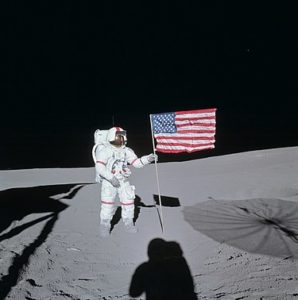
Apollo 14
Apollo 14 was launched in 1971! It was the third manned expedition to land on the moon. Commander Alan Shepard and Lunar Module Pilot Edgar Mitchell walked on the moon on February 5, while Command Module Pilot Stuart Roosa stayed in lunar orbit. Shepard and Mitchell collected over 94 pounds of lunar rocks, and Roosa carried several hundred seeds that were later germinated after their return to earth. Shepard actually “played golf” on the moon on February 6. Apollo 14 successfully returned to earth on February 9, 1971. Older children could learn more at: Apollo 14.

Robinson Crusoe
Robinson Crusoe Day is the anniversary of Alexander Selkirk’s rescue from the island Juan Fernandez in 1709. He landed on the island off the coast of Chile in 1704 after disagreeing with the captain. His exploits may have inspired Daniel Defoe’s Robinson Crusoe. Children can read Robinson Crusoe at: Project Gutenberg.
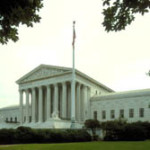
Supreme Court
Supreme Court opened its first session in 1790. In that year the capital was Philadelphia, Pennsylvania; the Supreme Court met in what is now Independence Hall. When the capital moved to Washington, DC, no Supreme Court building existed. The Court met in various parts of the Capitol Building and even met in a private home during the War of 1812. Until 1935 the Supreme Court continued to meet in various places. The Supreme Court Building opened in 1935. Children can learn more about at: Supreme Court.
Julia Ward Howe published “Battle Hymn of the Republic” as a poem in The Atlantic Monthly in 1862. The poem was a result of a visit she made to a Union army camp during the Civil War. Soldiers had asked her to create the lyrics of a “fighting song” to match a melody that already existed. She awoke one dawn and the words began to form the verses. She got up and wrote down the poem immediately. Children can read the lyrics and view a photograph of Julia Ward Howe at: Lyrics. Children can listen to the song at: Battle Hymn of the Republic.

Hale Telescope
Hale Telescope on Mount Palomar began operations in 1949. Named after George Ellery Hale, the 200-inch reflecting telescope was the largest of its kind. Located near San Diego, California, the telescope is still in use. Children can learn more at: Hale Telescope.
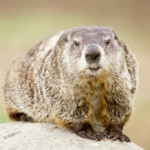
Groundhog
Groundhog Day delights children. If a groundhog pops out of his burrow and sees his shadow, then winter will last another six weeks. Idea: Gather statistics as to whether or not the event really predicts the arrival of spring. Children can try some great Groundhog Day activities at: Groundhog Day. Children could also read Groundhog Day! by Gail Gibbons.
George Walton died in Augusta, Georgia, on February 2, 1804. He was born near Farmville, Virginia, 1741, but his exact birth date is unknown. Representing Georgia, he signed the Declaration of Independence. He fought for his state militia during the Revolutionary War and was caught by the British in late 1778. He was imprisoned until September 1779, when he was exchanged for a British officer. After the war, he served as Georgia’s governor, a United States senator, and the chief justice of Georgia’s highest court. Children could learn more at: George Walton.