David Almond (born Felling, England, 1951) writes books for young adults. His books include Skellig, which earned a 2000 Michael L. Printz Honor Award, and Kit’s Wilderness, which received the 2001 Michael L. Printz Medal. He received the very prestigious Hans Christian Andersen Award for Writing in 2010. Children can visit his website at: David Almond.
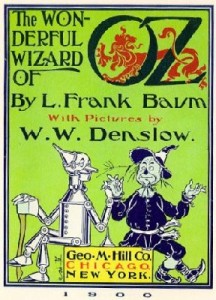
Wizard of Oz
Lyman Frank Baum (born Chittenango, New York, 1856; died Hollywood, California, May 6, 1919) was an author and newspaper reporter. He is famous for his 14 Wizard of Oz books. He also wrote 41 other novels, 83 short stories, more than 200 poems, and around 42 scripts. Children can read many of his works at: Project Gutenberg. Also, children could read The Road to Oz: Twists, Turns, Bumps, and Triumphs in the Life of L. Frank Baum, written by Kathleen Krull. Finally, children could learn more at: Baum.
Pierre Curie (born Paris, France, 1859; died Paris, France, April 19, 1906) was a physicist. He and his wife, Marie Curie, researched radioactivity. They and Antoine Henri Becquerrel received the 1903 Nobel Prize in physics for their work on the radioactivity of uranium.
Ellen MacGregor (born Baltimore, Maryland, 1906; died Chicago, Illinois, March 29, 1954) wrote books for children. She is most known for her Miss Pickerell series. After she died, Dora Pantell continued the series.
Norma Fox Mazer (born New York, New York, 1931; died Montpelier, Vermont, October 17, 2009) wrote books for young adults. Her book After the Rain received the 1988 Newbery Medal, and Taking Terri Mueller earned the 1982 Edgar Award. She was married to Harry Mazer, who also wrote books for children and young adults. They co-authored at least two books, Heartbeat and Bright Days, Stupid Nights. children can learn more at: Norma Fox Mazer.
Kadir Nelson (born Washington, DC, 1974) writes and illustrates books for children. He has earned two Caldecott Honor Awards: for Moses: When Harriet Tubman Led Her People to Freedom in 2007, and for Henry’s Freedom Box: A True Story from the Underground Railroad in 2008. He wrote and illustrated We Are the Ship: The Story of Negro League Baseball, for which he won both the 2009 Robert F. Sibert Informational Book Medals for words and pictures. He earned a Celdecott Medal and a Coretta Scott King Illustrator Medal for The Undefeated in 2020. Children can visit his website at: Kadir Nelson.
Katherine Anne Porter (born Indian Creek, Texas, 1890; died Silver Spring, Maryland, September 18, 1980) was an author. One of her best known novels is Ship of Fools. She was awarded the 1965 Pulitzer and the National Book Award for Collected Short Stories.
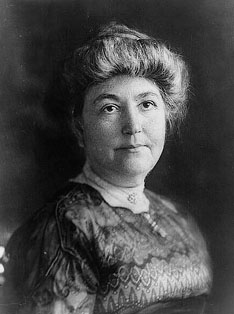
Ellen Louise Axson Wilson
Ellen Louise Axson Wilson (born Savannah, Georgia, 1860; died Washington, DC, August 6, 1914) was America’s First Lady from March 4, 1913 until her death on August 6, 1914. She was the first wife of Woodrow Wilson, twenty-eighth president of the United States. She worked to eliminate slum conditions. She died about a year after Wilson became president. Children could visit a website at: Edith Wilson. Idea: Two of Wilson’s daughters were married in the White House. Children could learn about the children of the president. They could decide if it would be fun to live in the White House.
G. Clifton Wisler (born Oklahoma City, Oklahoma, 1950; died Plano, Texas, April 8, 2016) wrote books for children and young adults. He also created westerns for adults. His books include Buffalo Moon and King’s Mountain.
Paul Zindel (born New York, New York, 1936; died New York, New York, March 27, 2003) was a playwright and author of young adult books. Two of his most popular books are The Pigman and David and Della. Children could visit a website devoted to him at: Paul Zindel.