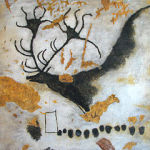
Caves of Lascaux
Lascaux was discovered in 1940. Located in southwestern France, the Lascaux cave was found by a young man named Marcel Ravidat. The series of caves contain about 6,000 paintings, which can be organized into three groups: animals, humans, and abstract creations. The cave was opened to tourists in 1948, but light, changes in air temperature, and carbon dioxide exhaled by humans took a toll on the works of art. The real cave was closed in 1963, and a simulation of the cave was opened nearby. Mold in the real cave continues to be a problem. Children can visit the official (and amazing) website at: Caves of Lascaux.

 Louvre opened in Paris, France, in 1793. Probably one of its most famous paintings is the Mona Lisa. The Louvre galleries measure eight miles in total, and the museum owns over one million pieces of art. I. M. Pei designed the Louvre Pyramid, completed in 1989. The Louvre website is filled with great online tours and activities:
 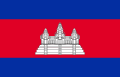 Kingdom of Cambodia celebrates Independence Day. This Asian country broke from French rule in 1953. Cambodia is slightly smaller than the state of Oklahoma. Over 14 million people live in this relatively flat land covered with forests. Exports include rubber, silk, clothing, and shoes. The capital is Phnom Penh. Angkor Wat is one of Cambodia’s major archaeological sites. The Cambodian flag features a drawing of Angkor Wat. Children can see photos of Angkor Wat at the UNESCO site: