National German-American Day is celebrated by Presidential Proclamation since 1987. This day was chosen because in 1683 German immigrants founded the community of Germantown, Pennsylvania.
Oct 062026
National German-American Day is celebrated by Presidential Proclamation since 1987. This day was chosen because in 1683 German immigrants founded the community of Germantown, Pennsylvania.
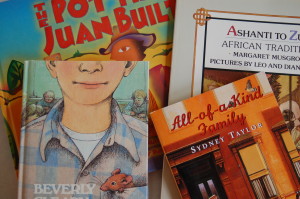
Award-Winning Books
American Library Association was founded in 1876 in Philadelphia, Pennsylvania. Today the nonprofit organization has 62,000 members and a staff of 300. It sponsors a number of awards, including the John Newbery Awards, Randolph Caldecott Awards, Pura Belpré Awards, and Coretta Scott King Awards. Adults can find a list of the award-winning books at: Book Lists.
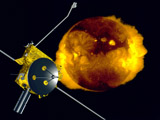
Ulysses
Ulysses, a space probe sponsored by NASA and the European Space Agency, was launched from Space Shuttle Discovery in 1990. It completed its second trip around the sun on September 29, 1995. Ulysses conducted three series of experiments regarding the sun. It also investigated three comets. Communications with Ulysses stopped on June 30, 2009. Children could learn more at: Ulysses.

51 Pegasi
51 Pegasi was discovered in 1995. It is the first sun-like star to have an exoplanet orbiting it. Swiss astronomers Michel Mayor and Didier Queloz first announced the discovery, and other scientists have confirmed the presence of the planet, now called Bellerophon. Children can enjoy the GREAT infographic of the star at: 51 Pegasi.
Jason Lewis in 2007 completed the first human-powered circumnavigation of the earth. He began his odyssey in July 1994 when he and a friend left London. He pedaled a small boat across oceans, line-skated across North America, bicycled through Australia, and had other experiences. He traveled a total of 46,505 miles.
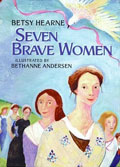
Seven Brave Women
Betsy Hearne (born Wilsonville, Alabama, 1942) is an instructor, poet, and author. She writes for both adults and children. She received the 1998 Jane Addams Award for Seven Brave Women.
Thor Heyerdahl (born Larvik, Norway, 1914; died Colla Micheri, Italy, April 18, 2002) was an ethnologist and an adventurer. He built and sailed the Kon-Tiki. He and five others sailed from Peru to eastern Polynesia on the balsa raft to prove that natives of South America could have settled the islands.
Susan Meddaugh (Montclair, New, Jersey, 1944) writes and illustrates books for children. She created the popular Martha Speaks series and Lulu’s Hat.
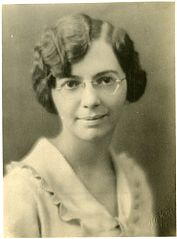
Florence Seibert
Florence Seibert (born Easton, Pennsylvania, 1897; died St. Petersburg, Florida, August 23, 1991) was a doctor and biochemist. She isolated a form of tuberculin that could be used in TB tests. Idea: The school nurse could talk to the class about the importance of the tuberculosis test. Children could learn more at: Florence Seibert.
Elizabeth Gray Vining (born Philadelphia, Pennsylvania, 1902; died Kennett Square, Pennsylvania, November 27, 1999) was a children’s author, writing 60 books. Using the pseudonym of Elizabeth Gray, she wrote Adam of the Road, which received the 1943 Newbery Medal. Children can learn more at: Elizabeth Gray Vining.
George Westinghouse (born Central Bridge, New York, 1846; died New York, New York, March 12, 1914) was an inventor. He held over 400 patents, and he created Westinghouse Electric Company. At one time his company employed about fifty thousand people.
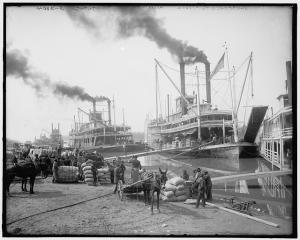
Steamboats but not the Washington
Double-decked steamboat arrived in New Orleans for the first time in 1816. The Washington traveled between New Orleans and Louisville. It traveled upstream at 16 miles per hour and downstream at 25 miles per hour. This first steamboat was so successful that many others followed. By 1850 about 740 steamboats, transporting three million people annually, traveled on the Mississippi River.
Dow Jones Industrial Average was created in 1896 to give a snapshot of the overall trends of the stock market. The original average contained twelve stocks. The stocks were: American Cotton Oil Company, American Sugar Company, American Tobacco Company, Chicago Gas Company, Distilling and Cattle Feeding Company, General Electric, Laclede Gas Company, National Lead Company, North American Company, Tennessee Coal, Iron and Railroad Company, U.S. Leather Company, and United States Rubber Company. Today thirty stocks comprise the Dow Jones Industrial Average, and none of the original companies are part of the Dow. General Electric was part of the Dow until June 2018. Children can view an interesting interactive graphic at: https://www.cnbc.com/2014/07/02/history-of-dow-30.html.
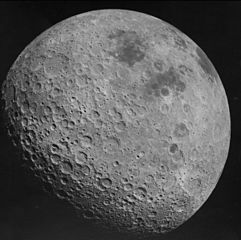
Far Side of Moon Photograph Taken by Crew of Apollo 16
Far side of the moon was first photographed in 1959. The Soviet Union’s Luna 3, launched October 3, 1959, took 29 pictures. Then, when the spacecraft came closer to earth, it transmitted seventeen of the pictures. The photographs were of lesser quality than later photographs, but they showed that the far side of the moon was very different from the side we can see. The far side is more mountainous. Children could learn more at: Moon.
Niels Bohr (born Copenhagen, Denmark, 1885; died Copenhagen, Denmark, November 18, 1962) developed the theory of atomic structure. He received the 1922 Nobel Prize for his work. Later he studied the nucleus of atoms and quantum mechanics. Idea: Children could draw a model of an atom and learn about its various energy levels. Older children could learn more at: Niels Bohr.
Alice Dalgliesh (born Trinidad, British West Indies, 1893; died Woodbury, Connecticut, June 11, 1979) wrote, illustrated, and/or edited at least 40 books for children. She received three Caldecott Honor Awards: in 1945 for The Silver Pencil, in 1953 for The Bears on Hemlock Mountain, and in 1955 for The Courage of Sarah Noble. Children can learn more at: Alice Dalgliesh.
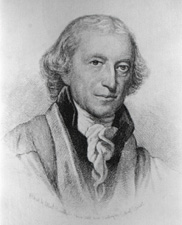
William Samuel Johnson
William Samuel Johnson (born Stratford, Connecticut, 1727; died Stratford, Connecticut, November 14, 1819) represented Connecticut at the Constitutional Convention. A lawyer, he helped present the Connecticut Compromise (two branches of Congress). Later he became a US senator. He lived to be the oldest signer of the Constitution. Children could learn more at: William Samuel Johnson.
Yo-Yo Ma (born Paris, France, 1955) is a cellist. He was performing before audiences by age five. He has produced 75 albums, and he received the US Presidential Medal of Freedom in 2001.
James Whitcomb Riley (born Greenfield, Indiana, 1849; died Indianapolis, Indiana, July 22, 1916) was known as the “Hoosier” poet. Idea: Students could read some of his poetry. Children could read many of his works at: Project Gutenberg.
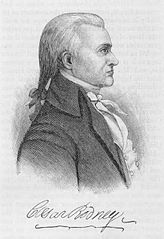
Caesar Rodney
Caesar Rodney (born Dover, Delaware, 1728; died Dover, Delaware, June 26, 1784) signed the Declaration of Independence. He represented Delaware. A wealthy man, he served as a sheriff, a member of the legislature, and a judge (even though he was not a lawyer). He fought in the Revolutionary War, and for a while he was governor of Delaware. Children could learn more at: Caesar Rodney.
Desmond Tutu (born Klerksdrop, South Africa, 1931; died Capetown, South Africa, December 26, 2021) was the archbishop of South Africa and a civil rights activist. He received many awards, including the 1984 Nobel Peace Prize and the 2009 US Presidential Medal of Freedom. Older children could learn more at: Desmond Tutu.