Museum of Modern Art in New York, New York, opened its doors in 1929. Children could view some of the artworks online at: MoMA.
Nov 072025
Museum of Modern Art in New York, New York, opened its doors in 1929. Children could view some of the artworks online at: MoMA.
Sneed B. Collard, III (born Santa Barbara, California, 1959) has written at least 65 books for children. His works include The Prairie Builders: Reconstructing America’s Lost Grasslands and One Night in the Coral Sea. Children can visit his website at: Sneed B. Collard.
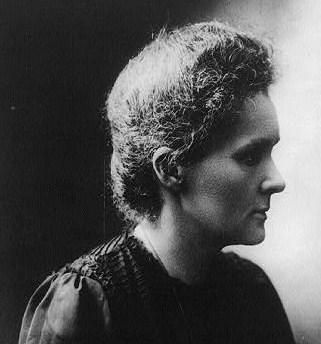
Marie Curie
Marie Sklodowska Curie (born Warsaw, Poland, 1867; died Savoy, France, July 4, 1934) was a physicist. She and her husband, Pierre, worked on radioactive substances. They isolated two new elements, radium and polonium. She, her husband, and a third scientist received the 1903 Nobel Prize in Physics. She was the first woman to receive any Nobel Prize. She also won the 1911 Nobel Prize in chemistry for her extended work on radium. Kathleen Krull wrote an excellent biography of the scientist, Marie Curie (Giants of Science).
Yuyi Morales (born Xalapa, Mexico, 1968) writes and illustrates book for children. Her book Just a Minute: A Trickster Tale and Counting Book received a 2004 Pura Belpre Medal. Viva Frida received a 2015 Pura Belpre Medal and a 2015 Caldecott Honor Award. In 2019 Dreamers/Sonadoras earned a Pura Belpre Medal.
Armstrong Sperry (born New Haven, Connecticut, 1897; died Hanover, New Hampshire, April 26, 1976) was a children’s author and illustrator. He wrote over 25 books, and his book Call It Courage was awarded the 1941 Newbery Medal. Children could visit his granddaughter’s website honoring her grandfather at: Armstrong Sperry

Rachel Carson Would Be Proud!
National STEM/STEAM Day is today! STEM is Science, Technology, Engineering, and Math. Add Art and you have STEAM. This year’s theme is Food for Thought. The Census Bureau has some great statistics: STEM/STEAM. Ideas combining STEM/STEAM and our environment:
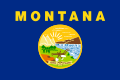
Montana Flag
Montana became the forty-first state of the United States in 1889. Its name comes from the Spanish word montana, meaning mountainous. Its nicknames are the Treasure State and Big Sky Country. Copper mining, lumbering, and tourism are major sources of income. The state’s southeastern section has reserves of low-sulphur coal. Montana ranks fourth in area and forty-fourth in population. Children could learn more about Montana by visiting: Montana.
 Louvre opened in Paris, France, in 1793. Probably one of its most famous paintings is the Mona Lisa. The Louvre galleries measure eight miles in total, and the museum owns over one million pieces of art. I. M. Pei designed the Louvre Pyramid, completed in 1989. The Louvre website is filled with great online tours and activities: Louvre.
X-rays were discovered by Dr. Wilhelm Roentgen in 1895. He was conducting experiments in other fields when he recognized the importance of the rays he called X-rays. He then began to systematically study and document the newly discovered X-rays. He received the first Nobel Prize in Physics in 1901. Children can view a video about X-rays at: X-Ray Video.
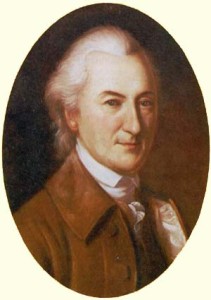
John Dickinson
John Dickinson (born Talbot Count, Maryland, 1732; died Wilmington, Delaware, February 14, 1808) was a Revolutionary War hero. He was known as the Penman of the Revolution because of the various papers he wrote, including his twelve Letters from a Farmer in Pennsylvania. He fought at the Battle of Brandywine in Pennsylvania. After the Revolutionary War, he was governor of both Delaware and Pennsylvania, and for two months he was the governor of the two states at the same time! He helped draft the Articles of Confederation, but he knew that the country needed a strong central government. He attended the Constitutional Convention and approved the new government framework. Children could learn more at: John Dickinson.
Edmund Halley (born London, England, 1656; died Greenwich, England, January 14, 1742) was an astronomer and mathematician. Halley’s Comet is named in his honor. He first saw it in 1682. After conducting some research, he realized the comet returned approximately every 76 years. It has been sighted 28 times. The first recorded sighting was in 240 BC. Older children can learn more about Halley’s Comet at: Halley’s Comet.
Margaret Mitchell (born Atlanta, Georgia, 1900; died after being struck by a car in Atlanta, Georgia, August 16, 1949) was a writer. Her most famous book, Gone with the Wind, has sold over 30 million copies and has been translated into 30 languages. It received the 1937 Pulitzer Prize for Fiction.
Bram Stoker (born Dublin, Ireland, 1847; died London, England, April 20, 1912) was a writer. He wrote at least twelve books and many short stories. However, he is most famous for his book Dracula. You can read Dracula and other Bram Stoker works at: Project Gutenberg.
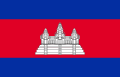 Kingdom of Cambodia celebrates Independence Day. This Asian country broke from French rule in 1953. Cambodia is slightly smaller than the state of Oklahoma. Over 14 million people live in this relatively flat land covered with forests. Exports include rubber, silk, clothing, and shoes. The capital is Phnom Penh. Angkor Wat is one of Cambodia’s major archaeological sites. The Cambodian flag features a drawing of Angkor Wat. Children can see photos of Angkor Wat at the UNESCO site: Angkor Wat.
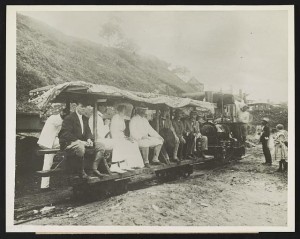
Theodore Roosevelt and Others Inspecting Panama Canal
Theodore Roosevelt traveled through the Panama Canal in 1906. Roosevelt felt that the Panama Canal had to be accomplished for both military and economic reasons. This trip also marked the first time an American President traveled to another country while in office. Children can research timelines and photos at: Panama Canal.
Kristallnacht transpired in Germany in 1938. Mobs of Germans demolished thousands of homes and businesses owned by Jews. Books and Torahs were burned. More than 30,000 Jews were arrested, and almost one hundred people died. Kristallnacht, “Crystal Night,” was given its name from the sound of window glass breaking. Older children could read Kristallnacht: The Nazi Terror That Began the Holocaust (The Holocaust through Primary Sources) by James M. Deem.