Oct 242025
 

Sarah Josepha Buell Hale (born Newport, New Hampshire, 1788; died Philadelphia, Pennsylvania, April 30, 1879) was a writer and an editor. Her most famous poem is “Mary Had a Little Lamb.” Children can read her very interesting The New Household Receipt-book at: Hale Cookbook.
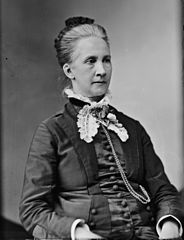
Belva Lockwood

Belva Lockwood

Belva A. Bennett Lockwood (born Royalton, New York, 1830; died Washington, DC, May 19, 1917) was the first woman to argue before the Supreme Court. She championed women’s rights. In 1884 she became the first woman to be nominated for President of the United States. She served on many boards, including the Nobel Peace Prize nominating committee. Older children could learn more at: Belva Lockwood.

Barbara Robinson (born Portsmouth, Ohio, 1927; died Berwyn, Pennsylvania, July 9, 2013) wrote books for children. Her works include The Best Christmas Pageant Ever and The Best School Year Ever. Children could learn more at: Barbara Robinson.

Anton Van Leeuwenhoek (born Delft, Netherlands, 1632; died Delft, Netherlands, August 26, 1723) invented the microscope. He invented the microscope to examine cloth quality. However, he went on to observe bacteria. He called the organisms animalcules. He also studied blood of various organisms. Idea: Children could place a drop of water on a slide and observe the drop under the microscopes. There they could look at some animalcules. Children could read All in a Drop: How Antony Van Leeuwenhoek Discovered an Invisible World, written by Lori Alexander and illustrated by Vivien Mildenberger. Older children could learn more at: Van Leeuwenhoek.
Oct 252025
 

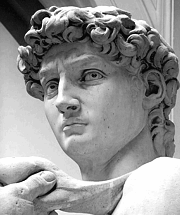
David by Michelangelo
(detail)

International Artist Day is today! Today celebrates the contributions artists make to our society through their creations. Idea: Children could list all the artists they can think of. Then they could pick one artist and find out how that artist has made positive changes. Finally they could make their own artistic creations!

Oct 252025
 
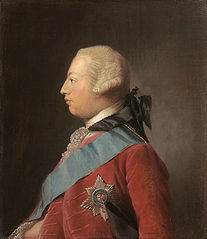
King George III

King George III

George III became King of Great Britain in 1760. His actions probably contributed to the start of the Revolutionary War. At one point he almost abdicated. He experienced periods of dementia, and from 1811 until his death in 1820 the country was actually run by his son. Children could read Jean Fritz’s Can’t You Make Them Behave, King George?

Oct 252025
 

Taiwan was returned to Chinese rule in 1945 after being controlled by the Japanese for fifty years. During its reign Japan had the Taiwanese adopt the Japanese language and customs. Many young Taiwanese males served in the Japanese army during World War II. The transition back to Chinese daily life was not smooth.

Oct 252025
 

Pop-Up Thermometer

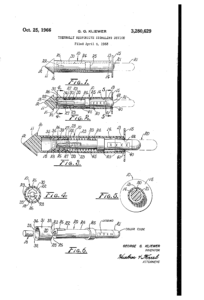
Turkey Pop-Up Thermometer was patented by George Kliewer in 1966. He received Patent Number 3,280,629. Originally called the Thermally Responsive Signaling Device, the invention was modeled somewhat on indoor sprinkler systems. An outer housing is inserted into the meatiest part of the bird. An inner rod is propped up by a spring, and a pin keeps the spring from popping up. The pin, made of either metal or wax, melts at a predetermined temperature and releases the spring. The spring pushes up the inner rod, signaling that the meat has reached the desired temperature. About 30 million pop-up thermometers are sold every year. Children can learn more at: Pop-Up.

Oct 252025
 
Miss Hickory

Miss Hickory

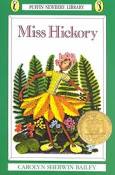
Carolyn Sherwin Bailey (born Hoosick Falls, New York, 1875; died Concord, Massachusetts, December 23, 1961) wrote books for children. She received the 1947 Newbery Medal for Miss Hickory. Children can read some of her works (but not Miss Hickory) at: Project Gutenberg.

Admiral Byrd

Admiral Byrd

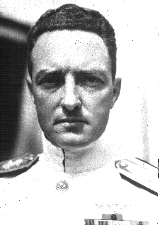
Richard Evelyn Byrd (born Winchester, Virginia, 1888; died Boston, Massachusetts, March 11, 1957) was an explorer. He made five treks to the Antarctic, and he was the first person to fly over both the North Pole and the South Pole.

Pablo Picasso (born Malaga, Spain, 1881; died Mougins, France, April 8, 1973) was an artist. He was probably one of the most important influences on the arts. He developed cubism, and he was a very prolific artist, creating about 50,000 pieces of art, including paintings, sculptures, and ceramics.  Children can view a number of his works at: Pablo Picasso.

Johann Strauss (born Vienna, Austria, 1825; died Vienna, Austria, June 3, 1899) was an Austrian composer. He was known as the “Waltz King” because he wrote almost 400 waltzes. He also composed marches, polkas, and operettas.

Stephanie S. Tolan (born Canton, Ohio, 1942) has written at least 25 books for children. Surviving the Applewhites earned a 2003 Newbery Honor Award. She also wrote Save Halloween. Children can visit her website at: Stephanie Tolan.

Oct 262025
 

Pumpkins

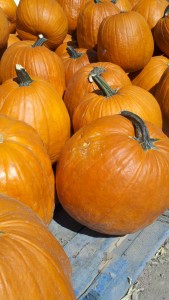
National Pumpkin Day is today! A pumpkin is a fruit because it contains seeds. Pumpkins are very versatile: pumpkin pie, pumpkin bread, pumpkin soup, pumpkin butter, and the list goes on. Many people toast and eat pumpkin seeds. Idea: Children could draw a pumpkin on a vine and write pumpkin facts on the leaves.