Five Americans received Nobel Prizes in 1976. Baruch Blumberg and D. Carleton Gajdusek earned the Nobel Prize in Medicine. Burton Richter and Samuel Chao Chung Ting earned the physics award, and Saul Bellow was awarded the Nobel Prize for Literature.
Janet Ahlberg (born England, 1944; died England, November 13, 1994) illustrated books for children. She worked with her husband, Allen Ahlberg. He wrote the books, and she illustrated them. She received the Kate Greenaway Medal twice: in 1979 for Each Peach Plum Pear, and in 1992 for The Jolly Christmas Postman.
Ann Cameron (born Rice Lake, Wisconsin, 1943) writes books for children. Her works include the Julian series and Spunky Tells All. Children can visit her website at: Ann Cameron.
Eugene B. Ely (born Williamsburg, Iowa, 1886; died Macon, Georgia, October 19, 1911) became, on January 18, 1911, the first pilot to land a plane on a warship and take off from a warship. Unfortunately he died in a plane crash just before his 25th birthday. Children can learn more and view some fascinating photos at: Eugene B. Ely
Caroline Carmichael McIntosh Fillmore (born Morristown, New Jersey, 1813; died New York, New York, August 11, 1881) was the second wife of Millard Fillmore, the thirteenth President of the United States. However, she was not married to Fillmore while he was president.
Ursula K. Le Guin (born Berkeley, California, 1929; died Portland, Oregon, January 22, 2018) wrote fantasy books for young adults. She earned a 1972 Newbery Honor Award for The Tombs of Atuan, and she received the 2004 Margaret A. Edwards Award for her body of works. Young adults can visit a website dedicated to her at: Ursula K. Le Guin.
William A. Mitchell (born Raymond, Minnesota, 1911; died Stockton, California, July 26, 2004) received at least 70 patents while he worked for General Foods. He created instant Jell-O, Cool-Whip, Tang, powdered egg whites, and Pop Rocks.
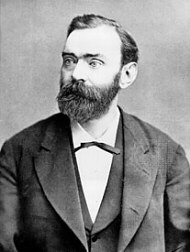
Alfred Nobel
Alfred Bernhard Nobel (born Stockholm, Sweden, 1833; died San Remo, Italy, December 10, 1896) was a chemist. He invented dynamite and became wealthy. However, the invention of dynamite came with costs, including human lives. Nobel left his estate, about nine million dollars, to the Nobel Fund. The interest from the fund would reward individuals in six areas: physics, chemistry, medicine, literature, economics, and peace. The Nobel Prize is the most prestigious award in the world. Older children can read a biography at: Alfred Nobel.

Pecans
National Nut Day is today! Today celebrates the many tree nuts and other plant nuts that contribute to our health and to our economy. Idea: Children could list all the nuts they can think of and then learn how we use some of the nuts.

First Parachute
Parachute jump was made for the first time in 1797. André-Jacques Garnerin dropped from a hot air balloon 3,200 feet above the city of Paris. His parachute resembled an umbrella. On the ascent, the parachute was closed. At the designated height, he cut the balloon away, opened the parachute, and landed with the gondola.
New York Metropolitan Opera House in 1883 celebrated its opening with a production of Faust.

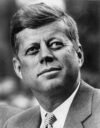
John Kennedy
Cuban Missile Crisis began when President Kennedy in 1962 demanded that missiles placed in Cuba by the Soviet Union be removed. The United States also placed an embargo around the island to prevent other arms entering Cuba. On October 28 the Union of Soviet Socialist Republics started to remove the weapons. Older children could learn more at: State Department.

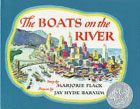
The Boats on the River
Marjorie Flack (born Long Island, New York, 1897; died Pigeon Cove, Massachusetts, August 29, 1958) wrote and illustrated books for children. Her works include The Story about Ping and the Angus series. She received a 1947 Caldecott Honor Award for The Boats on the River. Children can learn more at: Marjorie Flack.
Franz Liszt (born Raiding, Hungary, 1811, died Bayre, Bavaria, July 31, 1886) was a pianist and a composer. Probably his most celebrated works are his twenty Hungarian rhapsodies.
Robert Rauschenberg (born Port Arthur, Texas, 1925; died Captiva, Florida, May 12, 2008) was an artist. He often used a variety of materials on one canvas. Children can learn more at: Robert Rauschenberg.

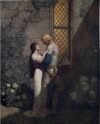
Wyeth’s illustration in King Arthur
N. C. Wyeth (born Needham, Massachusetts, 1882; died near Chadds Ford, Pennsylvania, October 19, 1945) was an artist and illustrator. Children can learn more at: N. C. Wyeth.

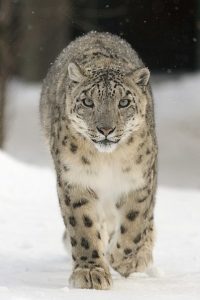
Snow Leopard
International Snow Leopard Day is today! Snow leopards live in mountain ranges in South Asia and Central Asia. Fewer than 10,000 snow leopards exist today, and that number is estimated to decline in the coming years. Listed as Vulnerable by the IUCN Red List, snow leopards have been killed by poaching. They have also seen their habitats declining. Smaller than other cats, snow leopards cannot roar. They are carnivores, preying on both wild and domesticated animals. They have adapted to mountainous, cold, and snowy conditions. They have thick fur; and their paws are large and covered with fur on the underside to traverse icy conditions. Interesting fact: their tails are unusually long and provide fat storage. The tail also has very long fur so that the tail can act as a blanket for the snow leopard’s face while the animal sleeps.

Amadeus Avogadro
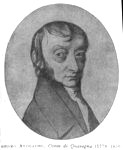
National Mole Day marks the celebration of Avogadro’s number, 6.02 x 10^23. The celebration begins at 6:02 AM on 10/23. This year’s theme is “Sherlock Molmes.” The event started in the early 1980’s and is often incorporated into National Chemistry Week. Children could visit a website at: Mole Day.