Jan 092025
 
Cave Frostwork and Popcorn

Cave Frostwork and Popcorn

Wind Cave National Park was established in 1903. The 33,500-acre park, located in South Dakota, hosts a mixed-grass prairie ecosystem with bison, elk, and prairie dogs. Below ground is a barometric wind cave with at least 137 miles of explored passages. The cave is unusually large and was formed by boxwork. Children can visit the park’s website and view some of its great multimedia presentations at: http://www.nps.gov/wica.

Jan 092025
 

Clyde Robert Bulla (born King City, Missouri, 1914; died Warrensburg, Missouri, May 23, 2007) was a children’s author. He wrote over 60 books. One of his books is The Chalk Box Kid. Another famous book is A Lion to Guard Us. Children can learn more at: Clyde Robert Bulla.

Carrie Chapman Catt (born Ripon, Wisconsin, 1859; died New Rochelle, New York, March 9, 1947) was a women’s rights champion who advocated for the Nineteenth Amendment, women’s right to vote. She also established the National League of Women Voters in 1920. During World War II she worked with the United States government to allow more Jews to immigrate to America and to escape Nazi governments. Children could read Carrie Chapman Catt: A Voice for Women by Kristin Thoennes Keller.

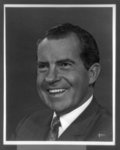
Richard Nixon

Richard Nixon

Richard Milhous Nixon (born Yorba Linda, California, 1913; died New York, New York, August 22, 1994) was the thirty-seventh president (1969 – 1974) of the United States. During World War II, he served in noncombat duty. He was elected to Congress in 1946 and to the Senate in 1950. He was Eisenhower’s vice president. During Nixon’s presidency the first moon landing occurred. Also, he made an important visit to China. He served from January 20, 1969, to August 9, 1974, when he resigned. He was about to be impeached. Children could visit a website at: Richard Nixon.

Jan 102025
 

Thomas Paine

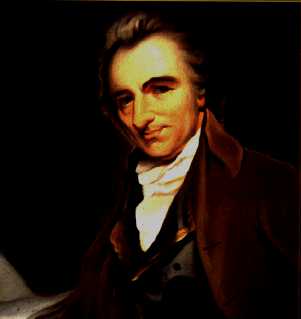
Common Sense was published by Thomas Paine in 1776. He first published the 48-page pamphlet anonymously because what he was propounding was treason against England. Some experts believe this small pamphlet was one of the major influences regarding America’s Revolutionary War. At least a half million copies were sold, and the proceeds were donated to George Washington and the Continental Army. Idea: Paine’s words are very stirring. Older children would enjoy reading and discussing some of the passages. The pamphlet can be found at: Project Gutenberg.

Jan 102025
 

League of Nations was formed in 1920. Over 50 countries worked together to try to end war. Permanent nations included France, Italy, Japan, and Great Britain. Later Germany and the Union of Soviet Socialist Republics became permanent members. However, the United States was not a member. The League of Nations ceased to exist in 1946, but it became the basis for the United Nations.

Flag of United Nations

Flag of United Nations

United Nations General Assembly held its first meeting in 1946 in London, England. Founded by 51 countries, the United Nations today is comprised of 193 countries. The four goals are:
• To keep peace between countries
• To develop friendly relationships between countries
• To help the world’s poor through medical and educational programs
• To be a catalyst so that progress can be made
Today the General Assembly meets in New York City. Other branches of the United Nations are located in Geneva, Switzerland, and Vienna, Austria. Children could learn more at: United Nations.

Jan 102025
 

Project Diana

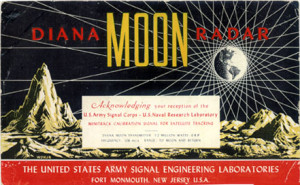
Project Diana was conducted in 1946 by the Army Signal Corps.  The group sent radio signals to the moon and recorded the reflected signals (about 468,000 miles to the moon and back). The signals took 2.5 seconds to return to earth. Today called EME (Earth – Moon – Earth), the program started the space program because it was the first time humans sent something beyond the earth’s atmosphere. Project Diana was named after the Roman goddess Diana, the goddess of the hunt and of the moon. Children can learn more at: Project Diana.

Jan 102025
 

Ethan Allen (born Litchfield, Connecticut, 1738; died Burlington, Vermont, February 12, 1789) was a hero of the American Revolution and the leader of the “Green Mountain Boys.” Children can visit: Ethan Allen. Children could also read Ethan Allen: Green Mountain Rebel by Brenda Haugen and Andrew Santella.

Fortunately

Fortunately

Remy Charlip (born Brooklyn, New York, 1929; died San Francisco, California, August 14, 2012) was an artist, choreographer, and writer/illustrator of children’s books. One of his works is the EXCELLENT book Fortunately. Children can read it and then make their own Fortunately books. He illustrated books by other writers, including Margaret Wise Brown and Jane Yolen.

Thomas Mifflin (born Philadelphia, Pennsylvania, 1744; died Philadelphia, Pennsylvania, January 20, 1800) represented Pennsylvania at the Constitutional Convention. During the Revolutionary War, Mifflin served as George Washington’s aide-de-camp and then the army’s quartermaster. After the war, he served as Pennsylvania’s governor and then he was elected to the Pennsylvania House of Representatives. Children could learn more at: Thomas Mifflin.

Robinson Jeffers (born Pittsburgh, Pennsylvania, 1887; died Carmel, California, January 20, 1962) was a poet and a playwright. Many of his works concern the environment. Children can read some of his work at: Robinson Jeffers.

Hildegarde Swift (born Clinton, New York, 1890; died Redland, California, January 10, 1977) wrote books for children. Her Little Blacknose: The Story of a Pioneer, illustrated by Lynd Kendall Ward, earned a 1930 Newbery Honor Award. She also wrote The Railroad to Freedom: A Story of the Civil War; it received a 1933 Newbery Honor Award.

Bill Toomey (born Philadelphia, Pennsylvania, 1939) is a decathlon champion. He won the gold medal in the 1968 Olympics. Idea: Children could create their own class decathlon, possibly a combination of mental and athletic events.
Jan 112025
 

Dairy Cow

National Milk Day is today! Perhaps today was chosen for National Milk Day because on this day in 1878 milk was delivered in glass bottles to consumers. See the post below. US citizens consume 226.6 billion pounds of milk per year. That averages as 130 pounds of milk per capita each year. Idea: Children could research and list products that are made from milk, for example butter, cheese, ice cream. They could prepare a snack of their favorite milk products.

Jan 112025
 

A bit of Uranus and some of its moons. Titania and Oberon are the last two on the right.

William Herschel discovered Titania and Oberon, the two largest moons of Uranus, in 1787. Herschel, a German-born astronomer who had moved to England, discovered Uranus in 1781. Today we know Uranus has 27 moons and a ring! Herschel named the two moons after characters in Shakespeare’s “Midsummer Night’s Dream.” Children can learn more about the moons of Uranus at: Moons of Uranus.

Jan 112025
 

milk delivered in bottles

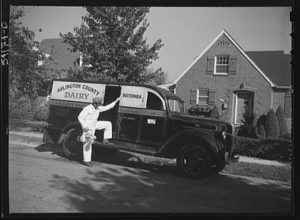
Milk was delivered in glass bottles for the first time in 1878. Alexander Campbell of New York brought milk to his customers in sealed bottles. Previously, a milkman ladled milk from his container into the purchaser’s container. Children can learn how milk goes from farm to family at: milk. They could find out why today milk is stored in white containers and not clear bottles.