Jan 102026
 

Thomas Paine

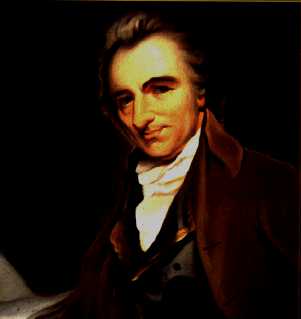
Common Sense was published by Thomas Paine in 1776. He first published the 48-page pamphlet anonymously because what he was propounding was treason against England. Some experts believe this small pamphlet was one of the major influences regarding America’s Revolutionary War. At least a half million copies were sold, and the proceeds were donated to George Washington and the Continental Army. Idea: Paine’s words are very stirring. Older children would enjoy reading and discussing some of the passages. The pamphlet can be found at: Project Gutenberg.

Jan 102026
 

League of Nations was formed in 1920. Over 50 countries worked together to try to end war. Permanent nations included France, Italy, Japan, and Great Britain. Later Germany and the Union of Soviet Socialist Republics became permanent members. However, the United States was not a member. The League of Nations ceased to exist in 1946, but it became the basis for the United Nations.

Flag of United Nations

Flag of United Nations

United Nations General Assembly held its first meeting in 1946 in London, England. Founded by 51 countries, the United Nations today is comprised of 193 countries. The four goals are:
• To keep peace between countries
• To develop friendly relationships between countries
• To help the world’s poor through medical and educational programs
• To be a catalyst so that progress can be made
Today the General Assembly meets in New York City. Other branches of the United Nations are located in Geneva, Switzerland, and Vienna, Austria. Children could learn more at: United Nations.

Jan 102026
 

Project Diana

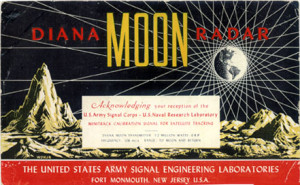
Project Diana was conducted in 1946 by the Army Signal Corps.  The group sent radio signals to the moon and recorded the reflected signals (about 468,000 miles to the moon and back). The signals took 2.5 seconds to return to earth. Today called EME (Earth – Moon – Earth), the program started the space program because it was the first time humans sent something beyond the earth’s atmosphere. Project Diana was named after the Roman goddess Diana, the goddess of the hunt and of the moon. Children can learn more at: Project Diana.

Jan 112026
 

Dairy Cow

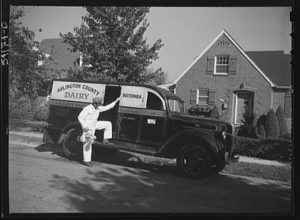
National Milk Day is today! Perhaps today was chosen for National Milk Day because on this day in 1878 milk was delivered in glass bottles to consumers. See the post below. US citizens consume 226.6 billion pounds of milk per year. That averages as 130 pounds of milk per capita each year. Idea: Children could research and list products that are made from milk, for example butter, cheese, ice cream. They could prepare a snack of their favorite milk products.

Jan 112026
 

A bit of Uranus and some of its moons. Titania and Oberon are the last two on the right.

William Herschel discovered Titania and Oberon, the two largest moons of Uranus, in 1787. Herschel, a German-born astronomer who had moved to England, discovered Uranus in 1781. Today we know Uranus has 27 moons and a ring! Herschel named the two moons after characters in Shakespeare’s “Midsummer Night’s Dream.” Children can learn more about the moons of Uranus at: Moons of Uranus.

Jan 112026
 

milk delivered in bottles

Milk was delivered in glass bottles for the first time in 1878. Alexander Campbell of New York brought milk to his customers in sealed bottles. Previously, a milkman ladled milk from his container into the purchaser’s container. Children can learn how milk goes from farm to family at: milk. They could find out why today milk is stored in white containers and not clear bottles.

Jan 122026
 
Bighorn Sheep

Bighorn Sheep

Sprague Lake

Sprague Lake

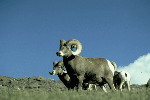
Rocky Mountain National Park was established in 1915. The 265,000-acre park, located in Colorado, straddles part of the Continental Divide. About one-third of the park supports an alpine tundra ecosystem. Visitors can hike over 300 miles of trails, and scientists come here to study bighorn sheep. To view some excellent multimedia presentations and to tap some webcams, children could visit: http://www.nps.gov/romo/index.htm.

Jan 122026
 

Senate Portrait of Hattie Caraway

Hattie Caraway became the first woman to be elected a United States Senator in 1932. She represented the state of Arkansas. Her husband was one of the state’s senators when he died. As was custom then, she completed his term. She surprised the powers to be when she decided to run for the office and won! She served in the Senate until 1945. Children could calculate the number of male and female senators by visiting: Women Senators. They could find out if the number of female senators has risen in recent years.

Jan 122026
 

Cape Hatteras National Seashore was established in 1953. Located along the Outer Banks of North Carolina, the national seashore is 70 miles long. Once called the “Graveyard of the Atlantic,” the park hosts many species of birds. Sea turtles also nest along the shore. Children can learn more at: https://www.nps.gov/caha/index.htm.