celebrateandlearn

May 012026
 

First wagon train left Independence, Missouri, for California in 1841. The wagon train reached its destination November 4, 1841. Most wagon trains left in the spring, because it took four or five months to reach their destination. The trains did not want to be isolated in the mountains during winter. The trains, perhaps as much as one hundred wagons long, traveled about fifteen to twenty miles a day. The wagons were called prairie schooners because their white tops looked like billowing sails. Idea: Children could learn more at: Wagon Trains. They could also read Russell Freedman’s Children of the Wild West.

May 012026
 
Empire State Building from the Top of the Rock.jpg

Empire State Building

Chicago began constructing the first skyscraper in 1884. It rose to a height of ten stories! The Home Insurance Company of New York owned the steel-framed building. It was finished by the fall of 1885, but two more floors were added at a later date. It was razed in 1931 so that another building could be built.

Empire State Building was dedicated in 1931. For quite a long time it was the tallest building in the world. However, other buildings are now taller than it. Children can learn more at: Empire State Building.

May 012026
 
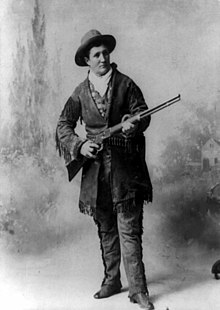
Calamity jane.jpeg

Calamity Jane

Calamity Jane (born Martha Jane Canary in Princeton, Missouri, 1852; died Terry, South Dakota, August 1, 1903) was a well-known frontier woman, scout, and story teller. Children can read her autobiography, Life and Adventures of Calamity Jane, at Calamity Jane.

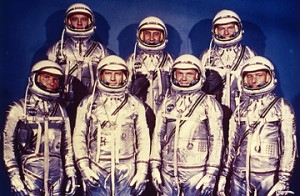
Carpenter is the far right person in the first row

Scott Carpenter (born Boulder, Colorado, 1925; died Denver, Colorado, October 10, 2013) was one of the seven original US astronauts. He was launched into space on May 24, 1962. The fourth American to travel in space, he circled the earth three times. Aboard Aurora 7, he conducted five experiments in the five-hour voyage. He was the first astronaut to eat solid food in space. Children could learn more at: Scott Carpenter.

Ingrid Law (born New York State, 1970) writes books for children. Savvy received a 2009 Newbery Honor Award, and many children like Scumble as well. Children can learn more at: Ingrid Law.

May 022026
 

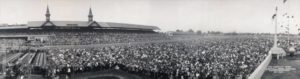
Diane Crump in 1970 became the first woman to ride in the Kentucky Derby. Her horse did not win the race, but she is credited with winning at least 228 races. Five other women (Patti Cooksey, Andrea Seefeldt, Julie Krone, Rosemary Homeister, and Rosie Napravnik) have been jockeys in the Kentucky Derby. Diane Crump died on January 1, 2026, in Winchester, Virginia. Children can read a short biography of Crump at: Diane Crump.

May 022026
 
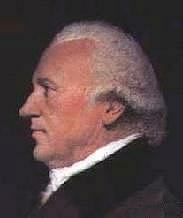
Catherine the Great

Catherine the Great

Catherine the Great (born Stettin, now Szczecin, Poland, 1729; died St. Petersburg, Russia, November 17, 1796) was Empress of Russia from 1762 to 1796. She is credited with making Russia into a modern state.
EJMcCoy.jpg

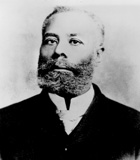
Elijah McCoy

Elijah McCoy (born Colchester, Ontario, Canada, 1844; died Eloise, Michigan, October 10, 1929) was an inventor. The son of runaway slaves, he patented over 50 inventions. His most famous invention was a way to lubricate train engines as they worked. His inventions were so reliable that people did not want to buy imitations. Thus, his name is honored with the phrase, “the Real McCoy.” Children can learn more at: Elijah McCoy.

Mary Quattlebaum (born Bryan, Texas, 1958) has written at least 23 books for children. Her books include the Jackson Jones series and A Year on My Street.

Susan Richards Shreve (born Toledo, Ohio, 1939) writes books for children and adults. Her books include the Joshua T. Bates series and The Lovely Shoes. Her book Lucy Forever and Miss Rosetree, Shrinks received the Edgar Award in 1988. Children could visit her website at: Susan Shreve.

May 032026
 

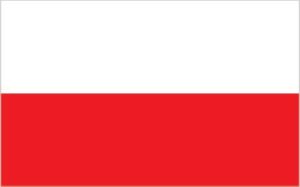
Flag of Poland

Poland celebrates Swieto Trzeciego Majo (Constitution Day). Its first constitution was ratified in 1794. This European country, according to the CIA World Factbook, is slightly smaller than New Mexico. The climate ranges from cold and snowy in winter to cool and rainy in the summer. About 38 million people live in Poland, and the country exports machinery and manufactured goods. Wycinanki, paper cutting, is a Polish folk art. Children could learn how to produce the folk art at: Wycinanki. Children can learn more about Poland at: Poland.