Confederate States of America came into being in 1861. Representatives from seven states (Texas, South Carolina, Louisiana, Mississippi, Florida, Alabama, and Georgia) met in Montgomery, Alabama, to start the formation of the Confederacy.
Feb 042026

Confederate States of America came into being in 1861. Representatives from seven states (Texas, South Carolina, Louisiana, Mississippi, Florida, Alabama, and Georgia) met in Montgomery, Alabama, to start the formation of the Confederacy.
Barbara Shook Hazen (born Dayton, Ohio, 1930) has written about 80 books for children. Her books include Katie’s Wish and The Knight Who Was Afraid of the Dark. Children can visit her website at: Barbara Shook Hazen.
Russell Hoban (born Lansdale, Pennsylvania, 1925; died London, England, December 13, 2011) was an author and an artist. He wrote over 60 books for children and over 15 books for adults. He also wrote poetry and plays. One of his books is Bedtime for Frances. Children could learn more at: Russell Hoban.
Charles A. Lindbergh (born Detroit, Michigan, 1902; died Kipahula, Maui, Hawaii, August 27, 1974) was the first person to fly solo across the Atlantic Ocean. He made the trip May 20-21, 1927. Called “Lucky Lindy,” he immediately became a hero. Children can read more about him at: Charles Lindbergh.
Thaddeus Kosciuszko (born Lithuania, 1746; died Solothurn, Switzerland, October 15, 1817) is often called the “Hero of Two Wars” because he fought for freedom in both America and Poland. He came to America in 1776 and presented himself to the Continental Congress. He had excellent engineering skills and built fortifications near Saratoga, West Point, and other locations. After the war, he received the rank of brigadier general. In 1784 he returned to Poland and became embroiled in a fight for freedom there. While his side won for a time, ultimately he was imprisoned. Children can visit a website at: Kosciuszko.
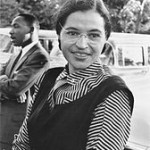
Rosa Parks
Rosa Louise Parks (born Tuskegee, Alabama, 1913; died Detroit, Michigan, October 24, 2005) was a civil rights leader. She refused to give up her bus seat in Montgomery, Alabama, and was arrested on December 1, 1955. Children could read Rosa Parks: My Story by Rosa Parks and Jim Haskins.

John Jeffries
National Weatherperson’s Day honors the birthday of John Jeffries, one of America’s first meteorologists. An avid balloonist, he recorded daily weather observations from 1774 until 1816. Children could read Weather Words and What They Mean by Gail Gibbons.
Roger Williams landed in America in 1631. He came for religious freedom, but he found the Massachusetts colony restrictive. Banished by Massachusetts leaders in early 1636, he founded the colony of Rhode Island and the city of Providence. Children can learn more at: Roger Williams.
Hermitage Museum opened to the public in Saint Petersburg, Russia, in 1852. Catherine the Great created the museum in 1764. One of the oldest museums in the world, the Hermitage houses nearly three million artifacts. Children can participate in a virtual tour or see virtual exhibits at the museum’s very interesting website at: Hermitage Museum.
Welcome Stranger Gold Nugget was discovered at Moliagul, Victoria, Australia, in 1869. The largest alluvial gold nugget ever found, the Welcome Stranger weighed almost 2,284 ounces. It measured 24 inches by 12 inches. The nugget was melted down and formed into ingots that were sent to the Bank of England.
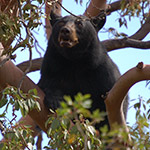
Bear in Big Bend National Park
National Wildlife Federation was established in 1936. The group’s mission statement is: Inspiring Americans to Protect Wildlife for Our Children’s Future.
The four-million-member group has three powerful goals:
• Finding solutions to the climate crisis
• Turning inside kids out
• Safeguarding America’s wildlife and wild places.
Children could visit the group’s website for children at: http://www.nwf.org/kids.aspx.
.

Hank Aaron
Henry Louis “Hank” Aaron (born Mobile, Alabama, 1932; died Atlanta, Georgia, January 22, 2021) was a Baseball Hall of Famer. He broke Babe Ruth’s home run record of 714, hitting 715 home runs on April 8, 1974. He concluded his career with 755 home runs. Children could read Hank Aaron’s Dream by Matt Tavares. They could also learn more at: Hank Aaron.
John Jeffries (born Boston, Massachusetts, 1745; died Boston, Massachusetts, September 16, 1819) was a scientist and physician. He and Jean Pierre Blanchard, on January 4, 1785, were the first to cross the English Channel in a hot air balloon, a dangerous adventure. He is perhaps best known for his meteorological observations, resulting in today’s National Weatherperson’s Day.
Patricia Lauber (born New York, New York, 1924; died New Canaan, Connecticut, March 12, 2010) wrote over 125 books for children. She received a Newbery Honor Award in 1986 for Volcano: Eruption and Healing of Mount Saint Helens. Children can learn more about her at: Patricia Lauber.
David Wiesner (born Bridgewater, New Jersey, 1957) is a children’s book author and illustrator. He has received three Caldecott Medals: Tuesday in 1992, The Three Pigs in 2002, and Flotsam in 2007. He has also earned three Caldecott Honor Awards: Free Fall in 1989, Sector 7 in 2000, and Mr. Wuffles! in 2014. Children can visit his site at: David Wiesner.
John Witherspoon (born near Edinburgh, Scotland, 1723; died Princeton, New Jersey, November 15, 1794) signed the Declaration of Independence. During the Revolutionary War, he served on over 100 committees. Representing New Jersey, he attended the second Continental Congress. He signed the Articles of Confederation and favored the Constitution. A clergyman, he was president of the College of New Jersey, known today as Princeton University. His students included James Madison and William Bradford. Older children can learn more at: John Witherspoon.

Massachusetts State Flag
Massachusetts became the sixth state in the United States by ratifying the Constitution in 1788. The word Massachusetts means, “at or about the great hill.” The state ranks forty-fifth in size and thirteenth in population. Its state beverage is cranberry juice. They could toast Massachusetts’s birthday with cranberry juice.
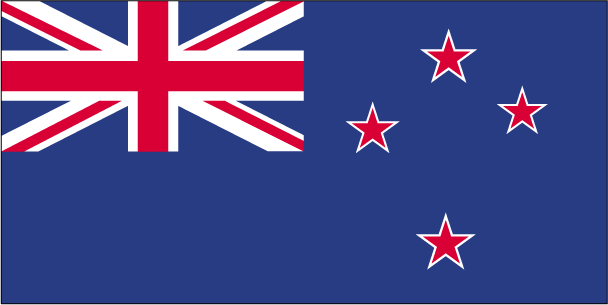 New Zealand remembers Waitangi Day. In 1840 the Maori and the Europeans signed the Treaty of Waitangi, permitting Great Britain to develop New Zealand. About the size of the state of Colorado, New Zealand is comprised of mostly mountains with some coastal plains. Slightly over four million people live on the islands. Wellington is the capital. The country exports dairy products, meat, wool, and wood products. The kiwi is native to New Zealand. Children can learn more at: New Zealand.