Battle of Bennington Day is celebrated in Vermont. The Green Mountain Boys defeated the British in 1777. During the Revolutionary War, British General Burgoyne sent a large contingent into the town of Bennington to take much-needed supplies and horses. The British were surprised to find 2,000 patriots, led by General John Stark. Burgoyne lost about 1,000 soldiers and was never able to replace his supplies. Eventually Burgoyne had to surrender at the Battle of Saratoga. Children can learn more at: Battle of Bennington.

Klondike Gold Rush
Bonanza Creek, Alaska, experienced a gold rush in 1896. When Skookum Jim, Dawson Charlie and others discovered gold in Rabbit Creek, the Klondike Gold Rush began. Around 100,000 people tried to travel to the area, but only about 30,000 actually completed the trip. Of that number only 4,000 prospectors found gold. In 1903 production started to decline, and about 1,250,000 pounds of gold were mined in the area. Idea: Children could read about the Klondike Gold Rush. What problems did the prospectors face? Children could learn more at the Klondike Gold Rush National Historical Park at: http://www.nps.gov/klgo/index.htm.
Sports Illustrated appeared for the first time in 1954. Currently three million people subscribe to the magazine, and 23 million people read the weekly magazine.
Menachem Begin (born Brest-Litovsk, Poland, 1913; died Tel Aviv, Israel, March 9, 1992) was an important Israeli hero. He fought for Israel’s freedom. He was elected Israel’s Prime Minister in 1977 and signed the Camp David Accord in 1979. He and Anwar el-Sadat received the 1978 Nobel Peace Prize for their efforts.
Matt Christopher (born Bath, Pennsylvania, 1917; died Charlotte, North Carolina, September 20, 1997) was a children’s author. He is known for his 130 novels about sports. Children could visit a site hosted by his sons, Dale and Duane, at: Matt Christopher. Idea: Children could pick one of Matt Christopher’s sports books. After reading it, they could make a list of new things they have learned about the sport.
Beatrice Schenk de Regniers (born Lafayette, Indiana, 1914; died Washington, DC, March 1, 2000) wrote more than 50 books for children. Her works include May I Bring a Friend? (which earned the 1965 Caldecott Medal for illustrator Beni Montresor) and The Giant Story (illustrated by Maurice Sendak). Children can learn more at: Beatrice Schenk de Regniers.
Diana Wynne Jones (born United Kingdom, 1934; died United Kingdom, March 26, 2011) wrote fantasy books for children. Her works include Fire and Hemlock and The Archer’s Goon. Children could learn more at: Diana Wynne Jones.

Flag of Indonesia
Indonesia celebrates Independence Day. It became free from Dutch control in 1945. About 13,700 islands comprise this archipelago, located between Asia and Australia. The total area of the islands is about three times the size of Texas. Over 251 million people live in Indonesia, making it the fourth most populous country. Jakarta is the capital. Idea: Indonesia grows cassava. Children could find out more about this crop.

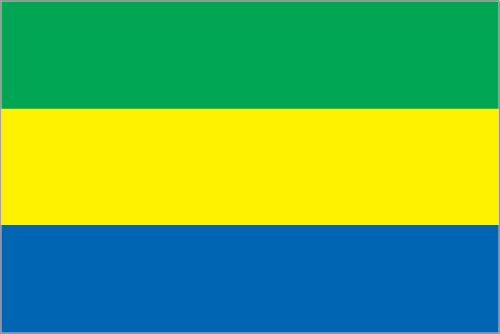
Flag of Gabon
Gabon celebrates Independence Day. It gained autonomy from France in 1960. The country, located on the western coast of Africa, is for the most part covered with rain forest. The country’s area is about the same as the area of Colorado, and about 1.6 million people live there. Libreville is the capital.
Robert Fulton’s first steamboat North River Steamboat, also known as the Clermont, was operated for the first time in 1807. It traveled between Albany and New York City. At first called “Fulton’s Folly,” the ship cruised the 150-mile stretch in 32 hours.

Double Eagle II
Double Eagle II landed in Miserey, France, in 1978. The balloon and its crew, Larry Newman, Ben Abruzzo, and Max Anderson, had left Presque Island, Maine, on August 11, 1978. The balloon was the first one of its kind to travel across the Atlantic Ocean, and the three balloonists instantly became heroes. Idea: Children could list the difficulties the crew faced. For example, where did they sleep? Older children can learn more at: Double Eagle II.
Davy Crockett (born Hawkins County, Tennessee, 1786; died at the Alamo, March 6, 1836) was an adventurer and a frontier fighter. He represented the state of Tennessee in the House of Representatives from March 4, 1833 to March 4, 1835. Idea: Children could make a timeline of Davy Crockett’s life. Older children could read his autobiography, A Narrative of the Life of Davy Crockett, of the State of Tennessee, at: Project Gutenberg.
Myra Cohn Livingston (born Omaha, Nebraska, 1926; died Los Angeles, California, August 23, 1996) wrote books of poetry for children. Her works include Celebrations and Sky Songs. Children can learn more at: Myra Cohn Livingston.
Geneva Grace Stratton-Porter (born near Wabash, Indiana, 1863; died Los Angeles, California, December 6, 1924) wrote books for children. She also wrote articles for magazines, and she was one of the first woman movie producers. Her books include Keeper of the Bees and A Girl of the Limberlost. Children can learn more at: Geneva Grace Stratton-Porter. Children can read many of her works at: Project Gutenberg.
On this day, two events connecting John White and Roanoke occurred:
- Virginia Dare in 1587 was the first child of Europeans to be born in the colonies. Her grandfather was John White, a leader of the Roanoke colony. He and his group had arrived at Roanoke on July 22. He returned to England for more supplies and more people. However, wars and other events delayed his voyage back.
- John White came back to Roanoke on August 18, 1590 to find that the Roanoke colony (and his granddaughter) had disappeared. Children could learn more at: Lost Colony