Social Security Act was approved by Congress in 1935. Idea: Children could learn more about Social Security and how it obtains its funds. Older children can learn more at: Social Security.
Aug 142026

Social Security Act was approved by Congress in 1935. Idea: Children could learn more about Social Security and how it obtains its funds. Older children can learn more at: Social Security.
Wiffle ball was patented in 1953 by David N. Mullany. He invented the ball for his son so that it would curve when it was pitched. Today wiffle ball tournaments are popular around the world. Children can learn more at: Wiffle Ball.
Michael Phelps earned his 28th Olympic Medal in 2016. He did not medal during the 2000 Summer Olympics swimming events. At the 2004 Summer Olympics he earned six gold medals and two bronze medals. At the 2008 Summer Olympics he won eight gold medals. During the 2012 Summer Olympics he earned four gold medals and two silver medals. At the 2016 Summer Olympics he won five gold medals and one silver medal.
Julia Child (born Pasadena, California, 1912; died Santa Barbara, California, August 13, 2004)) was an author and a television chef. She always concluded her shows with “Bon Appétit!” Her kitchen was donated to the Smithsonian. Children could view a timeline of her life at: Julia Child. Idea: Children could demonstrate to the class how to make simple foods.
Gary Larson (born Tacoma, Washington, 1950) is a cartoonist. He created The Far Side.
Alice Provensen (born Chicago, Illinois, 1918; died San Clemente, California, April 23, 2018) and her husband, Martin Provensen, wrote and illustrated children’s books. They earned a 1982 Caldecott Honor Award for A Visit to William Blake’s Inn: Poems for Innocent and Experienced Travelers. They also received the 1984 Caldecott Medal for The Glorious Flight: Across the Channel with Louis Bleriot, July 25, 1909.

Honey Bee
World Honey Bee Day is today! Celebrated on the third Saturday in August, the day honors the insect and all that it does for our planet. In 2009 then Secretary of Agriculture Thomas J. Vilsek issued a proclamation that the day was National Honey Bee Day. The day grew in popularity to what it is today. Honey bees are important because they pollinate so many different types of plants, including fruit trees and plants, vegetables, and nut trees. Bee are insects, so they have six legs. They have five eyes and two sets of wings. Bees communicate how far and in what direction food can be found by performing intricate dances.

Flag of Liechtenstein
Liechtenstein celebrates Assumption Day, a national holiday. This tiny principality, about the size of Washington, DC, is located between Austria and Switzerland. About 37,000 people live in this country of a low valley surrounded by mountains. Vaduz is the capital. Interesting fact: Liechtenstein is one of two doubly landlocked countries. Uzbekistan is the other country.

Flag of South Korea
South Korea celebrates Liberation Day. In 1945 it became free of Japanese rule. Its area is slightly larger than the area of Indiana, and mountains and hills cover the northwestern portion while a coastal plain covers the southeastern portion. Almost 49 million people live there, and Seoul is the capital.
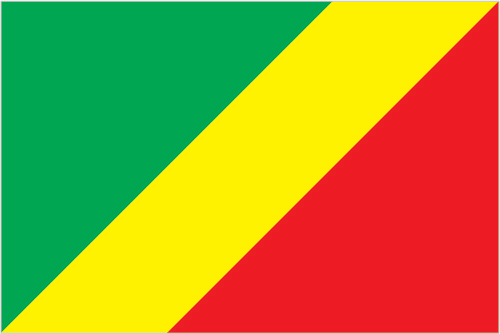
Flag of Republic of the Congo
Republic of the Congo celebrates Independence Day. It became free from French control in 1960. Located on the western coast of Africa, this country, about the size of the state of Montana, exports sugarcane, coffee and many other products. About 4.5 million people live in the Republic of the Congo, and Brazzaville is the capital.

Kissing the War Goodbye
World War II informally ended in 1945. When President Truman proclaimed that the Japanese had surrendered, people rejoiced around the world. The official surrender took place on September 2, 1945, in Tokyo Bay aboard the USS Missouri. Idea: Children could read 500 Facts World War II History for Kids, written by Kelly Milner Halls and illustrated by Katy Dockrill. Then they could make a timeline of World War II.

Napoleon Bonaparte
Napoleon Bonaparte (born Corsica, 1769; died St. Helena, May 5, 1821) was a French emperor.
Stephen G. Breyer (born San Francisco, California, 1938) is a retired associate justice of the Supreme Court. Appointed by Bill Clinton, he took over his duties regarding the Supreme Court on August 3, 1994. He retired on June 30, 2022. Children could learn more at: Stephen G. Breyer.
Walter Crane (born United Kingdom, 1845; died United Kingdom, March 14, 1915) was a famous illustrator of children’s books. He, Randolph Caldecott, and Kate Greenaway formed a powerful triumvirate that invigorated children’s literature. Children can view many of his works at: Project Gutenberg. They could learn more about Crane at: Walter Crane.
Edna Ferber (born Kalamazoo, Michigan, 1887; died New York, New York, April 16, 1968) was a novelist. So Big was very popular, and it won her a Pulitzer Prize. Children can read some of her works at: Project Gutenberg.

Florence Kling Harding
Florence Kling Harding (born Marion, Ohio, 1860; died Marion, Ohio, November 21, 1924) was America’s First Lady from March 4, 1921 to August 2, 1923. She was the wife of Warren Harding, twenty-ninth president of the United States. Children can visit a website at: Florence Harding. Idea: One child could research Mrs. Harding’s life and pretend to be her. The rest could have a question and answer session with “Mrs. Harding.”
Theresa Nelson (born Beaumont, Texas, 1948) writes books for children. Her works include Earthshine and The Empress of Elsewhere. Children can visit her website at: Theresa Nelson.
Edith Nesbit (born Kennington, Surrey, England, 1858; died New Romney, Kent, England, May 4, 1924) wrote at least 40 books for both children and adults. Her most famous children’s books include The Railway Children and Five Children and It. Children can learn more at: Edith Nesbit.
Sir Walter Scott (born Edinburgh, Scotland, 1771; died Abbotsford, Scotland, September 21, 1832) was a famous poet. Children can read many of his works at: Project Gutenberg.
Brinton Turkle (born Alliance, Ohio, 1915; died Santa Fe, New Mexico, October 9, 2003) wrote and illustrated about twenty books for children. He also illustrated over 100 books written by other authors. His works include Do Not Open and Deep in the Forest. He received a 1970 Caldecott Honor Award for Thy Friend, Obadiah. Children could learn more at: Brinton Turkle.