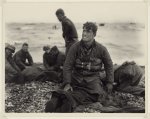
D-Day
D-Day happened in 1944 when almost two million Allied soldiers and two thousand ships landed on the shores of Normandy. Operation Overlord was very successful. Children could learn more at: D-Day.
D-Day
D-Day happened in 1944 when almost two million Allied soldiers and two thousand ships landed on the shores of Normandy. Operation Overlord was very successful. Children could learn more at: D-Day.
David Stein in 1988 in New York City created a bubble fifty feet long. A bubble has three layers: soap, water, and soap. Children could make their own bubble solution by combining 1/3 part dishwashing liquid with 2/3 part water. If possible, they should let the bubble solution rest for a while before they use it. They could conduct experiments to see who could make the biggest bubble (outside of course).
American Pharoah earned the Triple Crown by winning the Belmont Stakes in 2015. The horse placed first at the Kentucky Derby on May 2, 2015. He also won the Preakness Stakes on May 16, 2015. The last horse to win the Triple Crown was Affirmed in 1978.
Verna Aardema (born New Era, Michigan, 1911; died Fort Myers, Florida, August 15, 2000) wrote at least 32 books for children. She specialized in folk tales and stories from different cultures. Her works include Tales from the Third Ear and The Sky-God Stories. She wrote Why Mosquitoes Buzz in People’s Ears: A West African Tale. The illustrators of that story, Leo and Diane Dillon, received the 1976 Caldecott Medal. Children could learn more at: Verna Aardema.
Sarah Dessen (born Evanston, Illinois, 1970) has written at least fifteen novels and novellas for young adults. Her books include The Summer and The Moon and More. Young adults can visit her website at: Sarah Dessen.
Nathan Hale (born Coventry, Connecticut, 1755; hanged by the British in Manhattan, New York, September 22, 1776) was an American patriot. Nathan and his five brothers had joined the American army in 1775. He quickly rose to the office of captain. George Washington asked for a volunteer to go behind enemy lines to gather information about British General William Howe’s military plans. Nathan stepped forward. Disguised as a Dutch teacher, he gathered information. However, he was caught in New York City before he could return to the general’s headquarters. He is famous for saying, ” I only regret that I have but one life to lose for my country.” Children could learn more at: Nathan Hale.
Will James (born Joseph Ernest Nephtali Dufault in Quebec Province, Canada, 1892; died Hollywood, California, September 3, 1942) was a cowboy, artist, and writer. He wrote and illustrated approximately 23 books. He received the 1927 Newbery Medal for Smoky the Cowhorse.
Geraldine McCaughrean (born London, England, 1951) has written over 170 books for children and young adults. She received the 2008 Michael L. Printz Award for The White Darkness. Children can visit her website at: Geraldine McCaughrean.
Cynthia Rylant (born Hopewell, Virginia, 1954) has written more than 100 books for children. She is known for her excellent Henry and Mudge books. A Fine White Dust received a 1987 Newbery Honor Award, and Missing May was the 1993 Newbery Medal winner. Children can learn more at: Cynthia Rylant.
Peter Spier (born Amsterdam, Netherlands, 1927; died Port Jefferson, New York, April 27, 2017) was an author and illustrator of at least 46 children’s books. One of his best known works is Noah’s Ark, which won the 1977 Caldecott Medal.
Homer Plessy in 1892 was arrested for refusing to give up his seat in a whites only train car. His arrest became the foundation for Plessy v Ferguson, which went to the Supreme Court. The justices basically condoned separate but equal facilities. Children can watch an excellent video about Plessy v Ferguson at: https://www.nps.gov/people/homer-plessy.htm.
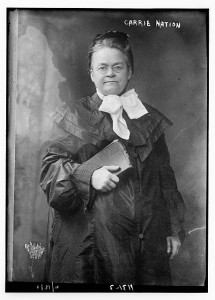
Carrie Nation
Carrie Nation in 1899 in Kiowa, Kansas. attacked the first of many saloons, destroying the saloon’s liquor supply. She was promoting the temperance movement. Eventually the six-foot tall woman smashed, sometimes using a hatchet, about 30 taverns. She became famous for her exploits and her beliefs. Children could learn more at: Carrie Nation.
The $64,000 Question television game show premiered in 1955. Contestants answered questions about an area where they felt they were experts. If a contestant answered a question correctly, he/she could double the money won and move on to a more difficult question. The last episode of the show aired on November 2, 1958. Idea: Children could design and play a variation of The $64,000 Question.
Virginia Apgar (born Westfield, New Jersey 1909; died New York, New York, August 7, 1974) was a physician who developed the Apgar Score. Newborn babies receive the test, and doctors can then identify those infants who need special attention. The Apgar measures five quick checks at one minute, five minutes, and ten minutes. Children could learn more at: Virginia Apgar.
Gwendolyn Elizabeth Brooks (born Topeka, Kansas, 1917; died Chicago, Illinois, December 3, 2000) was the first African-American to win the Pulitzer Prize for poetry. Her book, Annie Allen, took the prize in 1950. Children could read some of her poems at: http://www.poemhunter.com/gwendolyn-brooks/. They could also read A Song for Gwendolyn Brooks, written by Alice Faye Duncan and illustrated by Xia Gordon.
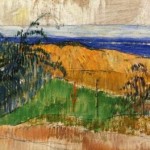
View of the Beach at Bellangenay
Paul Gauguin (born Paris, France, 1848; died Atoana, Hiva Ova, Marquesas, May 9, 1903) was an artist. He used bold colors and often painted landscapes. He was a stockbroker before he became a painter. He moved to Tahiti about three years after he became an artist. Visit a website at: Paul Gauguin. Idea: Children could view Gauguin’s work. He and van Gogh actually shared a house for a while. Children could compare the two artists’ works.
Nikki Giovanni (born Knoxville, Tennessee, 1943) is an African-American poet and writer. Her works for children include The Sun Is so Quiet and Lincoln and Douglass: An American Friendship. Her book Rosa, a tribute to Rosa Parks, was illustrated by Bryan Collier. He received a 2006 Caldecott Honor Award, as well as the Coretta Scott King Award for Illustrators. Children could visit her website at: Nikki Giovanni.
Georgess McHargue (born New York, New York, 1941; died Groton, Massachusetts, July 18, 2011) wrote at least 25 books for children. Her works include See You Later, Crocodile and The Talking Table Mystery.

United Nations Flag
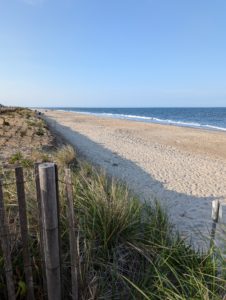
World Oceans Day
World Oceans Day is today! Conceived in 1992, the day was officially recognized by the United Nations in 2008. This year’s theme is Revitalization: Collective Action for the Ocean. Children can learn more at: World Oceans Day.

Flag of Norfolk Island
Norfolk Island celebrates Bounty Day. This self-governing territory of Australia honors the day in 1856 when Pitcairn Islanders on the Bounty landed on its shores. This tiny island (about 0.2 the size of Washington, DC) supports about 2,200 people. Kingston is the capital. Children can learn more at: Norfolk Island.