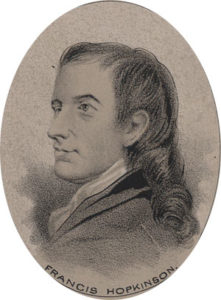
 Francis Hopkinson (born Philadelphia, Pennsylvania, 1737; died Philadelphia, Pennsylvania, May 9, 1791) signed the Declaration of Independence. Representing New Jersey, he was also a writer, lawyer and judge. Legend indicates he was instrumental in designing the flag of the United States. Children can learn more at: Francis Hopkinson.
Louis Jolliet (born near Quebec City, New France, 1645; died May 1700) was an explorer. He and Jacques Marquette traveled extensively through the upper Mississippi River region. Idea: Children could trace some of the routes the two explorers traveled.
Stephen King (born Portland, Maine, 1947) is an author. Two of his most famous works are The Shining and The Stand.
Margaret MacKall Smith Taylor (born Calvert County, Maryland, 1788; died East Pascagoula, Mississippi, August 14, 1852) was America’s First Lady from March 4, 1849 to July 8, 1850. She was the wife of Zachary Taylor, twelfth president of the United States. She lived in the White House for less than eighteen months because he died in office. Even while First Lady, however, she relegated social functions to her daughter. Children could visit a website at: Margaret Taylor.
Herbert George Wells (born Bromley, Kent, England, 1866; died London, England, August 13, 1946) was called the “father of science fiction.” He wrote at least 50 novels and at least twenty short stories. He wrote nonfiction, including commentaries on society, biographies, and an autobiography. Two of his most famous works are The War of the Worlds and The Invisible Man. Children can read many of his works at: Project Gutenberg.
Hans Wilhelm (born Bremen, Germany, 1945) has written and/or illustrated over 200 books for children. His books include The Big Boasting Battle and the Noodles series. Children can visit his website at: Hans Wilhelm.
Taro Yashima (born Japan, 1908; died Los Angeles, California, June 30, 1994) wrote and illustrated books for children. He received three Caldecott Honor Awards: one in 1956 for Crow Boy, one in 1959 for Umbrella, and one in 1968 for Seashore Story.

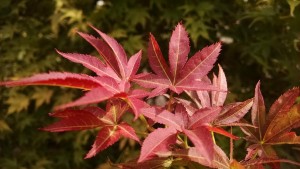 Autumnal equinox, the first day of fall, is today in the northern hemisphere. The first day of spring is celebrated in the southern hemisphere. Today the lengths of day and night are both twelve hours. Children can learn more at: