Feb 092025
 

Dick Gackenbach (born Allentown, Pennsylvania, 1927) has written and illustrated over 70 books for children. His works include Harry and the Terrible Whatzit and Hattie Rabbit.

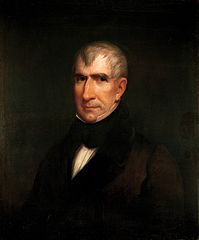
William Henry Harrison

William Henry Harrison (born Berkeley, Virginia, 1773; died Washington, DC, April 4, 1841) was the ninth president (1841) of the United States. After a successful military career, he served in the House of Representatives, the Senate, and as ambassador to Colombia. His presidential campaign slogan was “Tippecanoe and Tyler Too.” His inaugural address was delivered in the cold and rain. He developed pneumonia and died a month later. Children could visit a website at: William Henry Harrison. They could find out what happened at Tippecanoe.

Amy Lowell (born Brookline, Massachusetts, 1874; died Brookline, Massachusetts, May 12, 1925) was a poet. Children can learn more about her life at: Amy Lowell. Children can read some of her works at: Project Gutenberg.

Lydia Estes Pinkham (born Lynn, Massachusetts, 1819; died Lynn, Massachusetts, May 17, 1883) produced and sold Lydia Pinkham’s Vegetable Compound. Containing about 18 percent alcohol, the medicine was supposed to be therapeutic. After her death, the business became quite sound financially.

Alice Walker (born Eatonton, Georgia, 1944) is an author and social activist. One of her books is The Color Purple, which received the 1983 Pulitzer Prize for Fiction. She is the first African American woman to receive a Pulitzer. Children can visit her website at: Alice Walker.

Feb 102025
 
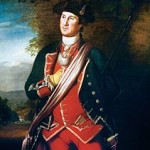
George Washington in British Uniform

George Washington in British Uniform

French and Indian War officially ended in 1763. The French and the British signed the Treaty of Paris. The war meant that the British greatly expanded their territory in North America. However, the war was a tremendous financial burden to Great Britain. That financial burden was passed on to the American colonists in the form of various taxes. The French and Indian War eventually led to the Revolutionary War. Did you know George Washington was an officer on the British side? Children could read Struggle for a Continent: The French and Indian Wars 1689-1763 by Betsy Maestro and Giulio Maestro.

Feb 102025
 

Amendment Twenty-Five to the Constitution was adopted in 1967. It delineated presidential succession requirements under four conditions and clarified Article II of the Constitution.

1. Should the President die, the Vice President becomes President.
2. Should there be no Vice President, the President can nominate someone and both portions of Congress must confirm the candidate with a majority of votes.
3. Should the President be unavailable (for example, a medical operation), the Vice President can take over.
4. Should the President be unable to discharge powers, the Vice President, with the support of Congress, can take over the responsibilities. This has never happened.

Older children can learn more at: Amendment Twenty-Five.


Feb 102025
 

Adrienne Adams (born Fort Smith, Arkansas, 1906; died Rolla, Missouri, December 3, 2002) wrote and illustrated books for children. She received a 1960 Caldecott Honor Award for her illustrations in Houses from the Sea. Adams earned a 1961 Caldecott Honor Award for her work in The Day We Saw the Sun Come Up. Alice E. Goudy wrote both of those books. Children can learn more at: Adrienne Adams.

Lucy Cousins (born United Kingdom, 1964) has written at least 38 books for children. She is best known for her series Maisy the Mouse. Children can view her website at: Maisy.

Stephen Gammell (born Des Moines, Iowa, 1943) has illustrated over 50 books for children. He received a Caldecott Honor Award in 1983 for Where the Buffaloes Begin. He earned the 1989 Caldecott Medal for Song and Dance Man. He illustrated Scary Stories to Tell in the Dark and its sequels.

Elaine Lobl Konigsburg (born New York, New York, 1930; died Falls Church, Virginia, April 19, 2013) was a children’s author. She wrote among other works Jennifer, Hecate, Macbeth, William McKinley, and Me, Elizabeth, which received a 1968 Newbery Honor Award. In that same year Konigsburg was awarded the Newbery Medal for the classic From the Mixed-Up Files of Mrs. Basil E. Frankweiler. She received another Newbery Medal in 1997 for A View from Saturday. Children can learn more at: Elaine Lobl Konigsburg.

Boris Leonidovich Pasternak (born Moscow, Russia, 1890; died Moscow, Russia, May 30, 1960) was an author. One of his most famous works is Doctor Zhivago; he received the Nobel Prize for Literature in 1958 for the book. Children can read some of his poems at: Pasternak.

Leontyne Price (born Laurel, Mississippi, 1927) is an opera singer. She rose to fame as one of the first African Americans to perform in leading roles at the Metropolitan Opera. In 1997 she wrote Aida, a book for children, illustrated by Leo and Diane Dillon.

Feb 112025
 

United Nations Flag

International Day of Women and Girls in Science is today! Created by the United Nations in December of 2015, the day is dedicated to bringing gender equality to the fields of math and science. Presently about 97 percent of Nobel Laureates are men and only three percent are women. Women in the fields of math and science are often paid less than their male counterparts. “More women and girls in science equals better science,” stated Antonio Guterres, UN Secretary-General. Children can learn more at: Women and Girls in Science.

Feb 112025
 

National Inventors’ Day is today! In 1983 President Ronald Reagan declared February 11 to be National Inventors’ Day, honoring Thomas Edison who was born on this day in 1847. The day recognizes all inventors and encourages everyone to try out new ideas. Children could list all the inventors they can think of and perhaps rank them in order of importance. They could research famous people who were also inventors. For example, Abraham Lincoln is the only president who received a patent. They could also learn more about creating an invention by reading Kids Inventing! A Handbook for Young Inventors by Susan Casey.

Feb 112025
 

Philadelphia established the first hospital, Pennsylvania Hospital, in the United States in 1751. Aided by Benjamin Franklin, Dr. Thomas Bond created the hospital where people received free medical care. Children can take a virtual tour of the old buildings at: Pennsylvania Hospital.

Feb 112025
 
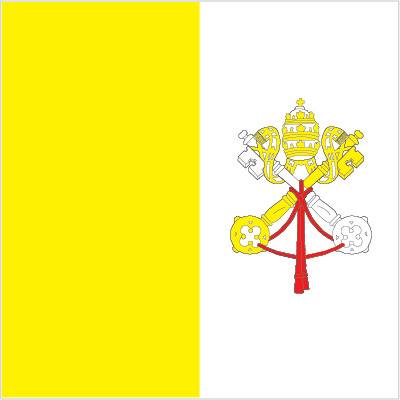
Vatican

Flag of the Vatican

Vatican achieved its independence from Italy in 1929. While Vatican City had been separate from Rome for centuries, documents signed this day in 1929 made the Vatican a distinct government. According to the CIA World Factbook, the Vatican is about 0.7 times the size of the National Mall in Washington, DC. The smallest country in the world, the Vatican is home to around 850 people. More than four million people visit the Vatican each year.