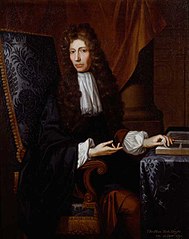
Robert Boyle
Robert Boyle (born Lismore, Ireland, 1662; died London, England, December 30, 1691) was a scientist. He developed Boyle’s Law: if a gas is maintained at a constant temperature, the volume of the gas is inversely proportional to the pressure. Children can learn about Boyle’s Law at: Boyle’s Law. Idea: Children could inflate a balloon and put it in a refrigerator. They could record the results.

Robert Burns
Robert Burns (born Ayrshire, Scotland, 1759; died Dumfries, Scotland; July 21, 1796) was a poet. One of his most famous works is “Auld Lang Syne.” Children can read some of his works at: Project Gutenberg.
Charles Coatesworth Pinckney (born Charleston, South Carolina, 1746; died Charleston, South Carolina, August 16, 1825) represented South Carolina at the Constitutional Convention. During the Revolutionary War, he served as an aide to George Washington. He was captured by the British and was a prisoner of war for about two years. After the war, he helped create South Carolina’s constitution. He unsuccessfully ran for both the offices of vice president and president. Older children could learn more at: Charles Coatesworth Pinckney.



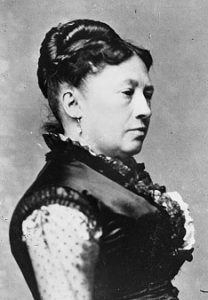 Julia Dent Grant (born St. Louis, Missouri, 1826; died Washington, D. C., December 14, 1902) was America’s First Lady from March 4, 1869 to March 4, 1877. She was the wife of Ulysses Grant, the eighteenth president of the United States. Grant was an army officer, and much of their married life was spent on the frontier in the garrisons. Mrs. Grant actually enjoyed the comparatively easy life of the White House. Children could visit a website at:
  Incandescent light bulb was patented by Thomas Edison in 1880. The patent number is 223898. Idea: In a drawing a light bulb above someone’s head indicates the person has developed a new idea. Children could draw light bulbs. They could surround the light bulbs with ideas of their own for new inventions. They could see his patent at: