Dec 082026
 

Mary Azarian (born Washington, DC, 1940) is an illustrator, working with woodcuts. She has illustrated over 50 children’s books and won the 1999 Caldecott Medal for Snowflake Bentley, written by Jacqueline Briggs Martin. Children can visit her website to view beautiful works of art as well as covers of many of her books at: Mary Azarian.

Miriam Chaikin (born Jerusalem, December 8, 1928; died April 19, 2015) wrote for both children and adults. She received the 1985 Sydney Taylor Award for her body of work. Children might want to read Alexandra’s Scroll: The Story of the First Hanukkah, illustrated by Stephen Fieser.

Padraic Colum (born Longford, Ireland, 1881; died Enfield, Connecticut, January 11, 1972) wrote plays and at least 61 books. He is most known for his children’s books. He earned a 1926 Newbery Honor Award for The Voyagers: Being Legends and Romances of Atlantic Discovery. He also received a 1934 Newbery Honor Award for Big Tree of Bunlahy: Stories of My Own Countryside. Children can read many of his works at: Project Gutenberg. BC

Horace (born Quntus Horatius Flaccus 65 B.C.; died 27 November 8 B.C.) was a great poet during ancient Roman times. Although his father had been a slave, Horace was well educated and a member of the army. Later, a wealthy friend recognized Horace’s talents and supported him. Horace was free from financial worries and could write. One of his most famous works is Odes. Children can read many of his works at: Project Gutenberg.

Diego Rivera (born Guanajuato, Mexico, 1886; died Mexico City, Mexico, November 25, 1957) was an artist known for his large murals. He worked in earth tones and celebrated the common people. Rivera made very large murals. Perhaps the children could plan and complete a very large but temporary mural in chalk on the playground. Children can see many of his works at the Google Art Project at: Diego Rivera. They can also read Diego Rivera: His World and Ours, by Duncan Tonatiuh. This book won the 2012 Pura Belpré Award for best illustrations.

James Grover Thurber (born Columbus, Ohio, 1894; died New York, New York, November 2, 1961) was a writer and cartoonist. Much of his work appeared in The New Yorker magazine. One of his most famous short stories is “The Secret Life of Walter Mitty.” He wrote several books for children, including Many Moons, which earned the 1944 Caldecott Medal for illustrator Louis Slobodkin. Other children’s books include The 13 Clocks and The Wonderful O. Children can learn more about Thurber at: James Thurber.

Edwin Tunis (born Cold Springs, New York, 1897; died Baltimore, Maryland, August 7, 1973) wrote books for children. He received a Newbery Honor Award in 1962 for Frontier Living. He also wrote Colonial Craftsmen and The Tavern at the Ferry. Children can learn more at: Edwin Tunis.

Eli Whitney (born Westborough, Massachusetts, 1765; died New Haven, Connecticut, January 8, 1825) was an inventor. He invented the cotton gin in 1793. It could clean as much cotton as fifty people could clean. Even though he had patented the cotton gin, other manufacturers made copies of his work. He fought them in the courts over years of trials. He also made muskets with interchangeable parts for the United States military. In 1798 he made 10,000 guns. Children can read more at the Eli Whitney Museum: Eli Whitney.
Dec 092026
 

Joan Blos (born New York, New York, 1928; died Ann Arbor, Michigan, October 12, 2017) wrote at least sixteen books for children. A Gathering of Days: A New England Girl’s Journal, 1830-32 won the Newbery Medal in 1979.

Jean De Brunhoff (born Paris, France, 1899; died Switzerland, October 16, 1937) was a children’s author. He is known for his eight books about Babar the Elephant. When Jean died in 1937, his son Laurent continued his father’s legacy by creating 30 more Babar books. Children could see if they see a difference between Jean’s Babar and Laurent’s Babar. They could learn more at: Jean De Brunhoff.

Joel Chandler Harris (born Eatonton, Georgia, 1848; died Atlanta, Georgia, July 3, 1908) was an author. Among other works, he wrote the Uncle Remus stories. Children can read many of his works at: Project Gutenberg. They can also learn more at: Joel Chandler Harris.

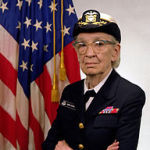
Grace Hopper

Grace Hopper

Grace Murray Hopper (born New York, New York, 1906; died Arlington, Virginia, January 1, 1992) was a computer scientist and mathematician. She was employed by the military for a good part of her life. She worked on the Mark I computer team. She coined the word bug for computer foul-ups when she found an insect in the Mark I’s circuitry. She helped create COBOL, and she standardized the navy’s computer languages. She retired from the military in 1986 as the oldest officer on active duty, and she was buried in Arlington Cemetery. Computers have created all kinds of new terms, such as RAM and Internet. Children could generate a list of new computer terms. She was posthumously awarded the Presidential Medal of Freedom on November 22, 2016. Children could learn more at: Grace Murray Hopper.

Mary Downing Hahn (born College Park, Maryland, 1937) writes for children. Author of at least 39 books, she is most known for Wait till Helen Comes: A Ghost Story. Stepping on the Cracks won the 1992 Scott O’Dell Award for Historical Fiction. Closed for the Season received the 2010 Edgar Award. Children could learn more at: Mary Downing Hahn.

Dec 102026
 

Melvil Dewey (born Adams Center, New York, 1851; died Highlands County, Florida, December 26, 1931) created the Dewey decimal book classification system. He advocated the use of the metric system as well. You can read some of his works at: Project Gutenberg.

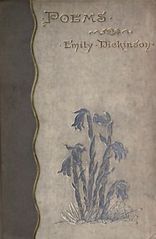
Emily Elizabeth Dickinson (born Amherst, Massachusetts, 1830; died Amherst, Massachusetts, May 15, 1886) was a poet. A very shy individual, she rarely traveled. Only a few of her poems were published during her lifetime. After her death, her sister Lavinia found hundred of poems among her effects. Lavinia was able to publish some of the poems. People appreciated Dickinson’s work and more poems were issued. About 1,775 poems have been published, and Emily Dickinson is now regarded as one of America’s best poets. Children can find many of her poems at: Project Gutenberg.

Cornelia Funke (born Dorsten, Germany, 1958) writes fantasy and adventure stories for children. Her books include Dragon Rider, The Thief Lord, and the Inkheart Trilogy. Children could visit her absolutely amazing website at: Cornelia Funk.

Ada Lovelace (born London, United Kingdom, 1815; died Marylebone, United Kingdom, November 27, 1852) was a mathematician. She is best known for her work regarding Charles Babbage’s Analytical Engine. Some experts credit her with being the first computer programmer. Children could read Ada Lovelace: Poet of Science by Diane Stanley.

Mary Norton (born London, England, 1903; died Hartland, England, August 29, 1992) was a children’s author. One of her most famous works is Bedknobs and Broomsticks, published in 1957. She also wrote several books about the Borrowers. Children could learn more at: Mary Norton.

Ernest Howard Shepard (born London, England, 1879; died London, England, March 24, 1976) was an artist and illustrator of children’s books. He illustrated Wind in the Willows and Winnie-the-Pooh. Children can learn more at: Ernest Howard Shepard.

Dec 112026
 

Annie Jump Cannon

Annie Jump Cannon (born Dover, Delaware, 1863; died Cambridge, Massachusetts, April 13, 1941) was an astronomer. She located several hundred new stars. However, she is best known for cataloging and classifying more than 225,000 stars. She developed a system that used the letters O, B, A, F, G, K, and M. O=blue stars (the hottest stars), B=blue-white stars, A=white stars, F=yellow-white stars, G=yellow stars, K=orange stars, M= red stars (the coolest stars). Children could read Annie Jump Cannon, Astronomer, written by Carole Gerber and illustrated by Christina Wald. Older children could learn more at: Annie Jump Cannon.

Robert Koch (born Clausthal, Germany, 1843; died Baden-Baden, Germany, May 27, 1910) was one of the earliest bacteriologists. He discovered the specific bacteria that cause tuberculosis, anthrax, cholera, and other diseases. He also conducted experiments on sleeping sickness. He was awarded a Nobel Prize in 1905 for his studies regarding tuberculosis. Children could read Robert Koch and the Study of Anthrax by Kathleen Tracy. Perhaps a nurse could visit and discuss the importance of getting rid of bacteria.

Alexandr Solzhenitsyn (born Kislovodsk, USSR, 1918; died Moscow, Russia, August 3, 2008) was a Russian author, activist, and dissident. One of his best known works is One Day in the Life of Ivan Denisovich. He was awarded the 1970 Nobel Prize for Literature.

Dec 122026
 

William Lloyd Garrison (born Newburyport, Massachusetts, 1805; died New York, New York, May 24, 1879) was an abolitionist and a writer. He was the editor of The Liberator, an abolitionist newspaper. Following the Civil War and the end of slavery, he became a proponent of women’s rights.

John Jay (born New York, New York, 1745; died Bedford, New York, May 17, 1829) was a diplomat and a writer. He co-authored the Federalist papers and was the first chief justice of the Supreme Court. Children could learn more at: John Jay.

Edvard Munch (born Loten, Norway, 1863; died Ekely, Norway, January 23, 1944) was an artist. He is known for The Scream, created in 1893. Older teenagers might want to visit the Munch portion of the Google Art Project at: Edvard Munch.

Dec 132026
 

Lucia Gonzalez (born Caimito, Cuba, 1957) is a children’s author, librarian, and storyteller. Her The Bossy Gallito received the 1995 Pura Belpré Literature Honor Award. She also wrote The Storyteller’s Candle/La velita de los cuentos, a bilingual book about Pura Belpré. It earned the 2008 Pura Belpré Children’s Literature Honor Medal. Children could learn more at: Lucia Gonzalez.

Mary Todd Lincoln

Mary Todd Lincoln (born Lexington, Kentucky, 1818; died Springfield, Illinois, July 16, 1882) was America’s First Lady from March 4, 1861 to April 14, 1865. She was the wife of Abraham Lincoln, sixteenth president of the United States. The attractive daughter of a rich and prominent southern family, she married the impoverished Lincoln in 1842. They had four sons. Most of her life seemed riddled with agitation. While First Lady, she was criticized for her extravagance. Her husband and three of her four sons died during her lifetime. Children could learn more at: Mary Todd Lincoln.

The Little Island

The Little Island

Leonard Weisgard (born New Haven Connecticut, 1916; died Denmark, January 14, 2000) was an author and/or illustrator of more than 200 books. He illustrated Margaret Wise Brown’s The Little Island and received the 1948 Caldecott Medal. Children could visit a website devoted to him and view the long list of books he illustrated at: Leonard Weisegard.

Dec 142026
 

James Harold Doolittle (born Alameda, California, 1896; died Pebble Beach, California, September 27, 1993) was an aviator and military hero. As a young man, he was the first person to fly across North America in under a day. During World War II, he led the first aerial raid on five cities in Japan. He also spearheaded the Eighth Air Force for the Normandy invasion.

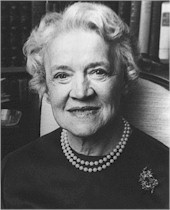
Margaret Chase Smith (born Skowhegan, Maine, 1897; died Skowhegan, Maine, May 29, 1995) was the first female to be elected to both the House of Representatives (1940-1949) and to the Senate (1949-1973). Children could learn more about her at: Margaret Chase Smith. They could also find out how the requirements for being a representative differ from those of being a senator.

Tycho Brahe (born Scania, then part of Denmark but today part of Sweden, 1546; died Prague, then part of the Holy Roman Empire, October 24, 1601) was an astronomer and alchemist. The telescope had not yet been invented. However, he used the best instruments then available to make great contributions to the field of astronomy. He recorded planetary motions, observed a supernova, and mathematically concluded that comets were farther away from earth than the moon. He was not always correct in his work, but he provided the foundation for other great astronomers. Here is an interesting fact: in a duel (over an astronomical concept) he lost all or part of his nose. After the duel he wore a fake nose made out of metal.

Dec 152026
 

Alexandre Gustave Eiffel

Alexandre Gustave Eiffel (born Dijon, France, 1832; died Paris, France, December 23, 1923) was a French architect and engineer. He designed bridges, train stations, and churches. However, he is most famous for designing the Eiffel Tower and the Statue of Liberty. Toward the end of his life, he devoted himself to studying aerodynamics and meteorology. Children could learn more about the Eiffel Tower at: Eiffel Tower.

Betty Smith (born Brooklyn, New York, 1896; died Shelton, Connecticut, January 17, 1972) was an author. She wrote, among other works, A Tree Grows in Brooklyn. 

Dec 162026
 

Jane Austen (born Steventon, Hampshire, England, 1775; died Winchester, England, July 18, 1817) was a writer. Two of her most famous works are Sense and Sensibility and Pride and Prejudice. Children can read many of her works at: Project Gutenberg.

Ludwig van Beethoven (born Bonn, Germany, 1770; died Vienna, Austria, March 26, 1827) was one of the greatest composers. He created nine symphonies, a number of overtures and chamber music, an opera and about 35 sonatas. He grew deaf in his later years, but he still was able to compose. Children could read Beethoven Lives Upstairs by Barbara Nichol.

Quentin Blake (born Sidcup, Kent, England, 1932) is a children’s author and illustrator. While he has written and/or illustrated at least 323 books, he is perhaps best known for his illustrations of books by Raold Dahl. He won the 1980 Kate Greenaway Award for his book Mister Magnolia. In 2002 he won the very prestigious Hans Christian Andersen Award for his body of works. He was knighted in 2013. Children could visit his website at: Quentin Blake.

Bill Brittain (born Rochester, New York, 1930; died Asheville, North Carolina, December 16, 2011) was an author. One of his books is All the Money in the World. Another of his most well-known works is The Wish Giver. It received the 1984 Newbery Honor Award.

Arthur Charles Clarke (born Minehead, England, 1917; died Colombo, Sri Lanka, March 19, 2008) was an author. He is best known for his science fiction, including 2001: A Space Odyssey. Children could learn more about him at: Clarke Foundation.

Marie Hall Ets (born Milwaukee, Wisconsin, 1895; died Inverness, Florida, January 17, 1984) was an author and/or illustrator of more than 20 children’s books. She received the 1960 Caldecott Medal for Nine Days to Christmas. Children could learn more at: Marie Hall Ets.

Wassily Kandinksy (born Moscow, Russia, 1866; died Neuilly-sur-Seine, France, December 13, 1944) was an abstract painter. He moved from Russia to Germany and eventually to France where he became a French citizen. Many experts consider him to be the founder of abstract art. Children can view some of his work at: Wassily Kandinsky.

Margaret Mead (born Philadelphia, Pennsylvania, 1901; died New York, New York, November 15, 1978) was an anthropologist and a writer. Coming of Age in Samoa, published in 1928, showed her strong interest in other cultures. Her writings often compared and contrasted two cultures. Older children could learn more at: Margaret Mead.

George Santayana (born Madrid, Spain, 1863; died Rome, Italy, September 26, 1952) was a philosopher. One of his most famous quotes is, “Those who cannot remember the past are condemned to repeat it.” Children can read some of his earlier works at: Project Gutenberg.

Dec 172026
 

Raúl Colón (born New York, New York, 1952) has illustrated more than 30 books for children. He illustrated Celebration! by Jane Resh Thomas and A Weave of Words by Robert D. San Souci. Children could watch a video at: Draw! where he talks about his book Draw!

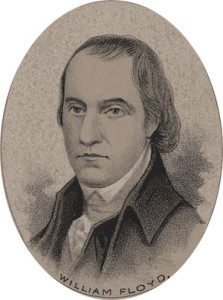
William Floyd (born Brookhaven, Long Island, 1734; died Westernville, New York, August 4, 1821) signed the Declaration of Independence. Born to a wealthy farming family, he had little formal education. He was elected to the Continental Congress in 1774. During the Revolutionary War he continued to serve in Congress. He was also major general of a New York militia. The British discovered his strong political views and confiscated his estate. His wife and children were able to escape before the British arrived. The British turned his home into a barracks and ruined his property. After the war, he rebuilt his home. He was elected to the first House of Representatives and served from 1789 to 1791. Children could learn more at: William Floyd.
Pope Francis (born Jorge Mario Bergoglio in Buenos Aires, Argentina, 1938; died Vatican, April 21, 2025) was the 266th pope. Children could learn more about Pope Francis at: Pope Francis.

Deborah Sampson (born Plympton, Massachusetts, 1760; died Sharon, Massachusetts, April 29, 1827) actually fought during the Revolutionary War. Since women were not accepted into the army during the Revolutionary War, she disguised herself as a man. For over a year, she was a capable fighter. She was wounded and chose to dress the wound herself because she was afraid she would be discovered. She became very ill and had to seek medical attention. Her secret was discovered, and she was discharged from the army. She received a military pension for a number of years. Idea: Children might want to read Ann McGovern’s The Secret Soldier: The Story of Deborah Sampson. Now women are part of the military. Children could interview a woman in the military. How is military service for women different from service in the past?

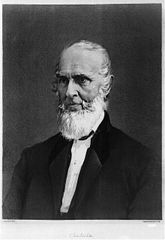
Whittier

John Greenleaf Whittier

John Greenleaf Whittier (born Haverhill, Massachusetts, 1807; died Hampton Fall, New Hampshire, September 7, 1892) was a poet. A Quaker, he was active in the anti-slavery movement. One of his most famous poems is “Ichabod,” published in 1850. The poem criticizes the Compromise of 1850 and Daniel Webster. Children can view his works at: Project Gutenberg.