Nov 272026
 

Anders Celsius (born Uppsala, Sweden, 1701; died Uppsala, Sweden, April 25, 1744) was an astronomer. However, he is most famous for his Celsius temperature scale. In the Celsius (centigrade) Scale, water freezes at zero degres, and water boils at one hundred degrees. Children could compare and contrast the Fahrenheit Scale with the Celsius Scale. They could also research where these scales are used.

Kevin Henkes (born Racine, Wisconsin, 1960) is a children’s author and illustrator. One of his books is Lilly’s Purple Plastic Purse. His Circle Dogs received the 1999 Charlotte Zolotow Award: Highly Commended. Henkes received a 2004 Caldecott Honor Award for Owen. Kitten’s First Full Moon was awarded the 2005 Caldecott Medal, and Olive’s Ocean received a 2004 Newbery Honor Award. He earned a 2014 Newbery Honor Award for The Year of Billy Miller. He received a 2016 Caldecott Honor Award for Waiting. Notice that Henkes has received both Caldecott and Newbery Awards – what an accomplishment! His amazing website is absolutely loaded with activities: Kevin Henkes.

Robert R. Livingston

Robert R. Livingston (born New York, New York, 1746; died Clermont, New York, February 26, 1813) was a patriot, a member of the Continental Congress, and a diplomat. Representing New York, he was one of the Committee of Five, the representatives who drafted the Declaration of Independence. A fervent believer in independence, he was recalled to New York and did not sign the Declaration. He delivered the presidential oath to George Washington at the inauguration in 1789. He was Minister to France from 1801 to 1804 and therefore he negotiated the Louisiana Purchase. Children could learn more at: Robert R. Livingston.

The Egg TreeKatherine Milhous (born Philadelphia, Pennsylvania, 1894; died Philadelphia, Pennsylvania, December 5, 1977) was a writer and an illustrator. She wrote and/or illustrated over fifteen books. One of her books, The Egg Tree, received the 1951 Caldecott Medal.

Bill Nye (born Washington, DC, 1955) is an educator, writer, scientist, and TV personality. He hosted “Bill Nye the Science Guy” on television from 1993 to 1998. He continues to be active in the combined fields of science and education. Children could spend days at his amazing website: Bill Nye.
Nov 282026
 

Stephanie Calmenson (born Brooklyn, New York, 1952) has written at least 35 books for children. Her works include The Principal’s New Clothes and Dinner at the Panda Palace. Children can learn more at: Stephanie Calmenson.

Ed Young (born Tientsin, China, 1931; died Hastings-on-Hudson, New York, September 29, 2023) was a children’s author and illustrator. He wrote and illustrated 17 books and illustrated more than 60 books written by other authors. He wrote among other works Lon Po Po: A Red-Riding-Hood Story from China (1990 Caldecott Medal). His Emperor and the Kite received a 1968 Caldecott Honor Award. His Seven Blind Mice earned a 1992 Caldecott Honor Award. In 1992 and again in 2000 he was the United States nominee for the Hans Christian Andersen Medal. Children can visit an interesting In Memoriam website: Ed Young.

Tomi Ungerer (born Strasbourg, France, 1931; died Cork, Ireland, February 9, 2019) published over 140 children’s books. His books have been translated into many different languages. He illustrated Jeff Brown’s Flat Stanley in 1964. Children can visit Ungerer’s website at: Tomi Ungerer.

Nov 292026
 
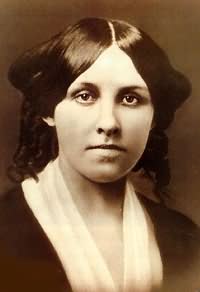
File:Louisa May Alcott headshot.jpg

Louisa May Alcott

Louisa May Alcott (born Philadelphia, Pennsylvania, 1832; died Boston, Massachusetts, March 6, 1888) was a novelist. One of her most famous works is Little Women. Children can read her works at Project Gutenberg. Children can learn more at: Louisa May Alcott.

Christian Johann Doppler (born Salzburg, Austria, 1803; died Venice, Italy, March 17, 1853) was an Austrian physicist. He proposed the Doppler Effect. Children could learn more about the Doppler Effect regarding sound and actually set up experiments to verify Doppler’s findings by viewing: Doppler Effect.

Jon Klassen (born Winnipeg, Canada, 1981) writes and illustrates books for children. He received the 2013 Caldecott Medal for This Is Not My Hat and a 2013 Caldecott Honor Award for Extra Yarn. He earned a 2015 Caldecott Honor Award for Sam and Dave Dig a Hole.

Madeleine L’Engle (born New York, New York, 1918; died Litchfield, Connecticut, September 6, 2007) was a children’s author. She wrote over 60 books, including A Wrinkle in Time, which received the 1963 Newbery Medal. A Ring of Endless Light was a 1981 Newbery Honor Award winner. Children could visit a website devoted to her at: Madeleine L’Engle.

C. S. Lewis (born Clive Staples Lewis in Belfast, Ireland, 1898; died Oxford, England, November 22, 1963) was a writer and a professor of medieval literature. He wrote for both adults and children. His most famous work in children’s literature is a series of seven books, The Chronicles of Narnia. Children can learn more at: C. S. Lewis.

Nellie Tayloe Ross (born Saint Joseph, Missouri, 1876; died Washington, DC, December 19, 1977) was the first woman governor of a state in the United States. After her husband, the governor of Wyoming, died, she completed his term. Then she campaigned and won her term. She was not reelected, but she became director of the United States Mint in 1933. She remained at that post for twenty years. Children could learn more at: Nellie Tayloe Ross.

Charles Thomson (born Machera, County Derry, Ireland, 1729; died Lower Merion, Pennsylvania, August 16, 1824) was secretary for the First File:CharlesThomson.jpegContinental Congress. He was secretary as the colonial representatives drafted and voted on the Declaration of Independence. Many historians believe that only John Hancock and he signed the Declaration of Independence on July 4, 1776.  He recorded government proceedings for the next fifteen years and collected thousands of documents. He gave all the records to the government in 1789.
Nov 302026
 

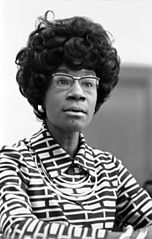
Shirley Chisholm

Shirley Chisholm (born Brooklyn, New York, 1924; died Ormond Beach, Florida, January 1, 2005) was the first African American woman elected to Congress. She represented New York’s 12th District from 1969 to 1983. Children can read Shirley Chisholm: The Story of the First Black Woman in Congress, by Alicia D. Williams. Children can also learn more at: Shirley Chisholm.

Sir Winston Leonard Spencer Churchill (born Oxfordshire, England, 1874; died London, England, January 24, 1965) was the Prime Minister of England during World War II. Children could read more about Churchill by exploring an interesting timeline at: Winston Churchill. How did he keep Great Britain functioning during the war?

Dick Clark (born Mt. Vernon, New York, 1924; died Santa Monica, California, April 12, 2012) was a television personality. He hosted American Bandstand.

William Livingston (born Albany, New York, 1723: died Elizabeth, New Jersey, July 25, 1790) represented New Jersey at the Constitutional Convention. A wealthy lawyer, he served in the Continental Congress and headed New Jersey’s militiamen during the Revolutionary War. He was also elected New Jersey’s governor in 1776. The British placed a bounty on him, and for about six years he was constantly on the move. Following the war, he tried to eliminate slavery. Older children could learn more at: William Livingston.

Lucy Maud Montgomery (born New London, Prince Edward Island, Canada, 1874; died Toronto, Canada, April 24, 1952) wrote 20 novels, over 500 short stories, and at least 500 poems. Her most famous work is probably Anne of Green Gables. She also wrote Emily’s Quest. Children can read her works at: Project Gutenberg. Children can learn more at: Lucy Maud Montgomery.

Roland Smith (born Portland, Oregon, 1951) has written close to 50 books for children and young adults. His works include In the Forest with the Elephants and Eruptions. Children can learn more at: Roland Smith.

Jonathan Swift (born Dublin, Ireland, 1667; died Dublin, Ireland, October 19, 1745) was an author and a satirist. One of his most famous works is Gulliver’s Travels, published in 1726. Children can read his works at: Project Gutenberg.

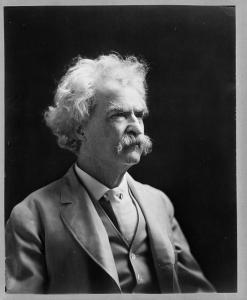
Mark Twain

Mark Twain

Mark Twain (born Samuel Langhorne Clemens in Florida, Missouri, 1835; died Redding, Connecticut, April 21, 1910) was a writer. His works include The Adventures of Tom Sawyer and The Prince and the Pauper. His birth and death coincide with an astronomical event. Students could see if they can find the event. Children can also read his works at: Project Gutenberg. Children can learn more at: Mark Twain.

Margot Zemach (born Los Angeles, California, 1931; died Berkeley, California, May 21, 1989) wrote/illustrated over 40 children’s books. She often collaborated with her husband, Harve Ficshstrom, who used the pseudonym Harve Zemach. She won the 1974 Caldecott Medal for Duffy and the Devil. She earned two Caldecott Honor Awards: one in 1970 for The Judge: An Untrue Tale and one in 1978 for It Could Always Be Worse: A Yiddish Folk Tale.

Dec 012026
 

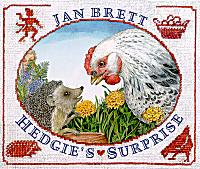
Hedgie's SurpriseJan Brett (born Norwell, Massachusetts, 1949) has written and illustrated at least 50 books. Her works include Hedgie’s Surprise and The Mitten. Children can visit her amazing website, filled with activities and coloring sheets, at: Jan Brett.

Mary Martin (born Weatherford, Texas, 1913; died Rancho Mirage, California, November 3, 1990) was a stage and television star. She was known for her roles in Peter Pan and South Pacific. Peter Pan includes the Lost Boys. Children could draw house plans for the Lost Boys’ residence.

Dec 022026
 

Peter Carl Goldmark (born Budapest, Hungary, 1906; died Westchester, New York, December 7, 1977) invented long-playing records and color television.

Don Lessem (born 1951) is a children’s author and dinosaur aficionado. He has written at least 50 science books, including Feathered Dinosaurs and Great Plant-Eating Dinosaurs. Children could visit his website, loaded with information about dinosaurs, at: Don Lessem.

David Macaulay (born Burton-on-Trent, United Kingdom, 1946) has written and illustrated at least 30 books for children. He received a 1974 Caldecott Honor Award for Castle: The Story of Its Construction. He earned the 1978 Caldecott Medal for Castle and the 1991 Caldecott Medal for Black and White. Idea: Macaulay’s Motel of the Mysteries is great fun to read. He makes fun of the conclusions archeologists sometimes make. Enjoy the book with the children. Then see if they can think of other “artifacts,” draw and label them Motel of the Mysteries style. Children could view his very interesting TED talk at: David Macauley.

Georges Pierre Seurat (born Paris, France, 1859; died Paris, France, March 29, 1891) was a painter who developed pointillism. Rather than painting with brush strokes, Seurat made dots of paint side by side. When the viewer stepped away from the artwork, images appeared. One of his most famous works is Sunday Afternoon on the Island of the Grand Jatte, painted in 1886. Children can view some of his works at: Georges Pierre Seurat. Children can make great pointillism works. Markers with angled tips seem to work best. Remember to place scrap paper under the art paper.

Dec 042026
 

George Ancona (born New York, 1929; died Santa Fe, New Mexico, January 1, 2021) was a photographer, author, and illustrator of over 100 children’s books. ¡Ole! Flamenco was a 2011 Pura Belpré Award Honor Book for Author, and Bario: José’s Neighborhood was a 2000 Pura Belpré Honor Book. Children can learn more at: George Ancona.

Bruce Hiscock (born San Diego, California, 1940; died Porter Corners, New York, July 11, 2021) wrote and illustrated books for children. He specialized in books about nature. His works include Ookpik – The Travels of a Snowy Owl and Coyote and Badger – Desert Hunters of the Southwest.

Munro Wilbur Leaf (born Hamilton, Maryland, 1905; died Garrett Park, Maryland, December 21, 1976) was a children’s author and illustrator. His credits include cartoons and around 40 books. One of his works is The Story of Ferdinand, published in 1936. Very interesting fact – Ferdinand was considered by some to be subversive and was banned in Nazi Germany. Older children could read the classic The Story of Ferdinand to younger children. Children can learn more at: Munro Wilbur Leaf.

Dec 052026
 

George Armstrong Custer (born New Rumley, Ohio, 1839; died Little Bighorn, Montana Territory, June 25, 1876) was an army officer. He became famous during the Civil War for being fearless. After the war, he joined a regiment fighting the Indians in Montana Territory. On June 25, 1876, he found an Indian village that he thought housed about one thousand warriors. However, the number of warriors probably exceeded two thousand. Custer and about 210 soldiers attacked immediately. Every soldier was killed, and the battle became known as “Custer’s Last Stand.” Children could read Dennis Brindell Fradin’s book, Custer’s Last Stand (Turning Points In U. S. History).

Walt Disney

Walt(er Elias) Disney (born Chicago, Illinois, 1901; died Los Angeles, California, December 15, 1966) was a cartoonist and empire builder. He invented Mickey Mouse and all the animal’s friends. Disney produced a number of animated movies, including Snow White and the Seven Dwarfs (1937) and Bambi (1942). He also produced live action movies and television programs. Disneyland opened in 1955, and Disney World began operations in 1971. Children could have a Disney Day. They could wear Disney shirts and share Disney books.

Bill Pickett (born Jenks-Branch, Texas, 1870; died Ponca City, Oklahoma, April 2, 1932) was an African American cowboy and rodeo star. Children can read more about his life at: Bill Pickett.

Christina Georgina Rossetti (born London, England, 1830; died London, England, December 29, 1894) was a poet. One of her most well known collections appropriate for children is Goblin Market and Other Poems, published in 1872. Children can read her works at: Project Gutenberg.

Martin Van Buren (born Kinderhook, New York, 1782; died Kinderhook, New York, July 24, 1862) was the eighth president (1837-1841) of the United States. The first president not to live during the Revolutionary War, he was nicknamed “The Little Magician.” He was a lawyer and Andrew Jackson’s vice president before he was elected president. Van Buren’s presidency had quite a few conflicts. The North disliked his views regarding slavery, and the South was not happy when he would not annex Texas. The Panic of 1837 caused a severe depression nation-wide. Children could visit a website at: Martin Van Buren.

Hugh Williamson (born Chester County, Pennsylvania, 1735; died New York, New York, May 22, 1819) represented North Carolina at the Continental Congress and at the Constitutional Convention. During his lifetime he was a minister, physician, scientist, and lawmaker. From 1789 to 1793 he represented North Carolina in the House of Representatives. Older children could learn more at: Hugh Williamson.

Dec 062026
 

Dave Brubeck (born Concord, California, 1920; died Norwalk, Connecticut, December 5, 2012) was a jazz musician. Children can view a great video and listen to “Take Five” at: https://www.youtube.com/watch?v=nzpnWuk3RjU.

Ira Gershwin (born New York, New York, 1896; died Beverly Hills, California, August 17, 1983) was a lyricist. He often worked with his brother, George. His Broadway hits include Funny Face. Children can visit a wonderful website and listen to his lyrics at: Ira Gershwin.

Alfred Eisenstaedt (born Dirschau, Prussia, 1898; died Martha’s Vineyard, Massachusetts, August 23, 1955) was a famous photojournalist. He was known for his photographs published by Life magazine. One of his most popular photographs was of a soldier kissing a nurse to celebrate the end of World War II. Children can view that photograph and many others at: http://www.youtube.com/watch?v=Sjq1iKVr2Es.

John Reynolds Gardiner (born Los Angeles, California, 1944; died Anaheim, California, March 4, 2006) was a children’s author. One of his most famous books is Stone Fox. Over four million copies of the book have been sold. Children can learn more about Gardiner at: John Reynolds Gardiner.

Alfred Joyce Kilmer (born New Brunswick, New Jersey, 1886; died in battle near Ourcy, France, July 30, 1918) was a poet. One of his most famous poems is “Trees,” published in 1913. Children could read “Trees” at: Trees. Children can read his works at: Project Gutenberg.

Cornelia Meigs (born Rock Island, Illinois, 1884; died Havre de Grace, Maryland, September 10, 1973) wrote over 30 books for children as well as screenplays and books for adults. The Windy Hill received a 1922 Newbery Honor Award. Clearing Weather won a 1929 Newbery Honor Award. Swift Rivers obtained a 1933 Newbery Honor Award. Invincible Louisa: The Story of the Author of “Little Women” received the Newbery Medal in 1934. Children can read The Windy Hill at: Project Gutenberg. Children can learn more at: Cornelia Meigs.

Jason Reynolds (born Washington, DC, 1983) has written more than twelve books for middle grade students and young adults. He received a 2018 Newbery Honor Award for Long Way Down. Other works include Lu and As Brave as You.  He received the 2023 Margaret A. Edwards Award for the his lifetime achievements, writing for young adults. Children could learn more at: Jason Reynolds.

Elizabeth Yates (born Buffalo, New York, 1905; died Concord, New Hampshire, July 29, 2001) was a children’s author, publishing at least 25 books. In 1944 she received a Newbery Honor Award for Mountain Born, and in 1951 her Amos Fortune, Free Man was awarded the Newbery Medal. In 1955 Rainbow Round the World received the Jane Addams Children’s Book Award. Children can learn more at: Elizabeth Yates.

Dec 072026
 

Kelly Barnhill (born Minneapolis, Minnesota, 1973) writes books for children. She received the 2017 Newbery Medal for The Girl Who Drank the Moon. Other works include The Witch’s Boy and The Unlicensed Magician. Children can visit her website at: Kelly Barnhill.

Willa Cather (born Winchester, Virginia, 1873; died New York, New York, April 24, 1947) was an author. One of her most famous works, published in 1913, is O Pioneers! She won the 1922 Pulitzer Prize for One of Ours. You can read many of her works at: Project Gutenberg.

Harry Chapin (born Greenwich Village, New York, 1942; died in an automobile crash, Long Island, New York, July 1981) was a folk singer and composer. Idea: Harry Chapin received the Special Congressional Medal of Honor for his concerns about world hunger. See if you can find recordings of his work. Play them. See if students would like to collect canned food for one of the nearby food banks.

Richard Warren Sears (born Stewartville, Minnesota, 1863; died Waukesha, Wisconsin, September 28, 1914) was working as a railroad station agent. He then began to sell watches via the mail. He formed a partnership with Alvah C. Roebuck, who repaired the watches. They created Sears, Roebuck and Company. At first it was strictly a mail order company. However, later they opened their first retail store. Sears and Roebuck formed a team. Children could list other famous teams (for example, Laurel and Hardy, or peanut butter and jelly).

John Tunis (born Boston, Massachusetts, 1889; died Essex, Connecticut, February 4, 1975) was a writer and sportscaster. He was also the author of at least 24 sports books for children, including The Kid from Tomkinville. Children can learn more at: John Tunis.