celebrateandlearn

Jun 072026
 

Virginia Apgar (born Westfield, New Jersey 1909; died New York, New York, August 7, 1974) was a physician who developed the Apgar Score. Newborn babies receive the test, and doctors can then identify those infants who need special attention. The Apgar measures five quick checks at one minute, five minutes, and ten minutes. Children could learn more at: Virginia Apgar.

Gwendolyn Elizabeth Brooks (born Topeka, Kansas, 1917; died Chicago, Illinois, December 3, 2000) was the first African-American to win the Pulitzer Prize for poetry. Her book, Annie Allen, took the prize in 1950. Children could read some of her poems at: http://www.poemhunter.com/gwendolyn-brooks/. They could also read A Song for Gwendolyn Brooks, written by Alice Faye Duncan and illustrated by Xia Gordon.
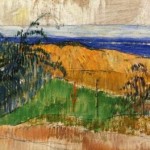
Gauguin Painting

View of the Beach at Bellangenay

Paul Gauguin (born Paris, France, 1848; died Atoana, Hiva Ova, Marquesas, May 9, 1903) was an artist. He used bold colors and often painted landscapes. He was a stockbroker before he became a painter. He moved to Tahiti about three years after he became an artist. Visit a website at: Paul Gauguin. Idea: Children could view Gauguin’s work. He and van Gogh actually shared a house for a while. Children could compare the two artists’ works.

Nikki Giovanni (born Knoxville, Tennessee, 1943) is an African-American poet and writer.  Her works for children include The Sun Is so Quiet and Lincoln and Douglass: An American Friendship. Her book Rosa, a tribute to Rosa Parks, was illustrated by Bryan Collier. He received a 2006 Caldecott Honor Award, as well as the Coretta Scott King Award for Illustrators. Children could visit her website at: Nikki Giovanni.

Georgess McHargue (born New York, New York, 1941; died Groton, Massachusetts, July 18, 2011) wrote at least 25 books for children. Her works include See You Later, Crocodile and The Talking Table Mystery.

Jun 082026
 
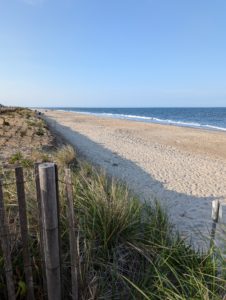
Laki Volcano, Iceland

Laki Today
Courtesy Petr Broz

Laki Volcano began erupting in 1783 in southern Iceland. The eruption, spewing 120 million tons of sulfur dioxide and lasting eight months, killed 10,000 people immediately, and caused weather changes all over the world. It caused droughts in Europe, Northern Africa, and parts of Asia. Experts estimate that probably five million people died of starvation or diseases related to the volcano over a period of seven years. Children can learn about volcanoes in general at: Volcanoes.

Jun 082026
 

James Madison suggested the Bill of Rights in 1789. He realized that many people felt the new Constitution was not strong enough without some statements about individual rights, including freedom of speech and freedom of religion. The Bill of Rights added the first ten amendments to the Constitution and became effective December 15, 1791. Children could read a kid-friendly version of the rights: Bill of Rights.

Jun 082026
 

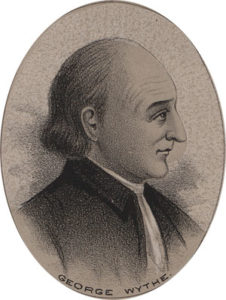
George Wythe died in 1806 in Richmond, Virginia. He was born in Elizabeth City, Virginia, probably in the year 1726. The exact date of his birth is unknown. Representing Virginia, he was one of the signers of the Declaration of Independence. He also attended the Constitutional Convention. A lawyer, he was a mentor to Thomas Jefferson and James Monroe. Sadly, he was murdered by a nephew seeking Wythe’s fortune. Children can learn more at: George Wythe.

Jun 082026
 
Rocket Mail, USS Barbero, Florida, missile

First Official Missile Mail

Rocket Mail took place in 1959. The United States Postal Service launched a missile, loaded with commemorative letters, from the USS Barbero, located off the northern coast of Florida. The missile safely parachuted down with its contents in Florida. There was thought that rockets could quickly deliver mail from continent to continent, but rocket costs and numerous setbacks halted the plans.

Jun 082026
 

Tim Berners-Lee (born London, England, 1955) is a computer scientist and is credited with creating the World Wide Web. Children could view some of his TED talks at: Tim Berners-Lee.

Barbara Bush

Barbara Bush (born Rye, New York, 1925; died Houston, Texas, April 17, 2018) was America’s First Lady from January 20, 1989 to January 20, 1993. She was the wife of George Bush, forty-first president of the United States. Because her husband’s occupations revolved around either the oil business or politics, they moved frequently. She counted 29 moves. While she was First Lady, she strove to improve literacy in America. While she was the wife of the forty-first president, she was also the mother of the forty-third president. Children can visit a website at: Barbara Bush.

Francis Crick (born Northampton, England, 1916; died San Diego, California, July 28, 2004) discovered with James Watson the structure of DNA. He, along with Watson and Maurice Wilkins, received the 1962 Nobel Prize in Physiology or Medicine. Children can learn more at: Francis Crick.

William Few (born near Baltimore, Maryland, 1748; died Beacon, New York, July 16, 1828) represented Georgia at the Constitutional Convention. He was a U.S. senator, and then he and his family moved to New York, where he was active in politics and the economy. Children could learn more at: William Few.

Ida Saxton McKinley

Ida Saxton McKinley (born Canton, Ohio, 1847; died Canton, Ohio, May 26, 1907) was America’s First Lady from March 4, 1897 to September 14, 1901. She was the wife of William McKinley, twenty-fifth president of the United States. Children can learn more at: Ida McKinley.

Carolyn Meyer (born Lewistown, Pennsylvania, 1935) has written at least 50 books for children and young adults. She writes historical fiction and biographies. Her books include the Royals series and The True Adventures of Charley Darwin. Children can visit her website at: Carolyn Meyer.

Judy Sierra (born Falls Church, Virginia, 1945) has written at least 50 books for children. Her books include Wild About Books and Tasty Baby Belly Buttons. Children can visit her website at: Judy Sierra.

Frank Lloyd Wright (born Richland Center, Wisconsin, 1867; died Phoenix, Arizona, April 9, 1959) was a revolutionary architect. He believed a house and its surroundings should blend together. One of his most famous designs was Fallingwater in western Pennsylvania where a house was designed around a small stream and waterfall. Children could learn more by reading Frank Lloyd Wright for Kids: His Life and Ideas, 21 Activities by Kathleen Thorne Thomsen.