Amendment Seventeen to the Constitution was adopted in 1913. It provided for the direct election of senators. Prior to the amendment, senators were elected by state legislatures. Children can view a list of current senators, plus much more information, at: US Senators.
Elizabeth Coatsworth (born Buffalo, New York, 1893; died Nobleboro, Maine, August 31, 1986) wrote over 90 books for children. Her books include the Sally series and The Cat Who Went to Heaven, which received the 1931 Newbery Medal. The Cat Who Went to Heaven was illustrated by Lynd Kendall Ward.
Phillip Hoose (born South Bend, Indiana, 1947) has written at least ten books for children. His book Claudette Colvin: Twice Towards Justice earned a 2010 Newbery Honor Award and a Robert F. Sibert Honor Award. Children can visit his website at: Phillip Hoose.
Harry Mazer (born New York, New York, 1925; died Montpelier, Vermont, April 7, 2016) wrote at least 22 books for children and young adults. His books include Solid Gold and The Island Keeper. He was married to Norma Fox Mazer, who also wrote books for children and young adults. They co-authored at least two books, Heartbeat and Bright Days, Stupid Nights.
Walt Whitman (born West Hills, Long Island, New York, 1819; died Camden, New Jersey, March 26, 1892) was a poet and reporter. One of his most famous works is Leaves of Grass. Children can read some of his works at: Project Gutenberg.
Jay Williams (born Buffalo, New York, 1914; died London, England, July 12, 1978) wrote at least 79 books for both adults and children. He is most known for his Danny Dunn series, numbering fifteen books.

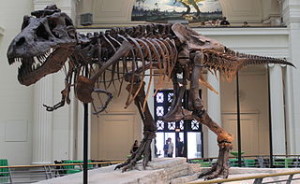
Sue, the skeleton of a T Rex
Dinosaur Day is today! Also celebrated on the third Tuesday in May, the day can be filled with all things dinosaurs: facts about dinosaurs, songs about dinosaurs, posters about dinosaurs. Children could make models of dinosaur eggs or footprints. Foodies could make dinosaur-shaped cookies. Children could learn more at: https://kids.nationalgeographic.com/animals/prehistoric.

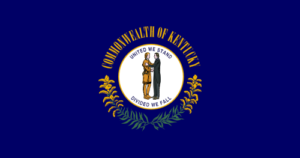
Kentucky Flag
Kentucky became the fifteenth state of the United States in 1792. It probably got its name from either the Iroquois word Kenta-ke, meaning meadowland, or the Wyandot word Kah-ten-tah-teh, meaning land of tomorrow. Its state song is “My Old Kentucky Home.” Kentucky ranks 37th in area and 25th in population compared to all the states. Tourist attractions include Mammoth Cave National Park. Frankfort is the capital, and Louisville is the largest city. Children could visit an internet site at: Kentucky.

Tennessee Flag
Tennessee became the sixteenth state of the United States in 1796. Its nickname is the Volunteer State. Tennessee’s name comes from tenase, meaning main village of Cherokees. Nashville is both the state capital and the state’s largest city. The state is the 36th largest state and ranks fifteenth in terms of population. The Grand Ole Opry, located in Nashville, attracts many country music fans. The state butterfly is the zebra swallowtail, and the state wild animal is the raccoon. Children could visit an Internet site at: Tennessee.
First recorded American earthquake occurred in Plymouth, Massachusetts, in 1638. Since English citizens had rarely experienced earthquakes, the colonists did not even have a word to describe their experience. Scientists today believe the earthquake was between a 6.5 to 7 on the Richter Magnitude Scale, making the earthquake one of the strongest ever in New England. Children could visit a WONDERFUL interactive site, including a map of earthquakes that have occurred today, at: http://earthquake.usgs.gov/learn/kids/.
James Daugherty (born Asheville, North Carolina, 1889; died Boston, Massachusetts, February 21, 1974) was a painter, illustrator, and author. He is one of only a few people who have earned both Newbery Awards and Caldecott Awards. His Andy and the Lion received a 1939 Caldecott Honor Award, and he earned another Caldecott Honor Award in 1957 for Gillespie and the Guards. He was awarded the 1940 Newbery Medal for Daniel Boone. Children could view some of his artwork at: James Daugherty.
Jacques Marquette (born Laon, France, 1637; died near Ludington, Michigan, May 18, 1675) was a priest and an explorer. He arrived in the New World in 1666. He founded several missions before he met Louis Jolliet. The two, with five other people, started to explore the Mississippi River in 1673. Idea: Children could speculate on why a priest would become such an active explorer. They could also learn more at: Jacques Marquette.
Doris Buchanan Smith (born Washington, DC, 1934; died Jacksonville, Florida, August 28, 2002) wrote seventeen books for children. Her A Taste of Blackberries was published in 1973.

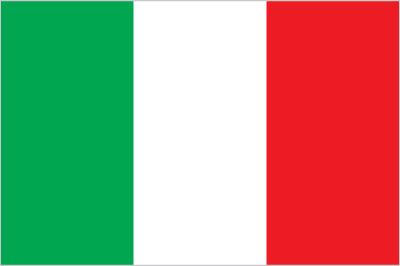
Flag of Italy
Italy celebrates Republic Day. It became a republic in 1946. Slightly larger than the state of Arizona, the country supports a population of 61 million people. Rome is the capital, and its mountainous interior supports olive groves and vineyards. Children can learn more at: Italy.
Hristo Botev Photograph
Public Domain
Bulgarians celebrate Hristo Botev Day. In 1876 Hristo Botev, writer and hero, died while fighting the Turks. Today Botev is a national hero in Bulgaria.

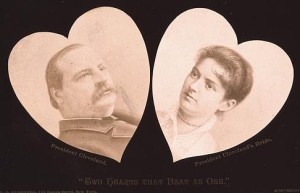
Grover and Frances
Grover Cleveland became the first and only President to wed in the White House when he married Frances Folsom, age 22, in 1886. Idea: Children might find out how Frances and Grover met.