celebrateandlearn

Jan 112025
 

Alexander Hamilton

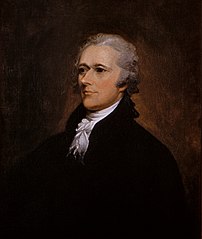
Alexander Hamilton (born British West Indies, 1757; died Weehawken, New Jersey, July 12, 1804) was an early American leader. He rallied for the causes of the Revolutionary War and served for a while as George Washington’s aide-de-camp. He represented New York at the Constitutional Convention. He was secretary of the treasury while Washington was president and helped the new country become financially sound. He was mortally wounded after a duel with Aaron Burr. Children could learn more at: Alexander Hamilton. Hamilton believed in a strong central government, and he wrote a large portion of The Federalist Papers. Children can read The Federalist Papers at: Project Gutenberg.

Robert C. O’Brien (born Robert Conly in Brooklyn, New York, 1918; died Washington, DC, March 3, 1973) was an editor for National Geographic and a children’s author. He won the 1972 Newbery Medal for Mrs. Frisby and the Rats of NIMH. He started Z for Zachariah, but he died before it was finished. His wife and daughter, following his notes, completed and published the book in 1974. Z for Zachariah received the Jane Addams Children’s Book Award and the Edgar Award in the juvenile division.

Alice Paul

Alice Paul (born Mount Laurel Township, New Jersey, 1885; died Moorestown, New Jersey, July 9, 1977) was a proponent of women’s rights, especially the right to vote. She picketed the White House, much to President Wilson’s chagrin. She was jailed for peacefully protesting, and she went on hunger strikes to bring attention to her cause. After the Nineteenth Amendment (voting rights for women) passed, she turned her attention to including women in the 1964 Civil Rights Act.

Mary Rodgers (born New York, New York, 1931; died New York, New York, June 25, 2014) was a composer of musicals and a writer of children’s books. Her works include Freaky Friday and The Rotten Book.

Ann Tompert (born near Detroit, Michigan, 1918; died Port Huron, Michigan, April 17, 2019) wrote over 50 books. Two fine examples of her books is Grandfather Tang’s Story and Just a Little Bit.


Jan 122025
 
Bighorn Sheep

Bighorn Sheep

Sprague Lake

Sprague Lake

Rocky Mountain National Park was established in 1915. The 265,000-acre park, located in Colorado, straddles part of the Continental Divide. About one-third of the park supports an alpine tundra ecosystem. Visitors can hike over 300 miles of trails, and scientists come here to study bighorn sheep. To view some excellent multimedia presentations and to tap some webcams, children could visit: http://www.nps.gov/romo/index.htm.

Jan 122025
 

Senate Portrait of Hattie Caraway

Hattie Caraway became the first woman to be elected a United States Senator in 1932. She represented the state of Arkansas. Her husband was one of the state’s senators when he died. As was custom then, she completed his term. She surprised the powers to be when she decided to run for the office and won! She served in the Senate until 1945. Children could calculate the number of male and female senators by visiting: Women Senators. They could find out if the number of female senators has risen in recent years.

Jan 122025
 

Cape Hatteras National Seashore was established in 1953. Located along the Outer Banks of North Carolina, the national seashore is 70 miles long. Once called the “Graveyard of the Atlantic,” the park hosts many species of birds. Sea turtles also nest along the shore. Children can learn more at: https://www.nps.gov/caha/index.htm.

Jan 122025
 
Goodnight Moon

Goodnight Moon

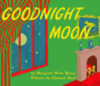
Clement Hurd (born New York, New York, 1908; died San Francisco, California, February 5, 1988) wrote and illustrated around 100 books for children. He illustrated books for his wife, Edith Thacher Hurd. However, he is probably best known for illustrating Margaret Wise Brown’s Goodnight Moon and her Runaway Bunny. He is the father of Thacher Hurd, also a writer and illustrator of children’s books. Children can learn more at: Clement Hurd.

Nina Laden (born New York, New York, 1962) writes and illustrates books for children. One of her book is Private I. Guana. Children can listen to Amanda Byles read Laden’s book, The Night I Followed the Dog at: http://www.storylineonline.net/ Children could also visit Laden’s website at: Nina Laden.

Jack London (born San Francisco, California, 1876; died Santa Rosa, California, November 22, 1916) was an author. He wrote more than 50 books, and two of his most celebrated works are Call of the Wild and White Fang. Children can read his works at: Project Gutenberg. They can learn more at: Jack London.

Charles Perrault (born Paris, France, 1628; died Paris, France, May 16, 1703) wrote several tales, including Cinderella, Sleeping Beauty, and Little Red Riding Hood. Children can read many of his stories at: Project Gutenberg. They can learn more at: Charles Perrault.

John Singer Sargent (born Florence, Italy, 1856; died London, England, 1925) was a painter. Children could view some of his works at: John Singer Sargent. Sargent’s portraits flatter the subject, but they also tell much about fashion and home décor of the time. Children could view some of his works and discuss clothing and home settings. Children could learn more at: John Singer Sargent.

John Winthrop (born Edwardston, England, 1588; died Boston, Massachusetts, March 26, 1649) was the leader of the Massachusetts Bay Colony for many of the years between 1630 and 1648.

Jan 132025
 

National Geographic Society was created in Washington, DC, in 1888. Around 33 founding members met at the Cosmos Club in Washington, DC, to sign the charter. Visit a website at: National Geographic.  Children enjoy perusing the National Geographic site for kids at: National Geographic Kids. Do you want an easy activity that combines geography and good, hard thinking? Create a geography ABC: write the letters of the alphabet down on paper. Next to each letter children can write down places that begin with that letter. For example, “A” could list Albania, Alabama, Andes Mountains, Arno River…

Jan 132025
 

Radio show was broadcasted for the first time in 1910. Lee Deforest arranged for Enrico Caruso and other celebrities to perform the opera Cavellaria rusticana at the Metropolitan Opera House in New York City. Only a few people owned the necessary equipment to receive the performance, but it did mark the beginning of radio communication.

Jan 132025
 

Robert C. Weaver

Robert C. Weaver became the first African American appointed to a presidential cabinet. President Lyndon Baines Johnson made Weaver Secretary of Housing and Urban Development in 1966. Children can view the list of current Cabinet members at: Presidential Cabinet.

Jan 132025
 
File:Ragged Dick Cover by Coates 1895.JPG

Ragged Dick

Horatio Alger, Jr. (born Revere, Massachusetts, 1834; died Natick, Massachusetts, July 18, 1899) was an author. He wrote more than one hundred books where the young male hero fought tough times to find fame and fortune. Two of his most famous works were Ragged Dick, published in 1867, and From Canal Boy to President, published in 1881. Children can read his works at: Project Gutenberg.

Wendy Hart Beckman (born Overbrook, Pennsylvania, 1958) has written several books for young adults and at least one book for adults. She has also published over 300 articles. One of her books is Robert Cormier: Banned, Challenged and Censored. Young adults could check out her website: http://wendyonwriting.com/.

N. M. Bodecker (born Copenhagen, Denmark, 1922; died Hancock, New Hampshire, February 1, 1988) wrote and illustrated books for children and adults. One of his books is Miss Jaster’s Garden.

Michael Bond (born Newbury, Berkshire, England, 1926; died London, England, June 27, 2017) was an author. He wrote the Paddington Bear series (26 books), the Olga De Polga series (at least 19 books), the Monsieur Pamplemousse series (at least 21 books), and at least 18 other books.

Salmon Portland Chase (born Cornish, New Hampshire, 1808; died New York, New York, May 7, 1873) was a politician and senator. He was Abraham Lincoln’s Secretary of the Treasury from 1861 to 1864. During his tenure, he created a national banking system and introduced paper currency. He also had the words “In God We Trust” stamped on coins. From 1864 to his death in 1873, he was the sixth chief justice of the Supreme Court. He would have liked to be president, but his anti-slavery views put off many voters.